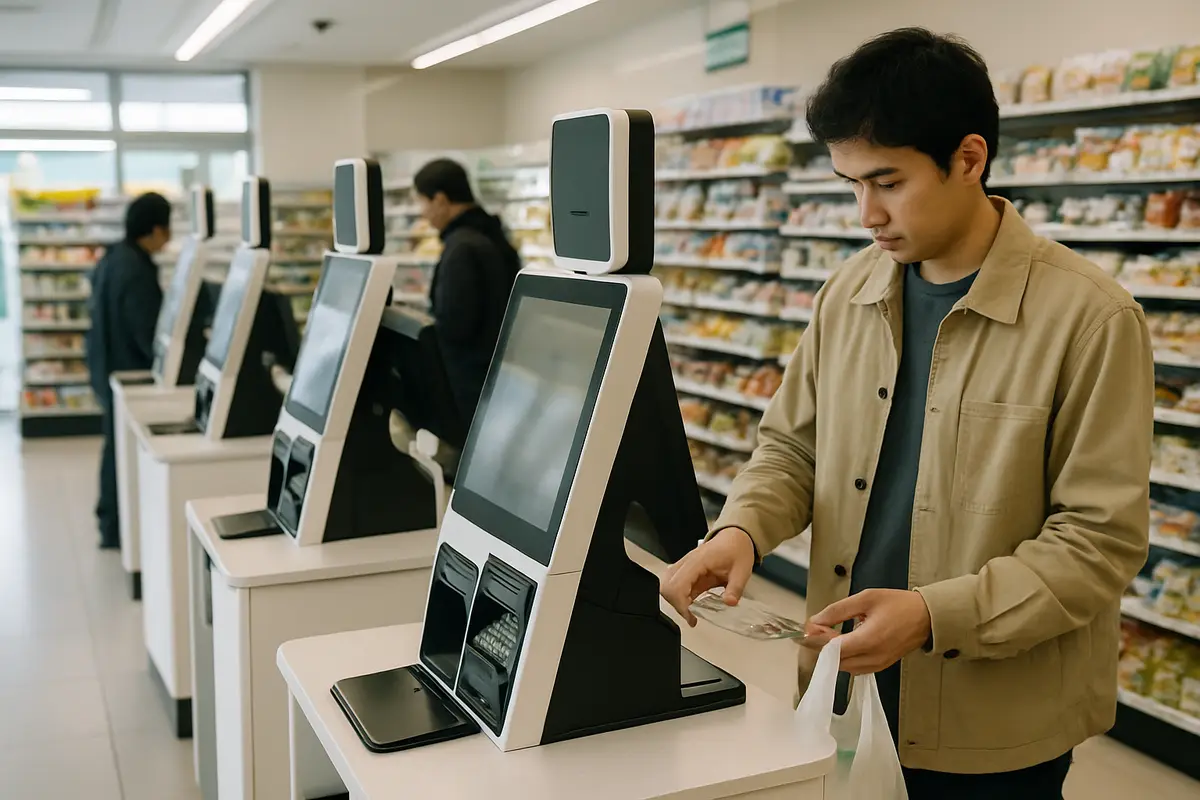
日本のコンビニで、セルフレジが増えています2。客が自分で商品のお金を払う機械です3。店員と話さなくても、買い物ができます4。
お店の人が足りない問題があります5。セルフレジを使うと、少ない店員でも店を開けることができます6。お店は夜も安心して営業できます7。
しかし、機械の使い方がわからない人もいます8。特にお年寄りには難しいことがあります9。ある会社は、使い方を教える店員を近くに置くことにしました10。これからもセルフレジは増えると言われています11。
(にほん)
Japan
(こんびに)
convenience store
(せるふれじ)
self-checkout register
(ふえる)
to increase; to grow
(きゃく)
Customer; guest
(じぶん)
oneself
(しょうひん)
goods; merchandise; product
(おかね)
money
(はらう)
to pay
(きかい)
machine
(てんいん)
shop clerk
(はなす)
to speak, talk
(かいもの)
shopping
(たりる)
to be enough; to be sufficient
(もんだい)
problem
(つかう)
to use
(すくない)
few, scarce
(みせ)
shop, store
(あける)
to open
(よる)
night
(あんしん)
relief / peace of mind
(えいぎょう)
business operation
(しかし)
however, but
(つかいかた)
how to use; usage
(わかる)
to understand
(とくに)
especially / particularly
(おとしより)
elderly person
(むずかしい)
difficult
(かいしゃ)
company
(おしえる)
to teach
(ちかく)
nearby
(おく)
to place, put
(いう)
to say
is doing, has been doing (ongoing state/action)
Expresses a continuing action or resulting state. Formed with て-form + いる. Can describe an action in progress or a state resulting from a past change.
今、ご飯を食べています。
I am eating rice now.
東京に住んでいます。
I live in Tokyo.
ドアが開いています。
The door is open.
even without ~ / even if not ~
Negative te-form with も meaning even if not. Here 予約をしなくても (even without making a reservation).
行かなくてもいい。
You don't have to go.
食べなくても大丈夫。
It's OK even without eating.
can do ..., to be able to ...
Verb dictionary form + ことができる expresses ability or possibility. More formal than the potential verb form. Common in written Japanese and announcements.
日本語を話すことができます。
I can speak Japanese.
ここで写真を撮ることができます。
You can take photos here.
インターネットで予約することができます。
You can make a reservation on the internet.
to decide to do ...
Expresses a decision made by someone. Formed with verb plain form + ことにする. Indicates a deliberate choice or resolution.
来年、日本に行くことにしました。
I decided to go to Japan next year.
毎朝走ることにした。
I decided to run every morning.
甘いものを食べないことにしています。
I have decided not to eat sweets.
it is said that ~
Passive form expressing common knowledge or reputation. It is said that aquaculture of nodoguro is difficult.
難しいと言われています。
It is said to be difficult.
日本語は難しいと言われています。
It is said that Japanese is difficult.
コンビニのセルフレジが増える
Self-checkout registers are increasing at convenience stores
日本のコンビニで、セルフレジが増えています。
Self-checkout registers are increasing at convenience stores in Japan.
客が自分で商品のお金を払う機械です。
They are machines where customers pay for their goods themselves.
店員と話さなくても、買い物ができます。
You can shop without speaking to a store clerk.
お店の人が足りない問題があります。
There is a problem of not having enough store staff.
セルフレジを使うと、少ない店員でも店を開けることができます。
Using self-checkout, a store can stay open even with few clerks.
お店は夜も安心して営業できます。
Stores can operate at night with peace of mind.
しかし、機械の使い方がわからない人もいます。
However, some people do not know how to use the machines.
特にお年寄りには難しいことがあります。
It can be especially difficult for elderly people.
ある会社は、使い方を教える店員を近くに置くことにしました。
One company decided to station clerks nearby to teach customers how to use them.
これからもセルフレジは増えると言われています。
It is said that self-checkout registers will continue to increase from now on.
2026年05月31日 21:10
著者: jpreader
この画像はAIで生成され、学習目的で使用されています。
This image is AI-generated and used for educational purposes.
日本のコンビニで、セルフレジが増えています2。客が自分で商品のお金を払う機械です3。店員と話さなくても、買い物ができます4。
お店の人が足りない問題があります5。セルフレジを使うと、少ない店員でも店を開けることができます6。お店は夜も安心して営業できます7。
しかし、機械の使い方がわからない人もいます8。特にお年寄りには難しいことがあります9。ある会社は、使い方を教える店員を近くに置くことにしました10。これからもセルフレジは増えると言われています11。
Discussion
to rate or comment.
No comments yet.