東京の新しいレストランで、ロボットが働いています2。このロボットは料理をテーブルまで運びます3。お客さんは、ロボットが来ると楽しそうに見ています4。
店の人によると、ロボットを使うと、店員の仕事が楽になるそうです5。日本では働く人が少なくなっています6。だから、多くの店がロボットや機械を使い始めました7。
ロボットは朝から夜まで動くことができます8。これからもっと多くのレストランでロボットを見ることができるでしょう9。
(ろぼっと)
robot
(りょうり)
cuisine, cooking
(はこぶ)
to carry; to transport
(れすとらん)
restaurant
(とうきょう)
Tokyo
(あたらしい)
new
(はたらく)
to work
(てーぶる)
table
(おきゃくさん)
guest / spectator / customer
(くる)
to come
(たのしい)
fun, enjoyable
(みる)
to see, watch
(みせ)
shop, store
(ひと)
person / people
(つかう)
to use
(てんいん)
shop clerk
(しごと)
work, job
(らく)
ease; comfort
(にほん)
Japan
(すくない)
few, scarce
(だから)
so, therefore
(おおい)
many
(きかい)
machine
(あさ)
morning
(よる)
night
(うごく)
to move
(もっと)
more / further
is doing, has been doing (ongoing state/action)
Expresses a continuing action or resulting state. Formed with て-form + いる. Can describe an action in progress or a state resulting from a past change.
今、ご飯を食べています。
I am eating rice now.
東京に住んでいます。
I live in Tokyo.
ドアが開いています。
The door is open.
looking / seemingly (manner)
Adverbial form of ~そう describing how something appears. おいしそうに食べていました (ate looking delicious / with apparent enjoyment).
うれしそうに笑った。
Smiled happily.
おいしそうに食べる。
Eats as if it's delicious.
when / whenever (conditional)
The dictionary form of a verb plus と expresses that one thing regularly or naturally follows another. Here, when the robot comes, the customers watch happily.
ボタンを押すと、ドアが開く。
When you press the button, the door opens.
ロボットを使うと、楽になる。
When you use a robot, it becomes easier.
according to ...
Cites a source of information. The noun before によると is the source. Often followed by a reported statement.
天気予報によると、明日は雨です。
According to the weather forecast, it will rain tomorrow.
ニュースによると、地震がありました。
According to the news, there was an earthquake.
先生によると、テストは来週です。
According to the teacher, the test is next week.
to become
Expresses a change of state; Kawai became the new commissioner of the Sports Agency.
新しい長官になりました。
He became the new commissioner.
目が見えなくなりました。
He became unable to see.
seems like / it appears
Conjecture form — prices 'seem likely to' become high.
高くなりそうです。
It looks like it will become expensive.
雨が降りそうです。
It looks like it'll rain.
can do ..., to be able to ...
Verb dictionary form + ことができる expresses ability or possibility. More formal than the potential verb form. Common in written Japanese and announcements.
日本語を話すことができます。
I can speak Japanese.
ここで写真を撮ることができます。
You can take photos here.
インターネットで予約することができます。
You can make a reservation on the internet.
Probably ~; it seems that ~
Expresses conjecture or probability. More formal than ~だろう. Often used in news and weather reports.
明日は雨が降るでしょう。
It will probably rain tomorrow.
start doing ~
Compound verb form expressing the start of an action; sending scallops has started.
ホタテを送り始めました。
They have started sending scallops.
雨が降り始めた。
The rain started falling.
ロボットが料理を運ぶレストラン
A restaurant where robots carry the food
東京の新しいレストランで、ロボットが働いています。
At a new restaurant in Tokyo, robots are working.
このロボットは料理をテーブルまで運びます。
These robots carry the food to the tables.
お客さんは、ロボットが来ると楽しそうに見ています。
When the robots come, the customers watch them happily.
店の人によると、ロボットを使うと、店員の仕事が楽になるそうです。
According to the restaurant staff, using robots makes the employees' work easier.
日本では働く人が少なくなっています。
In Japan, the number of working people is decreasing.
だから、多くの店がロボットや機械を使い始めました。
That is why many shops have started using robots and machines.
ロボットは朝から夜まで動くことができます。
Robots can work from morning until night.
これからもっと多くのレストランでロボットを見ることができるでしょう。
From now on, we will probably be able to see robots in even more restaurants.
2026年06月02日 19:08
著者: jpreader
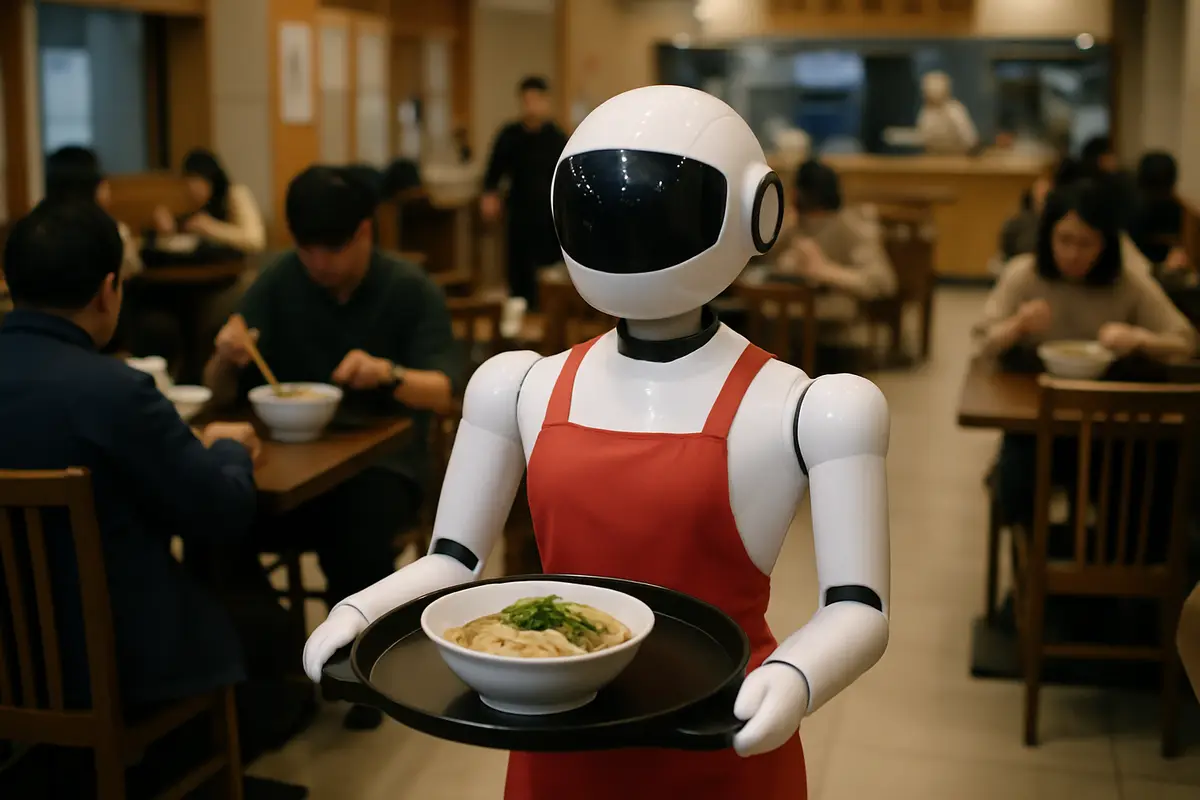
この画像はAIで生成され、学習目的で使用されています。
This image is AI-generated and used for educational purposes.
東京の新しいレストランで、ロボットが働いています2。このロボットは料理をテーブルまで運びます3。お客さんは、ロボットが来ると楽しそうに見ています4。
店の人によると、ロボットを使うと、店員の仕事が楽になるそうです5。日本では働く人が少なくなっています6。だから、多くの店がロボットや機械を使い始めました7。
ロボットは朝から夜まで動くことができます8。これからもっと多くのレストランでロボットを見ることができるでしょう9。
Discussion
to rate or comment.
No comments yet.