台風6号が日本に上陸しました2。強い風と雨で、いくつかの県でけがをした人がいます3。
ある町では、強い風で飛んできた物に当たって、男性がけがをしました4。別の場所では、転んで足をけがした人もいます5。病院に運ばれた人もいます6。
警察と消防は、危ないので外に出ないでくださいと言っています7。台風が通り過ぎるまで、家の中で安全に過ごしてください8。
(たいふう)
typhoon
(けが)
injury
(ひと)
person / people
(でる)
to come out; to occur
(にほん)
Japan
(じょうりく)
landfall, landing
(つよい)
strong
(かぜ)
wind
(あめ)
rain
(いくつか)
several, a few
(けん)
prefecture
(ある)
a certain (some)
(まち)
town
(とぶ)
to fly
(もの)
thing
(あたる)
to hit, to strike
(だんせい)
man; male
(べつ)
another; different
(ばしょ)
place
(ころぶ)
to fall down
(あし)
foot; leg
(びょういん)
hospital
(はこぶ)
to carry; to transport
(けいさつ)
police
(しょうぼう)
fire department, firefighting
(あぶない)
dangerous
(そと)
outside
(いう)
to say
(とおりすぎる)
to pass by, go past
(いえ)
house
(なか)
inside
(あんぜん)
safety
(すごす)
to spend (time)
past tense (plain/polite past)
Used throughout this news report to describe past events: the typhoon moved east, rain fell, warnings were issued.
東に進みました。
It advanced to the east.
雨がたくさん降りました。
It rained a lot.
is doing, has been doing (ongoing state/action)
Expresses a continuing action or resulting state. Formed with て-form + いる. Can describe an action in progress or a state resulting from a past change.
今、ご飯を食べています。
I am eating rice now.
東京に住んでいます。
I live in Tokyo.
ドアが開いています。
The door is open.
come toward (action approaching)
Indicates motion toward the speaker or a location. Here it describes rocks flying toward people.
鳥が飛んできた。
A bird flew toward (us).
雨が降ってきた。
It started raining.
please don't ~
Used in 「食べないで返してください」and 「食べないで返してほしい」as a polite request to not eat the butter and return it.
ここに座らないでください。
Please don't sit here.
心配しないでください。
Please don't worry.
because ~ / since ~
Causal connector. Because JA is buying at higher prices, store prices will also rise.
雨が降ったので、家にいた。
Since it rained, I stayed home.
忙しいので、行けません。
Since I'm busy, I can't go.
until / as far as
Indicates an end point in space or time. Here it expresses how far the balls flew.
駅まで歩きます。
I walk to the station.
遠くまで飛びました。
It flew far away.
please do ...
Polite request form. Formed with て-form + ください. Used to ask someone to perform an action.
ここに名前を書いてください。
Please write your name here.
もう一度言ってください。
Please say it once more.
窓を開けてください。
Please open the window.
台風6号でけがをした人が出た
People Were Injured by Typhoon No. 6
台風6号が日本に上陸しました。
Typhoon No. 6 made landfall in Japan.
強い風と雨で、いくつかの県でけがをした人がいます。
Due to the strong wind and rain, there are people who were injured in several prefectures.
ある町では、強い風で飛んできた物に当たって、男性がけがをしました。
In one town, a man was injured when he was hit by an object that flew at him in the strong wind.
別の場所では、転んで足をけがした人もいます。
In another place, there was also a person who fell and injured their leg.
病院に運ばれた人もいます。
Some people were taken to the hospital.
警察と消防は、危ないので外に出ないでくださいと言っています。
The police and fire department are telling people not to go outside because it is dangerous.
台風が通り過ぎるまで、家の中で安全に過ごしてください。
Please stay safely inside your home until the typhoon passes.
2026年06月04日 19:15
著者: jpreader
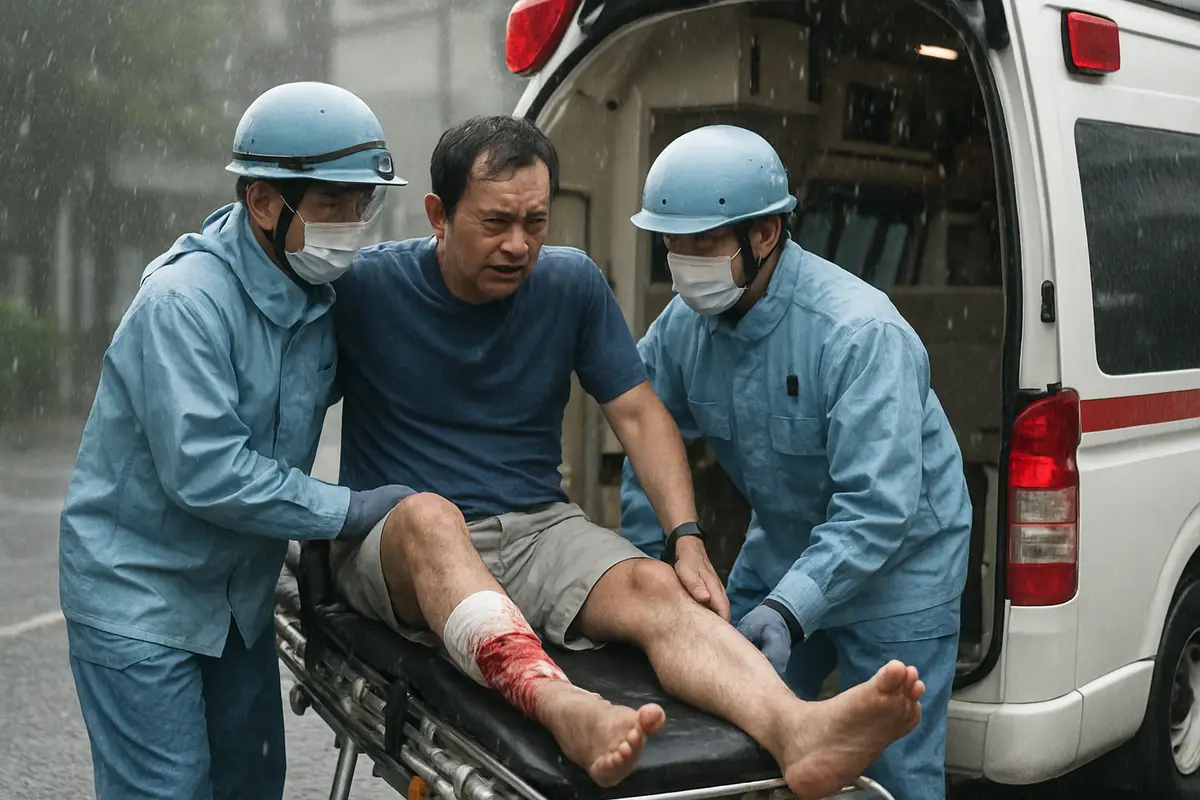
この画像はAIで生成され、学習目的で使用されています。
This image is AI-generated and used for educational purposes.
台風6号が日本に上陸しました2。強い風と雨で、いくつかの県でけがをした人がいます3。
ある町では、強い風で飛んできた物に当たって、男性がけがをしました4。別の場所では、転んで足をけがした人もいます5。病院に運ばれた人もいます6。
警察と消防は、危ないので外に出ないでくださいと言っています7。台風が通り過ぎるまで、家の中で安全に過ごしてください8。
Discussion
to rate or comment.
No comments yet.