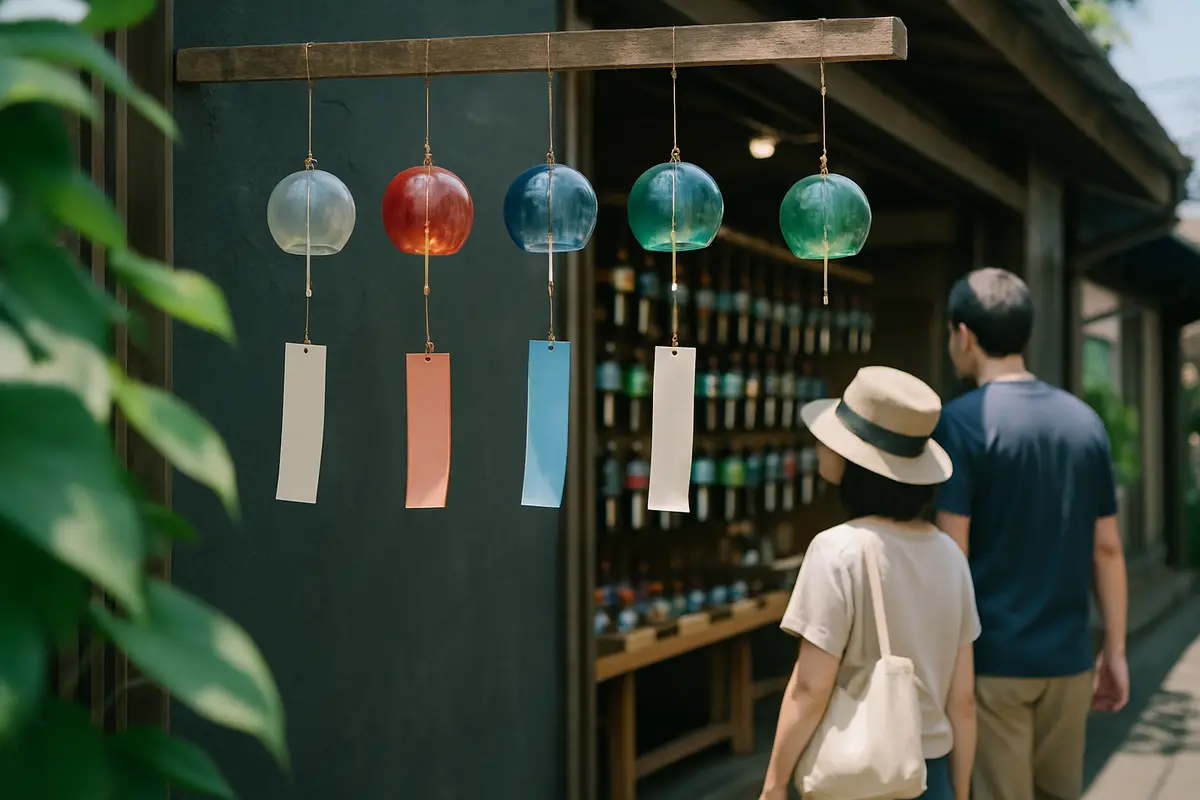
夏になると、日本では「風鈴」をよく見ます2。風鈴は、小さいガラスや金属で作った道具です3。風が吹くと、きれいな音が鳴ります4。
ある店では、たくさんの風鈴を売っています5。店の人は「風鈴の音を聞いて、涼しく感じてほしい」と話しました6。昔から、日本人はこの音を聞いて、夏の暑さを忘れてきました7。
最近は、いろいろな色や形の風鈴があります8。外国から来た人も、風鈴の音が好きだと言っています9。
(ふうりん)
wind chime
(おと)
sound
(すずしい)
cool, refreshing
(なつ)
Summer
(みせ)
shop, store
(にほん)
Japan
(みる)
to see, watch
(よく)
often, well, frequently
(ちいさい)
small
(がらす)
glass
(きんぞく)
metal
(つくる)
to make
(どうぐ)
tool, equipment
(かぜ)
wind
(ふく)
to blow (wind)
(きれい)
pretty, clean
(なる)
to ring; to sound
(たくさん)
a lot / many
(うる)
to sell
(ひと)
person / people
(きく)
to listen, hear
(かんじる)
to feel, to sense
(はなす)
to speak, talk
(むかし)
long ago, past
(にほんじん)
Japanese person
(あつさ)
heat
(わすれる)
to forget
(さいきん)
recently
(いろ)
color
(かたち)
shape, form
(がいこく)
foreign country
(くる)
to come
(すき)
liked, favorite
(いう)
to say
if/when ... (automatic result)
The conditional と indicates that when the first action happens, the second naturally or automatically follows. Often used for rules, natural consequences, and habitual results.
春になると、花が咲きます。
When spring comes, flowers bloom.
このボタンを押すと、ドアが開きます。
If you press this button, the door opens.
右に曲がると、駅があります。
If you turn right, there's a station.
is doing, has been doing (ongoing state/action)
Expresses a continuing action or resulting state. Formed with て-form + いる. Can describe an action in progress or a state resulting from a past change.
今、ご飯を食べています。
I am eating rice now.
東京に住んでいます。
I live in Tokyo.
ドアが開いています。
The door is open.
want (someone) to do ...
Expresses a wish for someone else to do something. Formed with て-form + ほしい. The person you want to act is marked with に.
静かにしてほしい。
I want you to be quiet.
もう少し待ってほしいです。
I'd like you to wait a bit more.
先生に説明してほしいです。
I want the teacher to explain.
come toward (action approaching)
Indicates motion toward the speaker or a location. Here it describes rocks flying toward people.
鳥が飛んできた。
A bird flew toward (us).
雨が降ってきた。
It started raining.
「風鈴の音で涼しく」 夏の店
"Cool down with the sound of wind chimes" — a summer shop
夏になると、日本では「風鈴」をよく見ます。
When summer comes, you often see "wind chimes" (fuurin) in Japan.
風鈴は、小さいガラスや金属で作った道具です。
A wind chime is a small object made of glass or metal.
風が吹くと、きれいな音が鳴ります。
When the wind blows, it makes a pretty sound.
ある店では、たくさんの風鈴を売っています。
One shop sells many wind chimes.
店の人は「風鈴の音を聞いて、涼しく感じてほしい」と話しました。
A shop worker said, "I want people to listen to the sound of the wind chimes and feel cool."
昔から、日本人はこの音を聞いて、夏の暑さを忘れてきました。
Since long ago, Japanese people have listened to this sound and forgotten the summer heat.
最近は、いろいろな色や形の風鈴があります。
Recently, there are wind chimes of various colors and shapes.
外国から来た人も、風鈴の音が好きだと言っています。
People who come from abroad also say they like the sound of wind chimes.
2026年06月06日 19:13
著者: jpreader
この画像はAIで生成され、学習目的で使用されています。
This image is AI-generated and used for educational purposes.
夏になると、日本では「風鈴」をよく見ます2。風鈴は、小さいガラスや金属で作った道具です3。風が吹くと、きれいな音が鳴ります4。
ある店では、たくさんの風鈴を売っています5。店の人は「風鈴の音を聞いて、涼しく感じてほしい」と話しました6。昔から、日本人はこの音を聞いて、夏の暑さを忘れてきました7。
最近は、いろいろな色や形の風鈴があります8。外国から来た人も、風鈴の音が好きだと言っています9。
Discussion
to rate or comment.
No comments yet.