フィリピンで、大きい地震がありました2。地震が起きたのは、夜でした3。地震の強さはマグニチュード7ぐらいでした4。多くの建物が壊れて、けがをした人もいます5。
この地震のあと、日本にも津波注意報が出ました6。気象庁は、海の近くにいる人に注意してくださいと言いました7。沖縄県などで、少し海の水が高くなりました8。
大きい被害は、まだ分かっていません9。専門家は、これからも余震が続くかもしれないと言っています10。政府は、地震や津波の情報に気をつけてほしいと話しています11。
(ふぃりぴん)
Philippines
(じしん)
earthquake
(にほん)
Japan
(つなみ)
tsunami; tidal wave
(ちゅういほう)
advisory / caution alert
(おおきい)
big; large
(おきる)
to happen, occur
(よる)
night
(つよさ)
strength
(まぐにちゅーど)
magnitude
(おおく)
many, much
(たてもの)
building
(こわれる)
To break; to be destroyed
(けが)
injury
(ひと)
person / people
(きしょうちょう)
Japan Meteorological Agency
(うみ)
sea, ocean
(ちかく)
nearby
(ちゅうい)
caution, warning
(いう)
to say
(おきなわけん)
Okinawa Prefecture
(すこし)
a little
(みず)
water
(たかい)
expensive; high
(ひがい)
damage; harm
(まだ)
still; yet
(わかる)
to understand, be clear
(せんもんか)
expert, specialist
(これからも)
from now on too
(よしん)
aftershock
(つづく)
to continue
(せいふ)
government; administration
(じょうほう)
information
(きをつける)
to be careful
(はなす)
to speak, talk
there is / was ~
Used to report the occurrence of an earthquake — 'there was a magnitude 6 strong earthquake'.
地震がありました。
There was an earthquake.
試験があります。
There is a test.
nominalizer 'the one/time that ... is ...'
Nominalizes the preceding clause: 飛んだのは初めて (the time it flew was the first time).
自然の中で飛んだのは初めてです。
It is the first time it flew out in nature.
about ~ / approximately ~
Indicates approximate quantity. About 230mm of rain falls normally.
1時間ぐらいかかります。
It takes about 1 hour.
500円ぐらいです。
It's about 500 yen.
and then / and (te-form conjunction)
Te-form links sequential or related clauses. Here it chains taking photos/videos and posting them to SNS.
朝起きて、ご飯を食べます。
I wake up in the morning and eat breakfast.
本を読んで、寝ました。
I read a book and went to sleep.
also / too
Used in '心配する人もいます' — there are ALSO people who are worried (in addition to happy people).
私も行きます。
I will go too.
彼も学生です。
He is also a student.
to appear / to be produced
Used with nouns like 被害 (damage) to mean 'damage occurred'. Here: 'とても大きい被害が出ています' (very large damage has occurred).
事故でけが人が出ました。
Injured people resulted from the accident.
大きい被害が出ました。
Significant damage was produced.
please do ...
Polite request form. Formed with て-form + ください. Used to ask someone to perform an action.
ここに名前を書いてください。
Please write your name here.
もう一度言ってください。
Please say it once more.
窓を開けてください。
Please open the window.
to say that ...
Quotation pattern. と marks the quoted content, followed by 言う (to say). Used for both direct and indirect speech.
先生は明日休みだと言いました。
The teacher said tomorrow is a day off.
母は早く帰ってきてと言った。
My mother said to come home early.
彼はもう行かないと言っています。
He says he won't go anymore.
such as / etc.
Used to give examples from a larger group.
りんごやバナナなどを買いました。
I bought apples, bananas, etc.
長野県や北海道など
Nagano, Hokkaido, etc.
to become (い-adjective)
Expresses a change of state for い-adjectives. Drop the final い and add くなる. Indicates something has changed or will change to a new state.
寒くなりました。
It has gotten cold.
日本語が上手になりました。
My Japanese has gotten better.
値段が高くなりました。
The price became expensive.
is doing, has been doing (ongoing state/action)
Expresses a continuing action or resulting state. Formed with て-form + いる. Can describe an action in progress or a state resulting from a past change.
今、ご飯を食べています。
I am eating rice now.
東京に住んでいます。
I live in Tokyo.
ドアが開いています。
The door is open.
might, maybe, possibly
Expresses possibility or uncertainty. Attached directly to the plain form of verbs, adjectives, or nouns. Less certain than でしょう.
明日は雨かもしれません。
It might rain tomorrow.
彼は来ないかもしれない。
He might not come.
この問題は難しいかもしれません。
This problem might be difficult.
want (someone) to do ...
Expresses a wish for someone else to do something. Formed with て-form + ほしい. The person you want to act is marked with に.
静かにしてほしい。
I want you to be quiet.
もう少し待ってほしいです。
I'd like you to wait a bit more.
先生に説明してほしいです。
I want the teacher to explain.
フィリピンで地震 日本に津波注意報
Earthquake in the Philippines; tsunami advisory for Japan
フィリピンで、大きい地震がありました。
There was a large earthquake in the Philippines.
地震が起きたのは、夜でした。
It was at night that the earthquake occurred.
地震の強さはマグニチュード7ぐらいでした。
The strength of the earthquake was about magnitude 7.
多くの建物が壊れて、けがをした人もいます。
Many buildings were destroyed, and there are also people who were injured.
この地震のあと、日本にも津波注意報が出ました。
After this earthquake, a tsunami advisory was issued for Japan as well.
気象庁は、海の近くにいる人に注意してくださいと言いました。
The Meteorological Agency told people near the sea to please be careful.
沖縄県などで、少し海の水が高くなりました。
In Okinawa Prefecture and other areas, the sea water rose a little.
大きい被害は、まだ分かっていません。
Major damage has not yet been confirmed.
専門家は、これからも余震が続くかもしれないと言っています。
Experts say that aftershocks may continue from now on.
政府は、地震や津波の情報に気をつけてほしいと話しています。
The government says it wants people to pay attention to information about earthquakes and tsunamis.
2026年06月09日 19:07
著者: jpreader
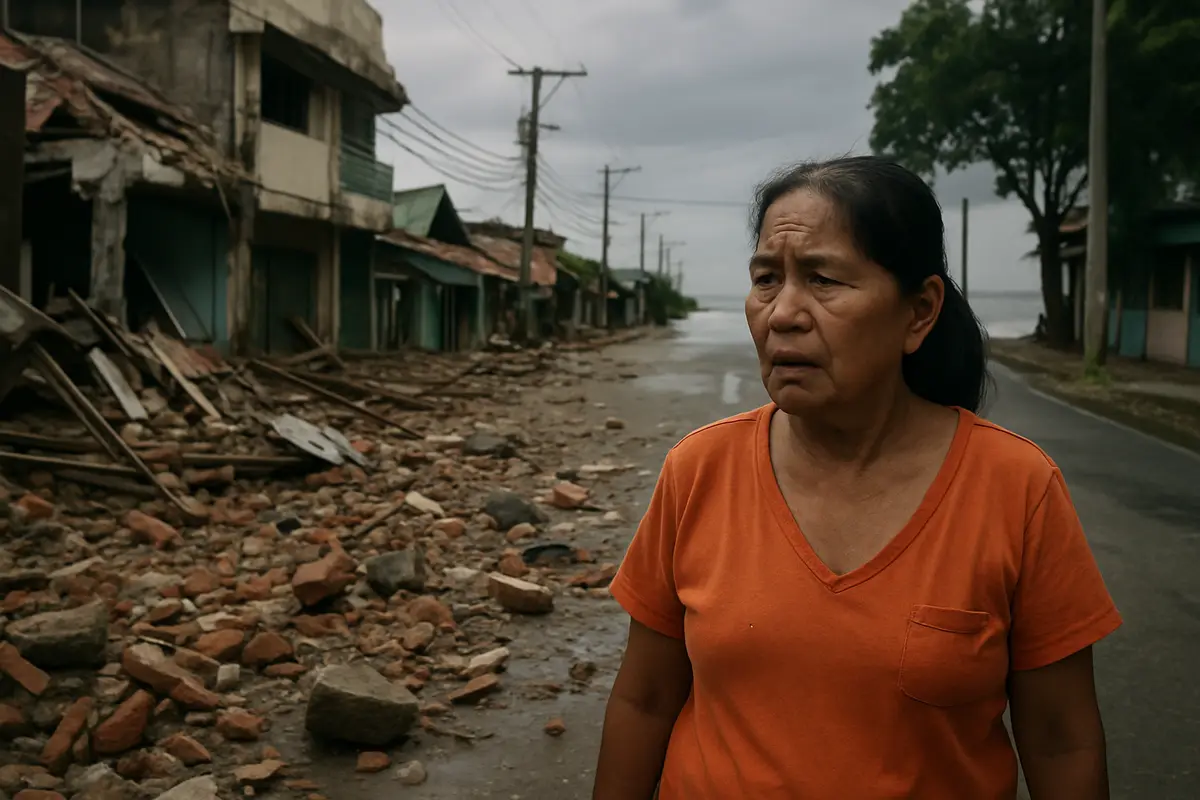
この画像はAIで生成され、学習目的で使用されています。
This image is AI-generated and used for educational purposes.
フィリピンで、大きい地震がありました2。地震が起きたのは、夜でした3。地震の強さはマグニチュード7ぐらいでした4。多くの建物が壊れて、けがをした人もいます5。
この地震のあと、日本にも津波注意報が出ました6。気象庁は、海の近くにいる人に注意してくださいと言いました7。沖縄県などで、少し海の水が高くなりました8。
大きい被害は、まだ分かっていません9。専門家は、これからも余震が続くかもしれないと言っています10。政府は、地震や津波の情報に気をつけてほしいと話しています11。
Discussion
to rate or comment.
No comments yet.