フィリピンの近くの海 uses の to connect nouns (the sea near the Philippines).
フィリピンの近くの海
The sea near the Philippines.
私の本
My book.
~が発生する
N3
to occur / to break out
強い地震が発生しました states that a strong earthquake occurred.
強い地震が発生しました
A strong earthquake occurred.
火事が発生した
A fire broke out.
~は約~だ
N4
is approximately ~
深さは約10キロメートル states the depth was about 10 km using 約.
深さは約10キロメートルでした
The depth was about 10 kilometers.
約三時間かかります
It takes about three hours.
~を超える
N3
to exceed, surpass
Indicates surpassing a quantity; the number exceeds nine million houses (九百万軒を超え).
数は九百万軒を超える。
The number exceeds nine million houses.
費用は一万円を超えた。
The cost exceeded ten thousand yen.
~とみられる
N2
is believed / seen to be
Expresses that something is presumed or regarded to be the case, common in news reporting.
事故が原因とみられている。
An accident is believed to be the cause.
~によって
N3
by means of / through
Expresses the means by which something is achieved — through sport, everyone can live together.
スポーツによって一緒に生きていけます。
Through sports we can live together.
インターネットによって情報が広がります。
Information spreads via the Internet.
~にも
N4
also to/by ~
Combines に (direction/target) with も (also).
子どもにも人気だ。
It's popular with children too.
私にもください。
Please give me some too.
~が出る
N4
to appear / to be produced
Used with nouns like 被害 (damage) to mean 'damage occurred'. Here: 'とても大きい被害が出ています' (very large damage has occurred).
事故でけが人が出ました。
Injured people resulted from the accident.
大きい被害が出ました。
Significant damage was produced.
~ことが確認される
N3
it is confirmed that ~
いることが確認されました nominalizes with こと and reports that it was confirmed there were casualties.
亡くなった人がいることが確認されました
It was confirmed that there were people who died.
安全であることが確認された
It was confirmed to be safe.
~ている
N5
is doing, has been doing (ongoing state/action)
Expresses a continuing action or resulting state. Formed with て-form + いる. Can describe an action in progress or a state resulting from a past change.
今、ご飯を食べています。
I am eating rice now.
東京に住んでいます。
I live in Tokyo.
ドアが開いています。
The door is open.
~へ
N5
to / toward (direction/target)
津波への警戒 uses へ to mark the target of the alert (vigilance toward the tsunami).
津波への警戒が呼びかけられました
Vigilance against the tsunami was called for.
未来への希望
Hope for the future.
~られる(受身)
N4
passive voice: was/were ~ed
Passive form indicating that the subject receives the action. '食べられて' means 'were eaten'. Central grammar of this article about tulips being eaten by deer.
ケーキが弟に食べられた。
The cake was eaten by my little brother.
~のため
N3
because of ~, for the reason of ~
Used to explain why food is scarce now: because tree nuts grew earlier than usual.
このため、今の季節に食べる物が少なくなっています。
Because of this, food has become scarce in the current season.
~よう(に)求める
N2
to request/urge that ~
注意するよう求めています means experts are urging people to be careful of aftershocks.
余震に注意するよう求めています
They are urging caution against aftershocks.
静かにするよう求めた
They requested that people be quiet.
1
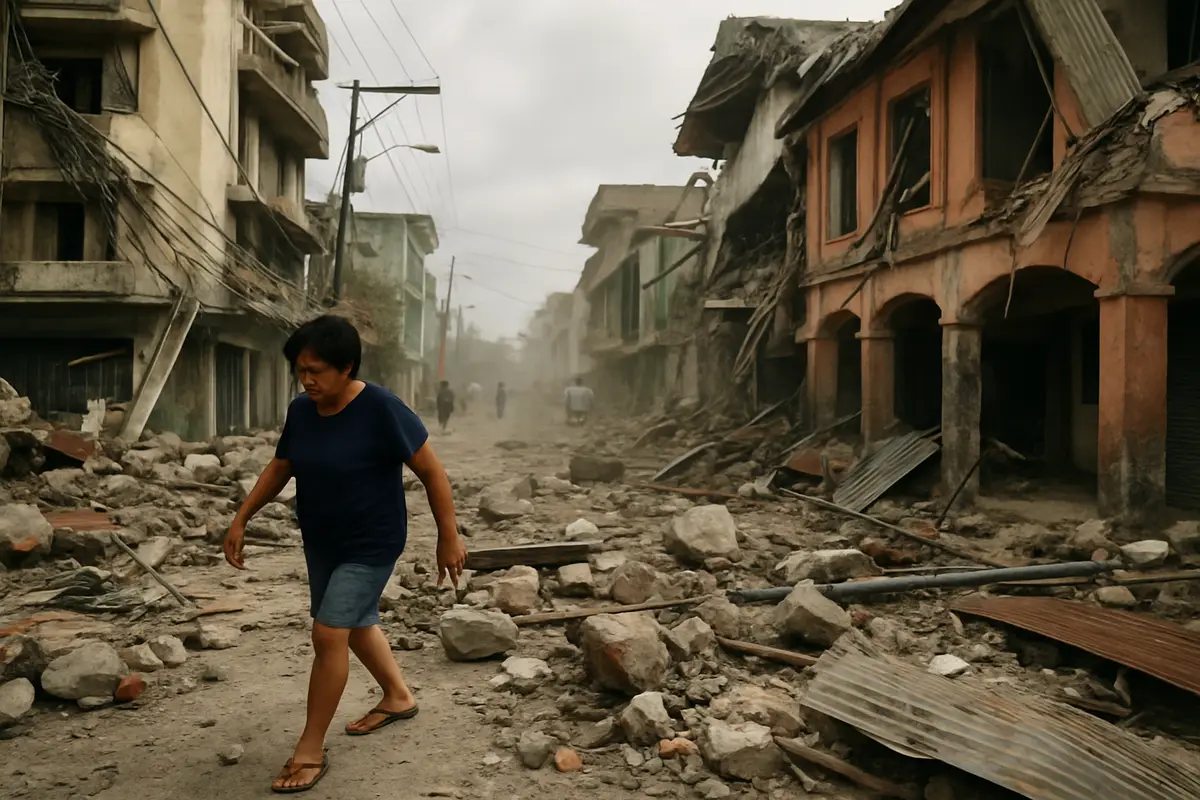
フィリピン沖で地震 被害が広がる
Earthquake off the Philippines; damage spreads
2
フィリピンの近くの海で、強い地震が発生しました。
A strong earthquake occurred in the sea near the Philippines.
3
震源は海の底で、深さは約10キロメートルでした。
The epicenter was at the bottom of the sea, at a depth of about 10 kilometers.
4
地震の規模はマグニチュード7を超えたとみられています。
The scale of the earthquake is believed to have exceeded magnitude 7.
5
この地震によって、海岸に近い町では多くの建物が倒れ、道路にも大きな被害が出ています。
Because of this earthquake, many buildings have collapsed in towns near the coast, and roads have also suffered major damage.
6
これまでに、けが人や亡くなった人がいることが確認されました。
So far, it has been confirmed that there are injured people and people who have died.
7
救助の作業が今も続いています。
Rescue work is still continuing.
8
地震の後、周辺の国々にも津波への警戒が呼びかけられました。
After the earthquake, surrounding countries were also urged to be on alert for a tsunami.
9
日本の気象庁も、念のため海の様子を観察しています。
Japan's Meteorological Agency is also observing the state of the sea just in case.
10
専門家は、今後しばらく余震に注意するよう求めています。
Experts are calling for people to watch out for aftershocks for some time to come.
フィリピン沖で地震被害が広がる1
2026年06月09日 19:10
著者: jpreader
この画像はAIで生成され、学習目的で使用されています。
This image is AI-generated and used for educational purposes.
Discussion
to rate or comment.
No comments yet.