神奈川県で、高校生が殺されました2。警察は19歳の男を逮捕しました3。
警察によると、男は高校生を殺した疑いがあります4。事件は夜に起きました5。近くの人が見つけて、警察に連絡しました6。
警察は今、男に詳しく話を聞いています7。なぜこのことが起きたのか、調べています8。
(こうこうせい)
high school student
(ころす)
to kill / to murder
(うたがい)
doubt, suspicion
(さい)
years old
(おとこ)
man
(たいほ)
arrest
(かながわけん)
Kanagawa Prefecture
(けいさつ)
police
(じけん)
incident, case
(よる)
night
(おきる)
to happen, occur
(ちかく)
nearby
(みつける)
to find; to discover
(れんらく)
contact, communication
(いま)
now
(くわしい)
detailed
(はなし)
talk, story
(きく)
to listen, hear
(しらべる)
to investigate; to survey
passive voice: was/were ~ed
Passive form indicating that the subject receives the action. '食べられて' means 'were eaten'. Central grammar of this article about tulips being eaten by deer.
ケーキが弟に食べられた。
The cake was eaten by my little brother.
according to ...
Cites a source of information. The noun before によると is the source. Often followed by a reported statement.
天気予報によると、明日は雨です。
According to the weather forecast, it will rain tomorrow.
ニュースによると、地震がありました。
According to the news, there was an earthquake.
先生によると、テストは来週です。
According to the teacher, the test is next week.
is doing, has been doing (ongoing state/action)
Expresses a continuing action or resulting state. Formed with て-form + いる. Can describe an action in progress or a state resulting from a past change.
今、ご飯を食べています。
I am eating rice now.
東京に住んでいます。
I live in Tokyo.
ドアが開いています。
The door is open.
高校生を殺した疑いで19歳の男を逮捕
A 19-year-old man arrested on suspicion of killing a high school student
神奈川県で、高校生が殺されました。
In Kanagawa Prefecture, a high school student was killed.
警察は19歳の男を逮捕しました。
The police arrested a 19-year-old man.
警察によると、男は高校生を殺した疑いがあります。
According to the police, the man is suspected of having killed the high school student.
事件は夜に起きました。
The incident happened at night.
近くの人が見つけて、警察に連絡しました。
A nearby person found it and contacted the police.
警察は今、男に詳しく話を聞いています。
The police are now questioning the man in detail.
なぜこのことが起きたのか、調べています。
They are investigating why this happened.
2026年06月12日 19:12
著者: jpreader
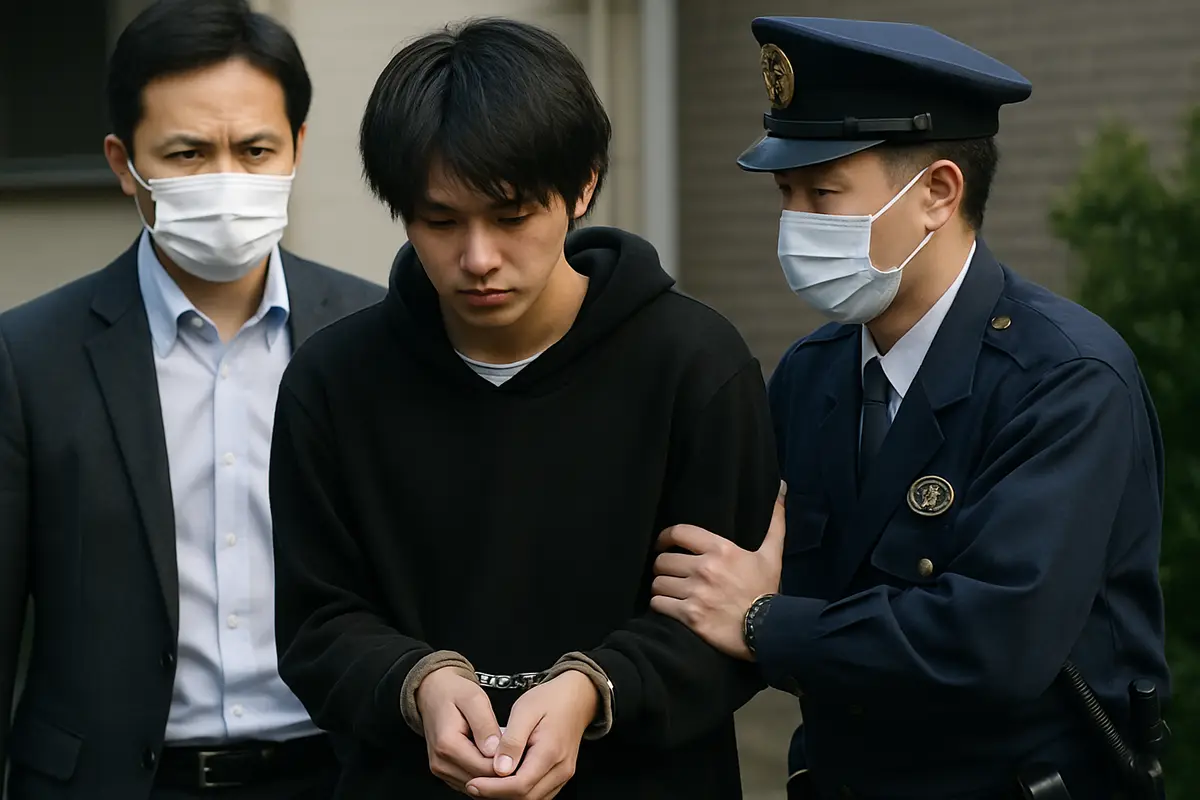
この画像はAIで生成され、学習目的で使用されています。
This image is AI-generated and used for educational purposes.
神奈川県で、高校生が殺されました2。警察は19歳の男を逮捕しました3。
警察によると、男は高校生を殺した疑いがあります4。事件は夜に起きました5。近くの人が見つけて、警察に連絡しました6。
警察は今、男に詳しく話を聞いています7。なぜこのことが起きたのか、調べています8。
Discussion
to rate or comment.
No comments yet.