北海道の東にある湖で、昔から続く「ホッカイシマエビ漁」が始まりました2。この漁は、夏と秋の年に二回行われます3。
漁師たちは、エンジンを使わず、帆に風を受けて進む特別な船に乗ります4。湖の底にいる海草を守るために、この昔ながらの方法が今も大切に守られています5。
獲れたエビは、ゆでると赤くなり、甘くておいしいと評判です6。地元の人や観光客に人気があり、秋の味覚として親しまれています7。
(ほっかいどう)
Hokkaido
(でんとう)
tradition
(しまえび)
striped shrimp
(りょう)
fishing
(ひがし)
east
(みずうみ)
lake
(むかし)
long ago, past
(つづく)
to continue
(ほっかいしまえび)
Hokkai striped shrimp
(はじまる)
to begin
(なつ)
Summer
(あき)
autumn; fall
(とし)
year
(にかい)
twice; two times
(おこなう)
to carry out, to perform
(りょうし)
fisherman
(えんじん)
engine
(つかう)
to use
(ほ)
sail
(かぜ)
wind
(うける)
to receive
(すすむ)
to advance, to progress
(とくべつ)
Special; particular
(ふね)
ship
(のる)
to ride, board
(そこ)
bottom
(かいそう)
seaweed
(まもる)
to protect
(ほうほう)
method; way
(いま)
now
(たいせつ)
important
(とれる)
to be caught/harvested
(えび)
shrimp; prawn
(ゆでる)
to boil
(あかい)
red
(あまい)
sweet
(おいしい)
delicious, tasty
(ひょうばん)
reputation; popular
(じもと)
local / one's hometown
(ひと)
person / people
(かんこうきゃく)
tourist; sightseer
(にんき)
popularity
(みかく)
taste; flavor (delicacy)
(したしむ)
to be familiar with; to be fond of
because ~
Provides a reason or cause.
疲れたから休む。
I'll rest because I'm tired.
寒いから帰る。
I'm going home because it's cold.
in order to ~
Expresses purpose.
健康のために歩く。
I walk for my health.
止めるために話し合う。
Discuss in order to stop it.
passive voice: was/were ~ed
Passive form indicating that the subject receives the action. '食べられて' means 'were eaten'. Central grammar of this article about tulips being eaten by deer.
ケーキが弟に食べられた。
The cake was eaten by my little brother.
if / when (natural consequence)
Conditional と indicating a natural or expected result. 一緒に捨てると…火が出て means 'if you throw them away together, fire starts.'
ボタンを押すと、ドアが開きます。
When you press the button, the door opens.
春になると、桜が咲きます。
When spring comes, cherry blossoms bloom.
as / in the role of
Marks the role, capacity, or status in which something is treated. Used here as 特別な史跡として (as a special historic site).
先生として働く。
To work as a teacher.
プレゼントとしてもらった。
I received it as a present.
is doing, has been doing (ongoing state/action)
Expresses a continuing action or resulting state. Formed with て-form + いる. Can describe an action in progress or a state resulting from a past change.
今、ご飯を食べています。
I am eating rice now.
東京に住んでいます。
I live in Tokyo.
ドアが開いています。
The door is open.
北海道 伝統のシマエビ漁が始まる
Hokkaido: The traditional striped shrimp fishing has begun
北海道の東にある湖で、昔から続く「ホッカイシマエビ漁」が始まりました。
At a lake in eastern Hokkaido, the long-standing "Hokkai striped shrimp fishing" has begun.
この漁は、夏と秋の年に二回行われます。
This fishing is carried out twice a year, in summer and autumn.
漁師たちは、エンジンを使わず、帆に風を受けて進む特別な船に乗ります。
The fishermen ride special boats that do not use engines and move by catching the wind in their sails.
湖の底にいる海草を守るために、この昔ながらの方法が今も大切に守られています。
In order to protect the seaweed at the bottom of the lake, this old-fashioned method is still carefully preserved today.
獲れたエビは、ゆでると赤くなり、甘くておいしいと評判です。
The shrimp that are caught turn red when boiled, and they are known for being sweet and delicious.
地元の人や観光客に人気があり、秋の味覚として親しまれています。
They are popular with local people and tourists, and are loved as a taste of autumn.
2026年06月17日 19:10
著者: jpreader
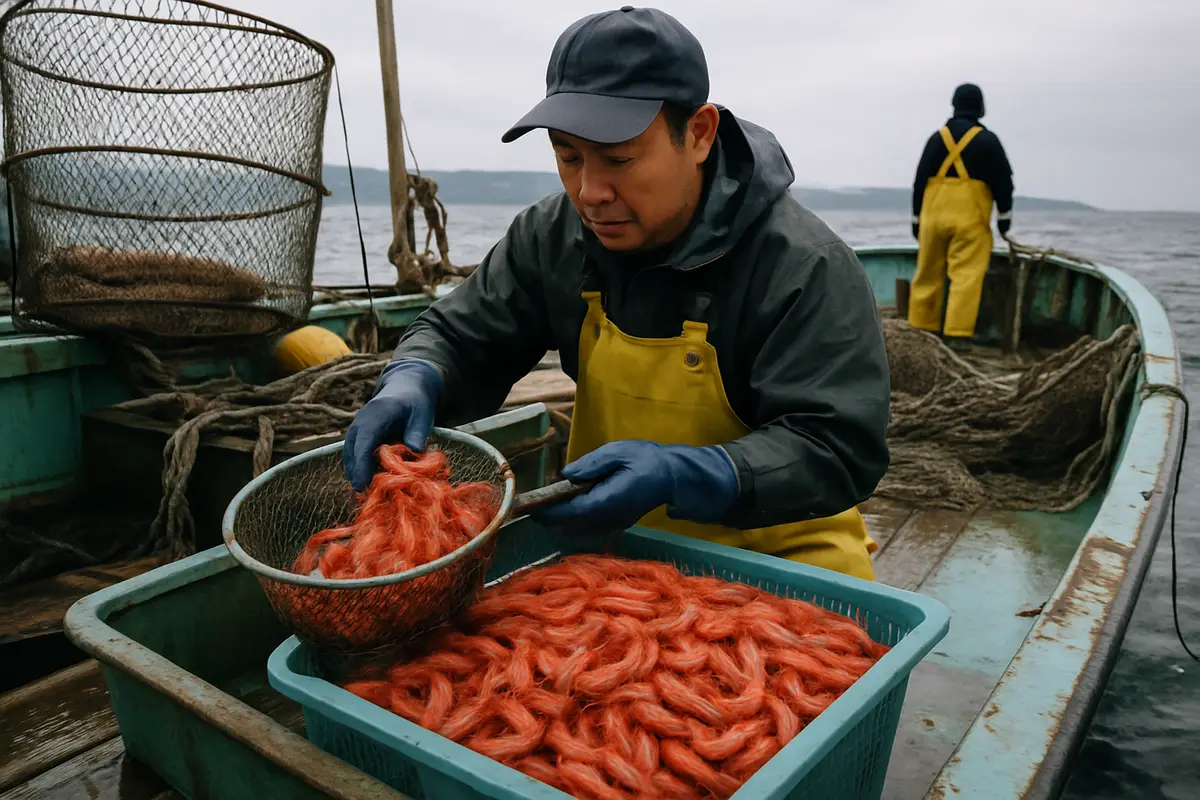
この画像はAIで生成され、学習目的で使用されています。
This image is AI-generated and used for educational purposes.
北海道の東にある湖で、昔から続く「ホッカイシマエビ漁」が始まりました2。この漁は、夏と秋の年に二回行われます3。
漁師たちは、エンジンを使わず、帆に風を受けて進む特別な船に乗ります4。湖の底にいる海草を守るために、この昔ながらの方法が今も大切に守られています5。
獲れたエビは、ゆでると赤くなり、甘くておいしいと評判です6。地元の人や観光客に人気があり、秋の味覚として親しまれています7。
Discussion
to rate or comment.
No comments yet.