六月十六日の朝、関東地方で地震がありました2。震度は5弱で、東京や神奈川など広い範囲で揺れを感じました3。この地震によるけが人や大きな被害は、今のところ報告されていません4。
気象庁によると、地震の規模を表すマグニチュードは5.3でした5。専門家は「同じくらいの強さの地震が、これから一週間ほど起きる可能性がある」と話しています6。
強い揺れのあとは、家具が倒れたり、物が落ちたりすることがあります7。気象庁は、家の中の安全を確かめ、いつでも避難できるように準備しておくよう呼びかけています8。
(かんとう)
Kanto region
(しんど)
seismic intensity
(じゃく)
weak; lower (seismic scale)
(じしん)
earthquake
(しゅうかん)
week; weekly
(ちゅうい)
caution, warning
(ろくがつ)
June
(じゅうろくにち)
the 16th (of the month)
(あさ)
morning
(ちほう)
region; area
(とうきょう)
Tokyo
(かながわ)
Kanagawa (prefecture)
(ひろい)
wide; spacious
(はんい)
range; scope; area
(ゆれ)
shaking, tremor
(かんじる)
to feel, to sense
(けがにん)
injured person
(おおきな)
big (attrib.)
(ひがい)
damage; harm
(いまのところ)
at present; for now
(ほうこく)
report
(きしょうちょう)
Japan Meteorological Agency
(きぼ)
scale / magnitude
(あらわす)
to represent; to express
(まぐにちゅーど)
magnitude
(せんもんか)
expert, specialist
(おなじ)
same
(くらい)
about; approximately; to the extent of
(つよさ)
strength
(これから)
from now on
(いっしゅうかん)
one week
(ほど)
approximately; about; to the extent
(おきる)
to happen, occur
(はなす)
to speak, talk
(つよい)
strong
(かぐ)
furniture
(たおれる)
to collapse; to fall down
(もの)
thing
(おちる)
to fall; to drop; to strike (lightning)
(いえ)
house
(なか)
inside
(あんぜん)
safety
(たしかめる)
to make sure; to confirm
(いつでも)
anytime
(ひなん)
evacuation
(じゅんび)
preparation
(よびかける)
to call out; to appeal
did ... (polite past)
Polite past tense of verbs. Formed with verb stem + ました. Used in formal or polite speech to describe completed actions.
昨日、映画を見ました。
I watched a movie yesterday.
朝ごはんを食べました。
I ate breakfast.
友達が来ました。
A friend came.
by / due to
Marks the agent/cause. Here: 'アメリカとイスラエルによるイランへの攻撃' (attack on Iran by America and Israel).
地震による被害。
Damage caused by the earthquake.
先生による説明。
Explanation by the teacher.
have not ~ (yet) / is not ~ing
Negative continuative state: 報告されていません (have not been reported).
大きな被害は報告されていません。
No major damage has been reported.
according to ...
Cites a source of information. The noun before によると is the source. Often followed by a reported statement.
天気予報によると、明日は雨です。
According to the weather forecast, it will rain tomorrow.
ニュースによると、地震がありました。
According to the news, there was an earthquake.
先生によると、テストは来週です。
According to the teacher, the test is next week.
to represent ~; to express ~
Describes which kanji represents the year.
今年を表す漢字は「熊」でした。
The kanji representing this year was 'bear'.
there is a possibility
Says there may be a possibility that earthquake scale was underestimated.
雨の可能性がある。
There's a possibility of rain.
遅れる可能性がある。
There's a chance of being late.
is doing, has been doing (ongoing state/action)
Expresses a continuing action or resulting state. Formed with て-form + いる. Can describe an action in progress or a state resulting from a past change.
今、ご飯を食べています。
I am eating rice now.
東京に住んでいます。
I live in Tokyo.
ドアが開いています。
The door is open.
doing things like ~ and ~
Lists representative actions among several. Implies there are other actions too. Used twice in this article.
週末は本を読んだり映画を見たりします。
On weekends I do things like read books and watch movies.
歌ったり踊ったりして楽しんだ。
We had fun singing and dancing.
there are times when ~
Indicates that something sometimes happens.
遅れることがある。
Sometimes I'm late.
間違えることがある。
There are times I make mistakes.
after ~
Indicates that something happened after a prior action. Used here after 'deciding to stop fighting'.
ご飯を食べたあと、散歩します。
After eating, I'll take a walk.
授業が終わったあと、帰ります。
After class ends, I'll go home.
so that ~
Indicates a goal or desired outcome. Here: so that trainees reach the Specified Skilled Worker level.
分かるように説明します。
I'll explain so you understand.
聞こえるように大きい声で話す。
Speak loudly so it can be heard.
Do ~ in advance (preparation)
Indicates doing something in advance for future readiness. Companies need to decide procedures in advance.
旅行の前にホテルを予約しておく。
I book a hotel in advance before the trip.
to call on (someone) to ~
Reports an appeal/instruction: 準備しておくよう呼びかけています (is calling on people to prepare).
気象庁は準備しておくよう呼びかけています。
The agency is urging people to prepare.
関東で震度5弱の地震 1週間は注意を
An earthquake with a seismic intensity of lower 5 hits the Kanto region; stay alert for a week
六月十六日の朝、関東地方で地震がありました。
On the morning of June 16th, there was an earthquake in the Kanto region.
震度は5弱で、東京や神奈川など広い範囲で揺れを感じました。
The seismic intensity was lower 5, and the shaking was felt over a wide area including Tokyo and Kanagawa.
この地震によるけが人や大きな被害は、今のところ報告されていません。
So far, no injuries or major damage from this earthquake have been reported.
気象庁によると、地震の規模を表すマグニチュードは5.3でした。
According to the Japan Meteorological Agency, the magnitude indicating the size of the earthquake was 5.3.
専門家は「同じくらいの強さの地震が、これから一週間ほど起きる可能性がある」と話しています。
Experts say, 「There is a possibility that earthquakes of about the same strength could occur over the next week or so.」
強い揺れのあとは、家具が倒れたり、物が落ちたりすることがあります。
After strong shaking, furniture may fall over and objects may drop.
気象庁は、家の中の安全を確かめ、いつでも避難できるように準備しておくよう呼びかけています。
The Japan Meteorological Agency is urging people to check the safety inside their homes and to be prepared to evacuate at any time.
2026年06月18日 19:13
著者: jpreader
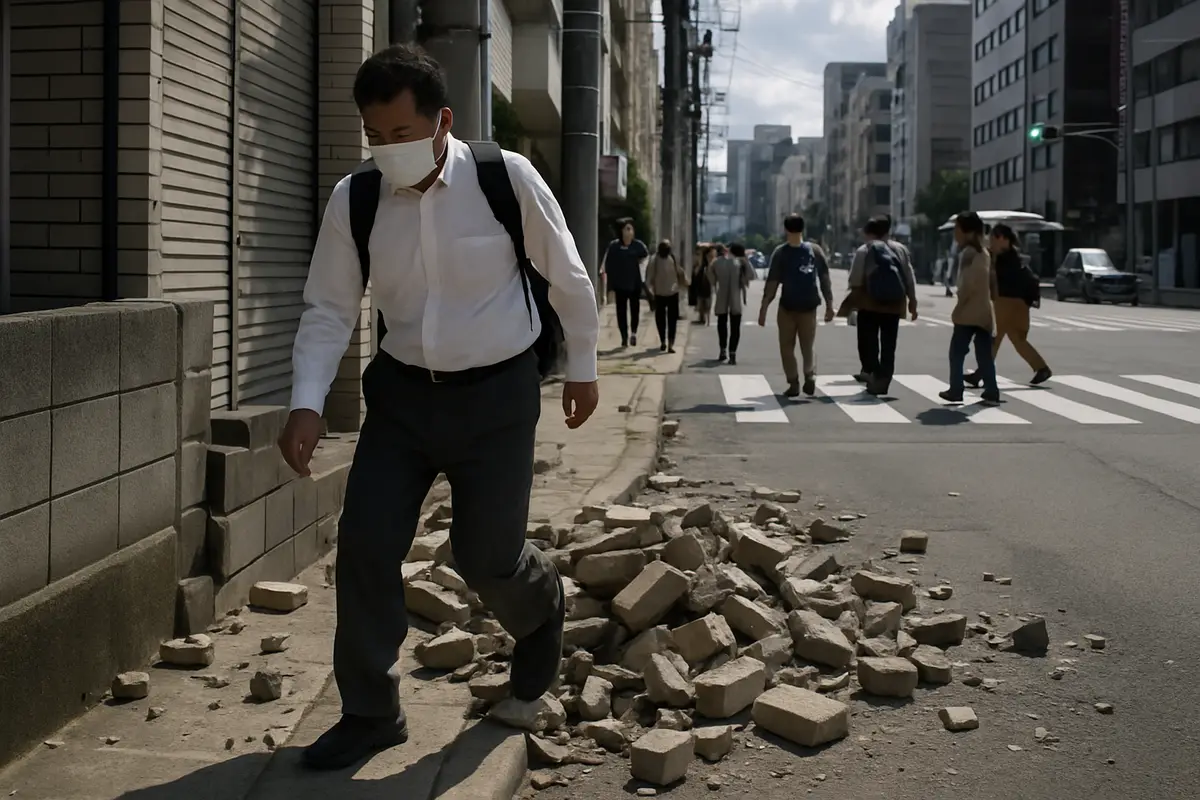
この画像はAIで生成され、学習目的で使用されています。
This image is AI-generated and used for educational purposes.
六月十六日の朝、関東地方で地震がありました2。震度は5弱で、東京や神奈川など広い範囲で揺れを感じました3。この地震によるけが人や大きな被害は、今のところ報告されていません4。
気象庁によると、地震の規模を表すマグニチュードは5.3でした5。専門家は「同じくらいの強さの地震が、これから一週間ほど起きる可能性がある」と話しています6。
強い揺れのあとは、家具が倒れたり、物が落ちたりすることがあります7。気象庁は、家の中の安全を確かめ、いつでも避難できるように準備しておくよう呼びかけています8。
Discussion
to rate or comment.
No comments yet.