日本は夏になります2。だんだん暑くなります3。今週は気温が30度より高くなる日があります4。
暑い日は、体の水が少なくなります5。気分が悪くなる人もいます6。これを「熱中症」と言います7。お年寄りや子どもは特に気をつけてください8。
熱中症にならないために、水やお茶をたくさん飲みましょう9。外に出るときは、帽子をかぶってください10。暑いときは、家の中でも涼しくして、休んでください11。
(あつい)
hot
(ひ)
day
(みず)
water
(たくさん)
a lot / many
(のむ)
to drink
(にほん)
Japan
(なつ)
Summer
(だんだん)
gradually
(こんしゅう)
this week
(きおん)
temperature (air)
(ど)
degree
(たかい)
expensive; high
(からだ)
body
(すくない)
few, scarce
(きぶん)
feeling, mood
(わるい)
bad
(ねっちゅうしょう)
heatstroke
(いう)
to say
(おとしより)
elderly person
(こども)
child
(とくに)
especially / particularly
(きをつける)
to be careful
(おちゃ)
tea
(そと)
outside
(でる)
to come out; to occur
(ぼうし)
hat
(かぶる)
to wear (on the head)
(いえ)
house
(なか)
inside
(すずしい)
cool, refreshing
(やすむ)
to rest; to take a break
to become
Expresses a change of state; Kawai became the new commissioner of the Sports Agency.
新しい長官になりました。
He became the new commissioner.
目が見えなくなりました。
He became unable to see.
to become (い-adjective)
Expresses a change of state for い-adjectives. Drop the final い and add くなる. Indicates something has changed or will change to a new state.
寒くなりました。
It has gotten cold.
日本語が上手になりました。
My Japanese has gotten better.
値段が高くなりました。
The price became expensive.
than / more than
Indicates comparison. Used to say prices rose on average 2.8% compared to last year.
去年より寒い。
Colder than last year.
彼より背が高い。
Taller than him.
to say that ...
Quotation pattern. と marks the quoted content, followed by 言う (to say). Used for both direct and indirect speech.
先生は明日休みだと言いました。
The teacher said tomorrow is a day off.
母は早く帰ってきてと言った。
My mother said to come home early.
彼はもう行かないと言っています。
He says he won't go anymore.
please do ...
Polite request form. Formed with て-form + ください. Used to ask someone to perform an action.
ここに名前を書いてください。
Please write your name here.
もう一度言ってください。
Please say it once more.
窓を開けてください。
Please open the window.
in order to ~
Expresses purpose.
健康のために歩く。
I walk for my health.
止めるために話し合う。
Discuss in order to stop it.
let's ~
Volitional form expressing a suggestion or invitation. Used by the African Union to suggest resolving through discussion.
一緒に行きましょう。
Let's go together.
話し合いで解決しましょう。
Let's resolve it through discussion.
when ~
Indicates the time when something happened — when he was in junior high school.
中学生のとき病気になりました。
When I was a junior-high student I got sick.
子どものとき日本にいました。
I was in Japan when I was a child.
暑い日 水をたくさん飲みましょう
On hot days, let's drink plenty of water
日本は夏になります。
Japan is entering summer.
だんだん暑くなります。
It is gradually getting hotter.
今週は気温が30度より高くなる日があります。
This week there are days when the temperature will rise above 30 degrees.
暑い日は、体の水が少なくなります。
On hot days, the body loses water.
気分が悪くなる人もいます。
Some people start to feel unwell.
これを「熱中症」と言います。
This is called "heatstroke."
お年寄りや子どもは特に気をつけてください。
Elderly people and children especially should be careful.
熱中症にならないために、水やお茶をたくさん飲みましょう。
To avoid heatstroke, let's drink plenty of water and tea.
外に出るときは、帽子をかぶってください。
When you go outside, please wear a hat.
暑いときは、家の中でも涼しくして、休んでください。
When it is hot, keep cool even inside the house and please rest.
2026年06月22日 16:10
著者: jpreader
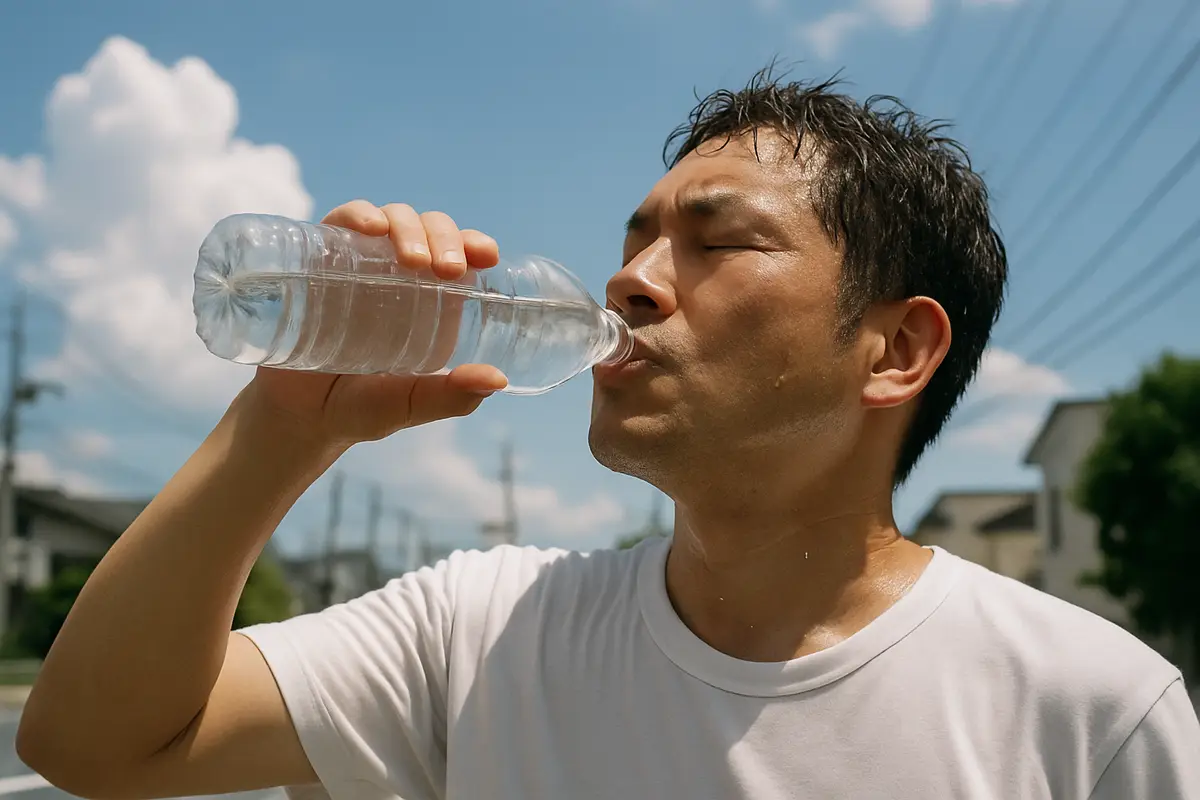
この画像はAIで生成され、学習目的で使用されています。
This image is AI-generated and used for educational purposes.
日本は夏になります2。だんだん暑くなります3。今週は気温が30度より高くなる日があります4。
暑い日は、体の水が少なくなります5。気分が悪くなる人もいます6。これを「熱中症」と言います7。お年寄りや子どもは特に気をつけてください8。
熱中症にならないために、水やお茶をたくさん飲みましょう9。外に出るときは、帽子をかぶってください10。暑いときは、家の中でも涼しくして、休んでください11。
Discussion
to rate or comment.
No comments yet.