日本のある町で、新しいバスが走り始めました2。このバスには運転手がいません3。コンピューターが自動で運転します4。
この町では、お年寄りが増えて、バスの運転手が足りなくなっています5。自動運転のバスがあれば、車がない人も買い物や病院に行きやすくなります6。
バスはまだ速く走ることができません7。安全のために、ゆっくり走ります8。町の人は「便利になって、うれしい」と話していました9。これから、ほかの町でも同じバスを使う計画があります10。
(うんてんしゅ)
driver
(ばす)
bus
(はしる)
to run
(にほん)
Japan
(まち)
town
(あたらしい)
new
(こんぴゅーたー)
computer
(じどう)
automatic
(うんてん)
operation, driving
(おとしより)
elderly person
(ふえる)
to increase; to grow
(たりる)
to be enough; to be sufficient
(くるま)
car
(かいもの)
shopping
(びょういん)
hospital
(いく)
to go
(まだ)
still; yet
(はやい)
fast
(あんぜん)
safety
(ゆっくり)
slowly, at ease, peacefully
(べんり)
convenient
(うれしい)
happy; glad
(はなす)
to speak, talk
(おなじ)
same
(つかう)
to use
(けいかく)
plan
start doing ~
Compound verb form expressing the start of an action; sending scallops has started.
ホタテを送り始めました。
They have started sending scallops.
雨が降り始めた。
The rain started falling.
te-form for sequence / connecting clauses
Used to connect verbs/clauses: '45回優勝して、いちばん多い記録を作りました' expresses sequential actions.
朝起きて、顔を洗います。
I wake up and wash my face.
本を読んで、寝ました。
I read a book and went to bed.
to become (い-adjective)
Expresses a change of state for い-adjectives. Drop the final い and add くなる. Indicates something has changed or will change to a new state.
寒くなりました。
It has gotten cold.
日本語が上手になりました。
My Japanese has gotten better.
値段が高くなりました。
The price became expensive.
conditional: if ~
Ba-form conditional expressing 'if ~ then ~'.
勉強すれば、合格できる。
If you study, you can pass.
早く起きれば間に合う。
If you wake up early, you'll make it.
easy to ~ / tends to ~
Used in 'うつりやすくて' meaning 'easily contagious / easy to catch'.
この本は読みやすい。
This book is easy to read.
忘れやすい。
Easy to forget.
can do ..., to be able to ...
Verb dictionary form + ことができる expresses ability or possibility. More formal than the potential verb form. Common in written Japanese and announcements.
日本語を話すことができます。
I can speak Japanese.
ここで写真を撮ることができます。
You can take photos here.
インターネットで予約することができます。
You can make a reservation on the internet.
in order to ~
Expresses purpose.
健康のために歩く。
I walk for my health.
止めるために話し合う。
Discuss in order to stop it.
to become
Expresses a change of state; Kawai became the new commissioner of the Sports Agency.
新しい長官になりました。
He became the new commissioner.
目が見えなくなりました。
He became unable to see.
is doing, has been doing (ongoing state/action)
Expresses a continuing action or resulting state. Formed with て-form + いる. Can describe an action in progress or a state resulting from a past change.
今、ご飯を食べています。
I am eating rice now.
東京に住んでいます。
I live in Tokyo.
ドアが開いています。
The door is open.
運転手のいないバスが走り始めた
A bus without a driver has started running
日本のある町で、新しいバスが走り始めました。
In a certain town in Japan, a new bus has started running.
このバスには運転手がいません。
This bus has no driver.
コンピューターが自動で運転します。
A computer drives it automatically.
この町では、お年寄りが増えて、バスの運転手が足りなくなっています。
In this town, the elderly population has grown and there is a shortage of bus drivers.
自動運転のバスがあれば、車がない人も買い物や病院に行きやすくなります。
If there are self-driving buses, even people without cars can more easily go shopping or to the hospital.
バスはまだ速く走ることができません。
The bus cannot run fast yet.
安全のために、ゆっくり走ります。
For safety, it runs slowly.
町の人は「便利になって、うれしい」と話していました。
A town resident said, "It has become convenient, and I'm happy."
これから、ほかの町でも同じバスを使う計画があります。
From now on, there are plans to use the same buses in other towns as well.
2026年06月22日 16:11
著者: jpreader
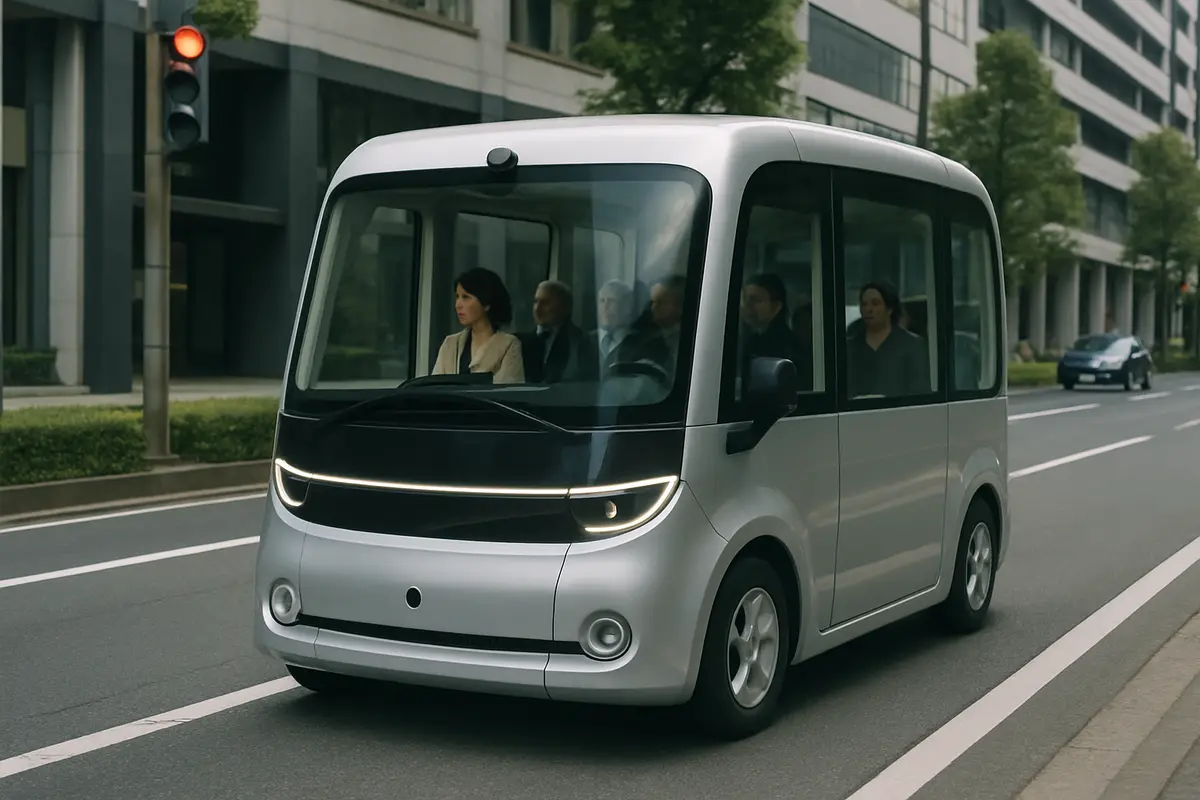
この画像はAIで生成され、学習目的で使用されています。
This image is AI-generated and used for educational purposes.
日本のある町で、新しいバスが走り始めました2。このバスには運転手がいません3。コンピューターが自動で運転します4。
この町では、お年寄りが増えて、バスの運転手が足りなくなっています5。自動運転のバスがあれば、車がない人も買い物や病院に行きやすくなります6。
バスはまだ速く走ることができません7。安全のために、ゆっくり走ります8。町の人は「便利になって、うれしい」と話していました9。これから、ほかの町でも同じバスを使う計画があります10。
Discussion
to rate or comment.
No comments yet.