若者わかもの
N3

(わかもの)

young people

伝統でんとう
N2

(でんとう)

tradition

和紙わし
N2

(わし)

Japanese paper (washi)

作りづくり
N4

(づくり)

making / production

学ぶまなぶ
N3

(まなぶ)

to learn / study

岐阜県ぎふけん
N3

(ぎふけん)

Gifu Prefecture

小さなちいさな
N4

(ちいさな)

small / little

まち
N5

(まち)

town

若いわかい
N5

(わかい)

young

作り方つくりかた
N4

(つくりかた)

way of making

千年せんねん
N4

(せんねん)

a thousand years

まえ
N5

(まえ)

before, previous

作るつくる
N5

(つくる)

to make

しかししかし
N4

(しかし)

however, but

職人しょくにん
N2

(しょくにん)

craftsman / artisan

かず
N3

(かず)

number, count

減るへる
N3

(へる)

to decrease / to diminish

続けるつづける
N4

(つづける)

to continue

難しいむずかしい
N5

(むずかしい)

difficult

時間じかん
N5

(じかん)

time

ちから
N5

(ちから)

strength; power

必要ひつよう
N4

(ひつよう)

necessary / needed

ふゆ
N5

(ふゆ)

winter

冷たいつめたい
N5

(つめたい)

cold (to touch)

みず
N5

(みず)

water

なか
N5

(なか)

inside

材料ざいりょう
N3

(ざいりょう)

materials, ingredients

何度もなんども
N4

(なんども)

many times

洗うあらう
N4

(あらう)

to wash

技術ぎじゅつ
N3

(ぎじゅつ)

skill, technology

教えるおしえる
N5

(おしえる)

to teach

最初さいしょ
N4

(さいしょ)

first, beginning

失敗しっぱい
N3

(しっぱい)

failure

多いおおい
N5

(おおい)

many

上手じょうず
N5

(じょうず)

skillful, well

少しずつすこしずつ
N4

(すこしずつ)

little by little

喜ぶよろこぶ
N3

(よろこぶ)

to be delighted

来るくる
N5

(くる)

to come

とてもとても
N5

(とても)

very; extremely

これからもこれからも
N4

(これからも)

from now on too

美しいうつくしい
N4

(うつくしい)

Beautiful

かみ
N4

(かみ)

paper

つぎ
N5

(つぎ)

next

世代せだい
N2

(せだい)

generation

伝えるつたえる
N4

(つたえる)

to convey / to tell

話すはなす
N5

(はなす)

to speak, talk

~ている
N5

is doing, has been doing (ongoing state/action)

Expresses a continuing action or resulting state. Formed with て-form + いる. Can describe an action in progress or a state resulting from a past change.

今、ご飯を食べています。

I am eating rice now.

東京に住んでいます。

I live in Tokyo.

ドアが開いています。

The door is open.

~以上
N3

~ or more / above ~

Indicates a quantity equal to or greater than a stated value. Here it describes earthquakes of magnitude 6 or greater.

マグニチュード6以上の地震が続いています。

Earthquakes of magnitude 6 or more are continuing.

20歳以上の人

People 20 years old or older

~てくる
N4

come toward (action approaching)

Indicates motion toward the speaker or a location. Here it describes rocks flying toward people.

鳥が飛んできた。

A bird flew toward (us).

雨が降ってきた。

It started raining.

~ので
N4

because ~ / since ~

Causal connector. Because JA is buying at higher prices, store prices will also rise.

雨が降ったので、家にいた。

Since it rained, I stayed home.

忙しいので、行けません。

Since I'm busy, I can't go.

~には
N3

in order to ~

Dictionary form + には indicates a condition required to achieve a goal. To deliver nengajō on Jan 1, you must mail by Dec 25.

駅に行くには、バスが便利です。

To get to the station, the bus is convenient.

上手になるには、練習が必要です。

To improve, practice is necessary.

~てもらう
N4

have someone do (for me)

Expresses receiving a favor/action from someone.

助けてもらって本当にありがとうございます。

Thank you so much for helping us.

教えてもらいました。

I had them teach me.

~ていく
N3

to go on doing / continue to (from now)

In '増えていく' – 'will continue to increase (into the future)'. Indicates continuing trend going forward.

これから寒くなっていく。

From now on, it will become colder.

日本語を勉強していきたい。

I want to continue studying Japanese.

1

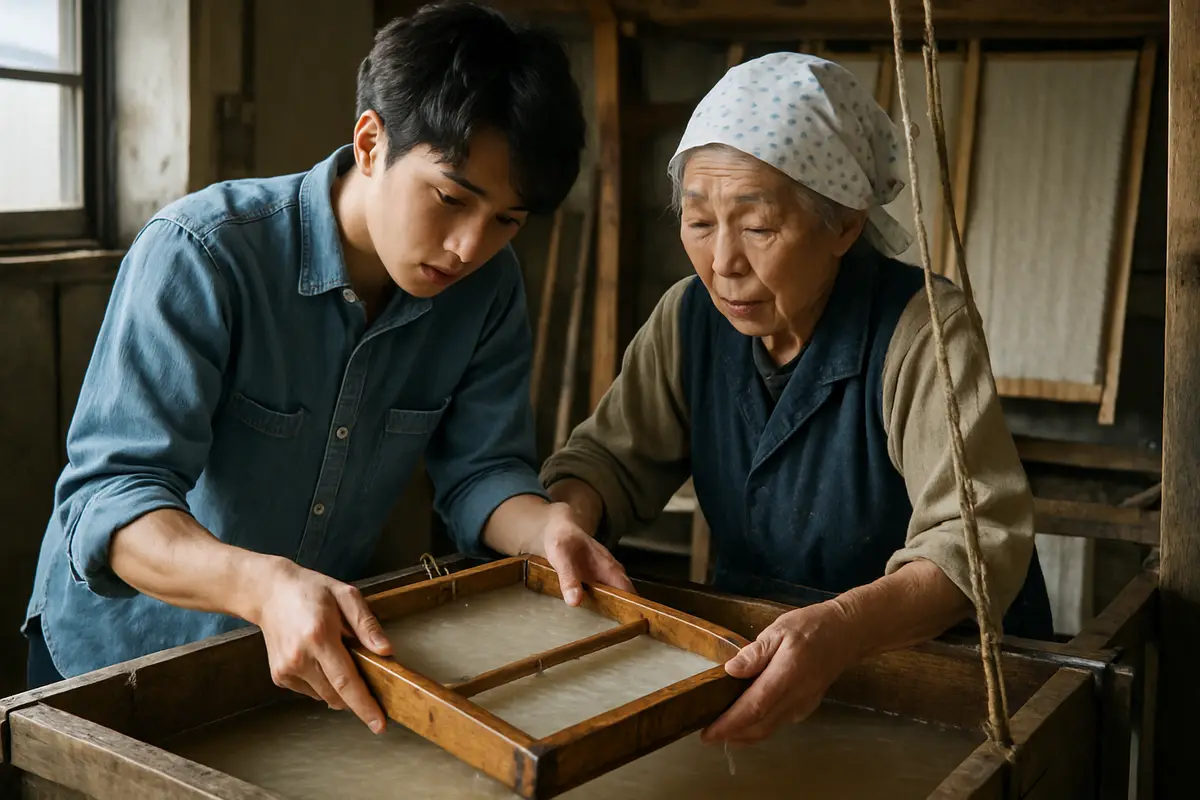
若者が伝統の和紙作りを学ぶ

Young people learn the traditional craft of washi paper-making

2

岐阜県の小さな町で、若い人たちが和紙の作り方を学んでいます。

In a small town in Gifu Prefecture, young people are learning how to make washi paper.

3

この町では、千年以上前から和紙が作られてきました。

In this town, washi has been made since more than a thousand years ago.

4

しかし、職人の数が減っているので、伝統を続けることが難しくなっています。

However, because the number of craftsmen is decreasing, continuing the tradition has become difficult.

5

和紙を作るには、たくさんの時間と力が必要です。

To make washi, a lot of time and effort are needed.

6

冬の冷たい水の中で、材料を何度も洗います。

In the cold winter water, they wash the materials many times.

7

若い人たちは、毎日職人から技術を教えてもらっています。

The young people are taught the techniques by the craftsmen every day.

8

最初は失敗が多かったですが、少しずつ上手になってきました。

At first they made many mistakes, but they have gradually become skilled.

9

町の人たちは、若い人が来てくれたことをとても喜んでいます。

The townspeople are very glad that young people have come.

10

これからも、この美しい紙を次の世代に伝えていきたいと話しています。

They say they want to keep passing on this beautiful paper to the next generation.

若者わかもの伝統でんとう和紙わしつくまな1

2026年06月22日 19:09

著者: jpreader

若者が伝統の和紙作りを学ぶ

この画像はAIで生成され、学習目的で使用されています。

This image is AI-generated and used for educational purposes.

岐阜県ぎふけんちいさなまちで、わかひとたちが和紙わしつくかたまなでいます2。このまちでは、千年せんねん以上いじょうまえから和紙わしつくられてきました3しかし職人しょくにんかずているので、伝統でんとうつづけることがむずかしくなっています4

和紙わしつくには、たくさんの時間じかんちから必要ひつようです5ふゆつめたいみずなかで、材料ざいりょう何度なんどあらいます6わかひとたちは、毎日まいにち職人しょくにんから技術ぎじゅつおしてもらっています7最初さいしょ失敗しっぱいおおかったですが、すこしずつ上手じょうずなってきました8

まちひとたちは、わかひとてくれたことをとてもよろこんでいます9これからも、このうつくしいかみつぎ世代せだいつたていきたいとはなています10

Discussion

00

to rate or comment.

No comments yet.