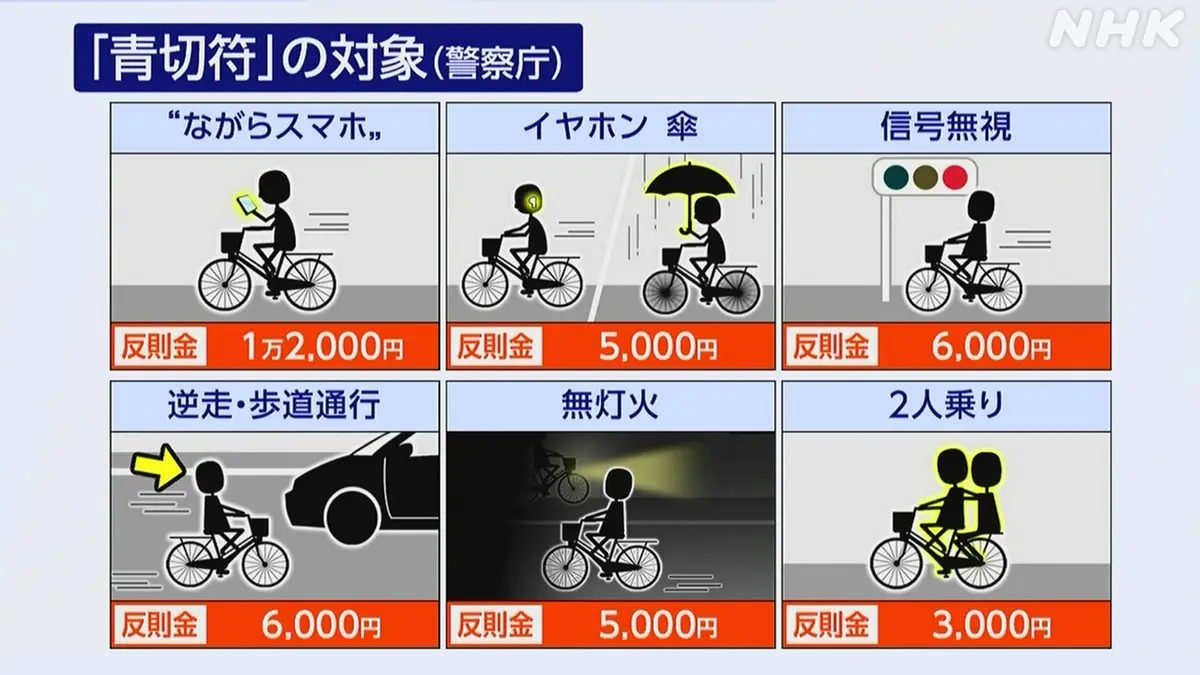
4月1日から自転車で交通ルールに違反した人は、お金を払わなければいけないかもしれません2。
▽スマートフォンを使いながら運転すると1万2千円3。
▽信号を守らないと6000円などです4。
自転車が関係する交通事故が多いためです5。
警察庁によると、警察は違反を見たらまず注意します6。お金を払ってくださいといつも言うわけではありません7。そして「ルールを守って安全に自転車を使ってほしい」と言っています8。
(じてんしゃ)
bicycle
(こうつう)
traffic, transportation
(いはん)
violation; infringement
(はらう)
to pay
(おかね)
money
(るーる)
rule
(すまーとふぉん)
smartphone
(つかう)
to use
(うんてん)
operation, driving
(しんごう)
traffic signal, traffic light
(まもる)
to protect
(じこ)
accident; incident
(かんけい)
relation
(おおい)
many
(けいさつちょう)
National Police Agency
(けいさつ)
police
(ちゅうい)
caution, warning
(まず)
first of all
(いつも)
always, usually
(あんぜん)
safety
must, have to
Expresses obligation or necessity. Formed with the negative stem (なければ) + いけない. Indicates something that must be done.
早く寝なければいけない。
I have to go to bed early.
薬を飲まなければいけません。
I must take medicine.
もっと勉強しなければいけない。
I have to study more.
might, maybe, possibly
Expresses possibility or uncertainty. Attached directly to the plain form of verbs, adjectives, or nouns. Less certain than でしょう.
明日は雨かもしれません。
It might rain tomorrow.
彼は来ないかもしれない。
He might not come.
この問題は難しいかもしれません。
This problem might be difficult.
while doing ...
Verb stem + ながら indicates doing two things simultaneously. The action before ながら is the secondary action; the main action follows.
音楽を聞きながら勉強します。
I study while listening to music.
歩きながら話しましょう。
Let's talk while walking.
テレビを見ながらごはんを食べます。
I eat while watching TV.
when ..., if ... (natural consequence)
Conditional と indicating that when one thing happens, another naturally follows. States general truths, habitual results, or inevitable consequences.
春になると、桜が咲きます。
When spring comes, the cherry blossoms bloom.
このボタンを押すと、ドアが開きます。
If you press this button, the door opens.
according to ...
Cites a source of information. The noun before によると is the source. Often followed by a reported statement.
天気予報によると、明日は雨です。
According to the weather forecast, it will rain tomorrow.
ニュースによると、地震がありました。
According to the news, there was an earthquake.
先生によると、テストは来週です。
According to the teacher, the test is next week.
it's not that ..., it doesn't mean that ...
Negates an assumption or generalization. Clarifies that something is not always or necessarily the case. わけ means 'reason/meaning', so the pattern literally says 'it is not the case that...'
日本語が全然わからないわけではない。
It's not that I don't understand Japanese at all.
嫌いなわけではありません。
It's not that I dislike it.
いつも遅れるわけではない。
It's not that I'm always late.
want (someone) to do ...
Expresses a wish for someone else to do something. Formed with て-form + ほしい. The person you want to act is marked with に.
静かにしてほしい。
I want you to be quiet.
もう少し待ってほしいです。
I'd like you to wait a bit more.
先生に説明してほしいです。
I want the teacher to explain.
自転車の交通違反 お金を払わなければいけないかもしれない
Bicycle traffic violations: you may have to pay a fine
4月1日から自転車で交通ルールに違反した人は、お金を払わなければいけないかもしれません。
Starting April 1, people who break traffic rules while riding a bicycle may have to pay a fine.
▽スマートフォンを使いながら運転すると1万2千円。
Using a smartphone while riding costs 12,000 yen.
▽信号を守らないと6000円などです。
Not obeying traffic signals costs 6,000 yen, and so on.
自転車が関係する交通事故が多いためです。
This is because there are many traffic accidents involving bicycles.
警察庁によると、警察は違反を見たらまず注意します。
According to the National Police Agency, when police see a violation they first give a warning.
お金を払ってくださいといつも言うわけではありません。
They do not always tell you to pay a fine.
そして「ルールを守って安全に自転車を使ってほしい」と言っています。
They also say, "We want people to follow the rules and use bicycles safely."
2026年04月09日 12:34
4月1日から自転車で交通ルールに違反した人は、お金を払わなければいけないかもしれません2。
▽スマートフォンを使いながら運転すると1万2千円3。
▽信号を守らないと6000円などです4。
自転車が関係する交通事故が多いためです5。
警察庁によると、警察は違反を見たらまず注意します6。お金を払ってくださいといつも言うわけではありません7。そして「ルールを守って安全に自転車を使ってほしい」と言っています8。
Discussion
to rate or comment.
No comments yet.