岩手大学いわてだいがく
N1

(いわてだいがく)

Iwate University

ねこ
N4

(ねこ)

cat

ごはんごはん
N5

(ごはん)

meal, food, cooked rice

残すのこす
N3

(のこす)

to leave behind, to leave uneaten

匂いにおい
N3

(におい)

smell; scent; aroma

慣れるなれる
N3

(なれる)

to get used to; to become accustomed

不思議ふしぎ
N3

(ふしぎ)

mysterious, strange, wonder

思うおもう
N5

(おもう)

to think

多いおおい
N5

(おおい)

many

研究けんきゅう
N4

(けんきゅう)

research, study

グループぐるーぷ
N4

(ぐるーぷ)

group

ひき
N4

(ひき)

counter for small animals/fish

調べるしらべる
N4

(しらべる)

to investigate; to survey

かい
N4

(かい)

time(s), counter for occurrences

食事しょくじ
N4

(しょくじ)

meal

あげるあげる
N5

(あげる)

to lift, to raise

同じおなじ
N5

(おなじ)

same

りょう
N3

(りょう)

Quantity; amount; volume

食べるたべる
N5

(たべる)

to eat

減るへる
N3

(へる)

to decrease / to diminish

だんだんだんだん
N4

(だんだん)

gradually

べつ
N3

(べつ)

another; different

変えるかえる
N4

(かえる)

to change

増えるふえる
N3

(ふえる)

to increase; to grow

違うちがう
N5

(ちがう)

to differ; to be different

お腹おなか
N5

(おなか)

stomach, belly

いっぱいいっぱい
N4

(いっぱい)

full; a lot

ペットフードぺっとふーど
N2

(ぺっとふーど)

pet food

作るつくる
N5

(つくる)

to make

豊かゆたか
N3

(ゆたか)

rich, abundant, plentiful

話すはなす
N5

(はなす)

to speak, talk

うちうち
N5

(うち)

one's home, house

~のだろうか
N3

I wonder why/whether ...

のだ (explanatory) + ろう (conjecture) + か (question). Used for rhetorical or genuine wondering. Often seen in written or reflective contexts.

どうして遅れたのだろうか。

I wonder why they were late.

本当に正しいのだろうか。

I wonder if it's really correct.

なぜこんなに高いのだろうか。

I wonder why it's so expensive.

~と思う
N5

to think that

In '増えていくと思います' – 'I think (they) will continue to increase'. Used to express opinion.

雨が降ると思います。

I think it will rain.

彼は学生だと思う。

I think he is a student.

~続ける
N4

to continue doing ...

Verb stem + 続ける expresses continuing an action. The て-form あげ続ける means 'continue giving'. A common compound verb pattern.

3時間、走り続けました。

I kept running for 3 hours.

毎日、勉強し続けています。

I keep studying every day.

彼は話し続けた。

He kept on talking.

~と
N4

when ..., if ... (natural consequence)

Conditional と indicating that when one thing happens, another naturally follows. States general truths, habitual results, or inevitable consequences.

春になると、桜が咲きます。

When spring comes, the cherry blossoms bloom.

このボタンを押すと、ドアが開きます。

If you press this button, the door opens.

~のは~からだ
N3

the reason ~ is because ~

Explains the reason for something. The price dropped because the government sold cheap rice to supermarkets.

米の値段が下がったのは、国が安く売った米をスーパーで売り始めたからだ。

The reason the rice price dropped is because supermarkets started selling rice the government sold cheaply.

遅刻したのは電車が遅れたからです。

The reason I was late is because the train was delayed.

~ている
N5

is doing, has been doing (ongoing state/action)

Expresses a continuing action or resulting state. Formed with て-form + いる. Can describe an action in progress or a state resulting from a past change.

今、ご飯を食べています。

I am eating rice now.

東京に住んでいます。

I live in Tokyo.

ドアが開いています。

The door is open.

~から
N5

because ~

Provides a reason or cause.

疲れたから休む。

I'll rest because I'm tired.

寒いから帰る。

I'm going home because it's cold.

1

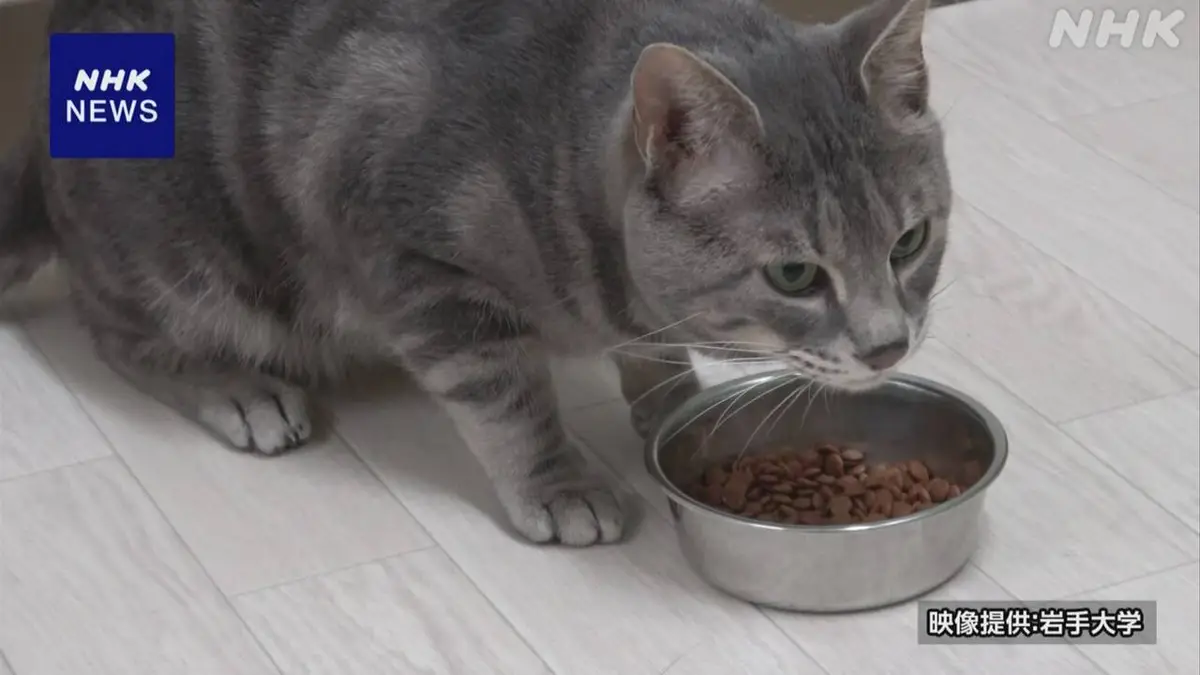
岩手大学「猫がごはんを残すのは匂いに慣れるからだ」

Iwate University: "Cats leave food because they get used to the smell"

2

「なぜ、うちの猫はごはんを残すのだろうか」と不思議に思っている人も多いと思います。

I think many people wonder, "Why does my cat leave its food?"

3

岩手大学の研究グループは、12匹の猫で、調べました。

A research group at Iwate University conducted a study with 12 cats.

4

6回、食事をあげます。

They gave the cats food six times.

5

同じ食事をあげ続けると、猫が食べる量は、だんだん減ります。

When the same food is given repeatedly, the amount the cats eat gradually decreases.

6

しかし、6回目、別の食事に変えると、食べる量が増えました。

However, on the sixth time, when the food was changed to a different one, the amount they ate increased.

7

同じ食事でも、違う匂いに変えると、食べる量は増えました。

Even with the same food, when the smell was changed, the amount they ate increased.

8

研究グループは、猫はお腹がいっぱいだからではなく、匂いに慣れたから食べなくなったと言っています。

The research group says the cats stopped eating not because they were full, but because they had gotten used to the smell.

9

そして、「ペットフードをつくるときに、匂いについても考えると、猫の食事が豊かになると思います」と話しています。

They also said, "When making pet food, if you also think about the smell, I think cats' meals will become richer."

岩手大学いわてだいがくねこごはんのこのはにおれるからだ」1

2026年04月09日 20:19

岩手大学「猫がごはんを残すのは匂いに慣れるからだ」

「なぜ、うちねこごはんのこだろう不思議ふしぎおもいるひとおおおもます2

岩手大学いわてだいがく研究けんきゅうグループは、12ひきねこで、調しらました3

6かい食事しょくじあげます4

おな食事しょくじあげつづけるねこべるりょうは、だんだんます5

しかし、6かいべつ食事しょくじえるべるりょうました6

おな食事しょくじでも、ちがにおえるべるりょうました7

研究けんきゅうグループは、ねこなかいっぱいからではなく、におからなくなったっています8

そして、「ペットフードつくるきに、におについてもかんがえるねこ食事しょくじゆたになるおもますはないます9

Discussion

00

to rate or comment.

No comments yet.