や lists representative examples — Shikoku and Kyushu among other regions (四国や九州).
りんごやみかんを買った。
I bought apples and oranges (among others).
東京や大阪は大きい都市だ。
Tokyo and Osaka are big cities.
~ている
N5
is doing, has been doing (ongoing state/action)
Expresses a continuing action or resulting state. Formed with て-form + いる. Can describe an action in progress or a state resulting from a past change.
今、ご飯を食べています。
I am eating rice now.
東京に住んでいます。
I live in Tokyo.
ドアが開いています。
The door is open.
~たことがない
N4
have never done ~ (no past experience)
Expresses a lack of past experience — rain of a scale never experienced before (経験したことがない).
日本に行ったことがない。
I have never been to Japan.
そんな話を聞いたことがない。
I have never heard such a story.
~ほど
N3
to the extent that / as much as
ほど expresses degree — heavy rain to the extent never experienced before (…ないほどの大雨).
泣きたいほど嬉しい。
I'm so happy I could cry.
歩けないほど疲れた。
I'm so tired I can't walk.
~恐れがある
N2
there is a fear/risk that
In 「影響が広がる恐れがある」 it warns of the risk that the impact on citizens' lives could spread.
台風が来る恐れがある。
There is a risk that a typhoon will come.
病気が広がる恐れがある。
There is a fear the disease will spread.
~と(条件)
N4
if / when (natural consequence)
Conditional と indicating a natural or expected result. 一緒に捨てると…火が出て means 'if you throw them away together, fire starts.'
ボタンを押すと、ドアが開きます。
When you press the button, the door opens.
春になると、桜が咲きます。
When spring comes, cherry blossoms bloom.
~続ける
N4
to continue doing ...
Verb stem + 続ける expresses continuing an action. The て-form あげ続ける means 'continue giving'. A common compound verb pattern.
3時間、走り続けました。
I kept running for 3 hours.
毎日、勉強し続けています。
I keep studying every day.
彼は話し続けた。
He kept on talking.
~くなる
N4
to become (い-adjective)
Expresses a change of state for い-adjectives. Drop the final い and add くなる. Indicates something has changed or will change to a new state.
寒くなりました。
It has gotten cold.
日本語が上手になりました。
My Japanese has gotten better.
値段が高くなりました。
The price became expensive.
~たり~たりする
N4
doing things like ~ and ~
Lists representative actions among several. Implies there are other actions too. Used twice in this article.
週末は本を読んだり映画を見たりします。
On weekends I do things like read books and watch movies.
歌ったり踊ったりして楽しんだ。
We had fun singing and dancing.
~なくなる
N4
to become no longer / to disappear
Indicates a change where something ceases to exist or can no longer be done. Here it describes that prayer gatherings can no longer be held in Hong Kong.
お金がなくなった。
The money is gone.
痛みがなくなりました。
The pain went away.
~よう(に)
N3
so as to / urging that ~
ように/よう introduces the requested action — calling on people to move to a safe place (移動するよう呼びかけています).
早く来るよう伝えた。
I told them to come early.
注意するよう呼びかけた。
They called on people to be careful.
~前に
N5
before ~
Indicates doing something before another action. Used to advise checking the store before ordering.
食べる前に手を洗います。
I wash my hands before eating.
寝る前に本を読む。
I read before sleeping.
~たら
N4
if ..., when ...
Conditional form indicating 'if' or 'when' something happens. Formed by adding ら to the た-form of a verb. Expresses a hypothetical or temporal condition.
雨が降ったら、行きません。
If it rains, I won't go.
お金があったら、旅行したいです。
If I had money, I'd like to travel.
終わったら、電話してください。
When you're done, please call me.
~ずに
N3
without doing ~
Used in 悩まずに ('without worrying alone') to encourage people to seek consultation.
朝ごはんを食べずに出かけた。
I went out without eating breakfast.
何も言わずに帰った。
He left without saying anything.
~てほしい
N4
want (someone) to do ...
Expresses a wish for someone else to do something. Formed with て-form + ほしい. The person you want to act is marked with に.
静かにしてほしい。
I want you to be quiet.
もう少し待ってほしいです。
I'd like you to wait a bit more.
先生に説明してほしいです。
I want the teacher to explain.
~こと(が大切だ)
N4
nominalizer: doing ~ (is important)
こと nominalizes the verb phrase, making 'keeping early action in mind' the subject that is important (心がけることが大切です).
毎日勉強することが大切だ。
Studying every day is important.
休むことも必要だ。
Resting is also necessary.
1
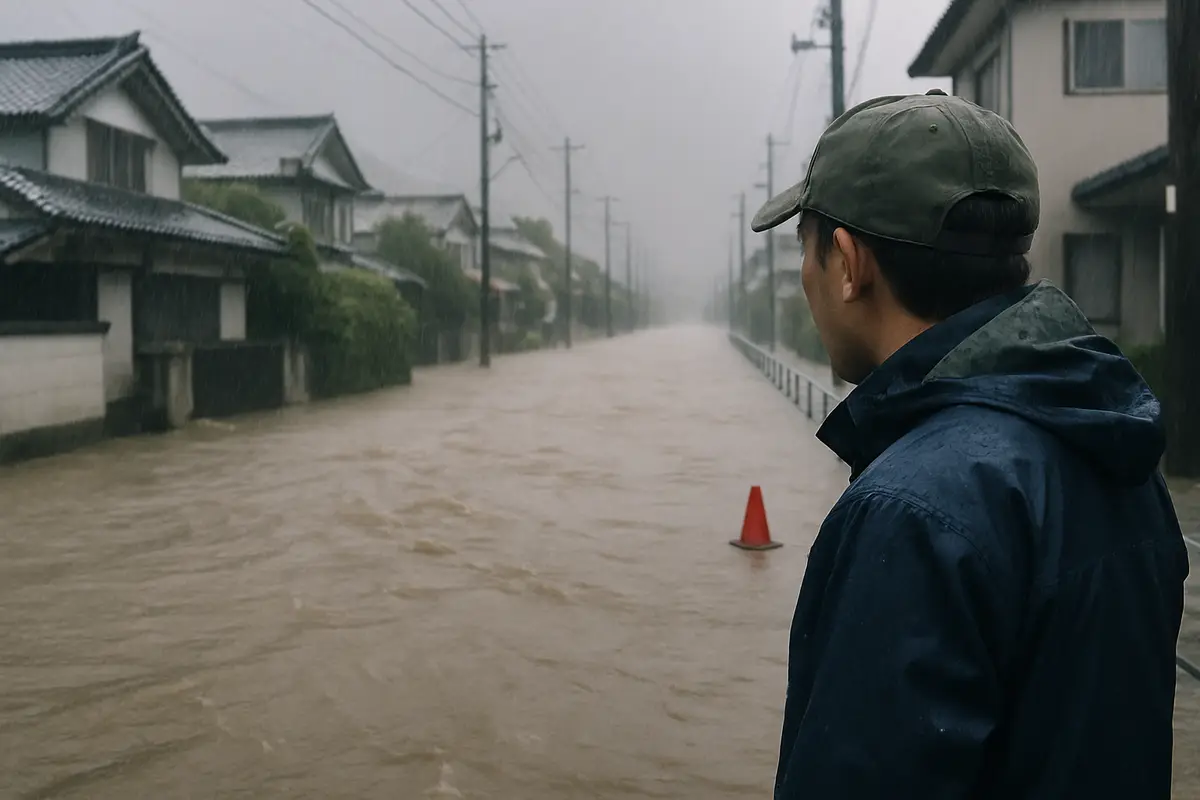
四国や九州で大雨 災害に注意
Heavy rain in Shikoku and Kyushu — beware of disasters
2
6月の終わりになり、四国や九州では非常に激しい雨が続いています。
As the end of June approaches, extremely intense rain is continuing in Shikoku and Kyushu.
3
気象庁は、これまでに経験したことがないほどの大雨になる恐れがあると発表しました。
The Meteorological Agency announced that there is a risk of heavy rain on a scale never experienced before.
4
雨が長く降り続けると、地面が水を含んで弱くなります。
When rain keeps falling for a long time, the ground absorbs water and becomes weak.
5
そのため、山が崩れたり、川があふれたりする危険が高まります。
Because of this, the danger of mountains collapsing and rivers overflowing increases.
6
実際に、一部の地域では道路が通れなくなり、住民が避難する動きも出ています。
In fact, in some areas roads have become impassable, and movements of residents evacuating are also emerging.
7
自治体は、暗くなる前に安全な場所へ移動するよう呼びかけています。
Local governments are calling on people to move to a safe place before it gets dark.
8
専門家は「危ないと感じたら、ためらわずに避難してほしい」と話しています。
Experts say, "If you feel it is dangerous, please evacuate without hesitation."
9
最新の情報を確認し、早めの行動を心がけることが大切です。
It is important to check the latest information and to make an effort to act early.
四国や九州で大雨災害に注意1
2026年06月25日 19:15
著者: jpreader
この画像はAIで生成され、学習目的で使用されています。
This image is AI-generated and used for educational purposes.
Discussion
to rate or comment.
No comments yet.