先月、青森県で大きい地震がありました2。たくさんの建物が壊れて、多くの人が困っていました3。道も電気も止まって、学校も使えなくなり、しばらく授業ができませんでした4。
しかし、先週から少しずつ生活が元に戻ってきました5。直した学校もあります6。きのう、青森県のいくつかの学校で、また授業が始まりました7。
久しぶりに学校に来た子どもたちは、友達に会えてうれしそうでした8。先生は「みんなが元気に来てくれて安心しました」と話しました9。これから普通の生活に戻ることを、みんな願っています10。
(じしん)
earthquake
(ある)
a certain (some)
(あおもりけん)
Aomori Prefecture
(がっこう)
school
(せんげつ)
last month
(おおきい)
big; large
(たくさん)
a lot / many
(たてもの)
building
(こわれる)
To break; to be destroyed
(おおい)
many
(ひと)
person / people
(こまる)
to be troubled; to be in difficulty
(みち)
road, street, path
(でんき)
electricity
(とまる)
to stop
(つかう)
to use
(しばらく)
for a while
(じゅぎょう)
lesson; class
(できる)
to be able; to be made
(せんしゅう)
last week
(すこしずつ)
little by little
(せいかつ)
daily life; livelihood
(もと)
former
(もどる)
to return / to come back
(なおす)
to fix; to repair
(きのう)
yesterday
(いくつか)
several, a few
(ひさしぶり)
after a long time
(くる)
to come
(こども)
child
(ともだち)
friend
(あう)
to meet
(うれしい)
happy; glad
(せんせい)
teacher
(みんな)
Everyone; everybody
(げんき)
Healthy; energetic; lively
(あんしん)
relief / peace of mind
(はなす)
to speak, talk
(ふつう)
normal; ordinary; usual
(ねがう)
to wish, hope
~ begins
Used to announce that the Deaflympics have started on the 15th.
学校が始まる。
School begins.
試合が始まった。
The game started.
is doing, has been doing (ongoing state/action)
Expresses a continuing action or resulting state. Formed with て-form + いる. Can describe an action in progress or a state resulting from a past change.
今、ご飯を食べています。
I am eating rice now.
東京に住んでいます。
I live in Tokyo.
ドアが開いています。
The door is open.
te-form connecting clauses
Used to link sequential actions, e.g. 刺されて亡くなりました (was stabbed and died).
本を読んで寝ました。
I read a book and went to sleep.
刺されて亡くなりました。
She was stabbed and died.
to become no longer / to disappear
Indicates a change where something ceases to exist or can no longer be done. Here it describes that prayer gatherings can no longer be held in Hong Kong.
お金がなくなった。
The money is gone.
痛みがなくなりました。
The pain went away.
however / but
Conjunction introducing a contrasting fact. Here it contrasts the bus arrangement with the traffic problem.
勉強した。しかし、試験は難しかった。
I studied. However, the exam was difficult.
しかし、雪で道が混みました。
However, the roads were crowded because of snow.
come toward (action approaching)
Indicates motion toward the speaker or a location. Here it describes rocks flying toward people.
鳥が飛んできた。
A bird flew toward (us).
雨が降ってきた。
It started raining.
looks like / seems about to (appearance)
Used with verb stems to express that something appears about to happen, as in 水があふれそうなとき (when the water looks like it will overflow) and 山がくずれそうなとき.
雨が降りそうです。
It looks like it will rain.
山がくずれそうだ。
The mountain looks about to collapse.
to do ~ for me/us (favor)
Indicates that someone does something kindly for the speaker. Here 応援してくれて (cheered me on).
友達が手伝ってくれた。
My friend helped me.
教えてくれてありがとう。
Thank you for teaching me.
to wish that ~
仲良くなることを願っています nominalizes with こと to express the wish that the two countries become friendly.
二つの国が仲良くなることを願っています
They wish the two countries become friendly.
成功することを願う
To wish for success.
地震があった青森県で学校が始まる
School resumes in Aomori Prefecture, where an earthquake occurred
先月、青森県で大きい地震がありました。
Last month, a large earthquake occurred in Aomori Prefecture.
たくさんの建物が壊れて、多くの人が困っていました。
Many buildings were destroyed, and many people were in difficulty.
道も電気も止まって、学校も使えなくなり、しばらく授業ができませんでした。
Roads and electricity stopped, schools became unusable, and classes could not be held for a while.
しかし、先週から少しずつ生活が元に戻ってきました。
However, since last week, life has gradually returned to normal.
直した学校もあります。
There are also schools that have been repaired.
きのう、青森県のいくつかの学校で、また授業が始まりました。
Yesterday, classes started again at several schools in Aomori Prefecture.
久しぶりに学校に来た子どもたちは、友達に会えてうれしそうでした。
The children who came to school for the first time in a while looked happy to be able to see their friends.
先生は「みんなが元気に来てくれて安心しました」と話しました。
A teacher said, "I was relieved that everyone came in good health."
これから普通の生活に戻ることを、みんな願っています。
Everyone hopes to return to a normal life from now on.
2026年06月27日 19:15
著者: jpreader
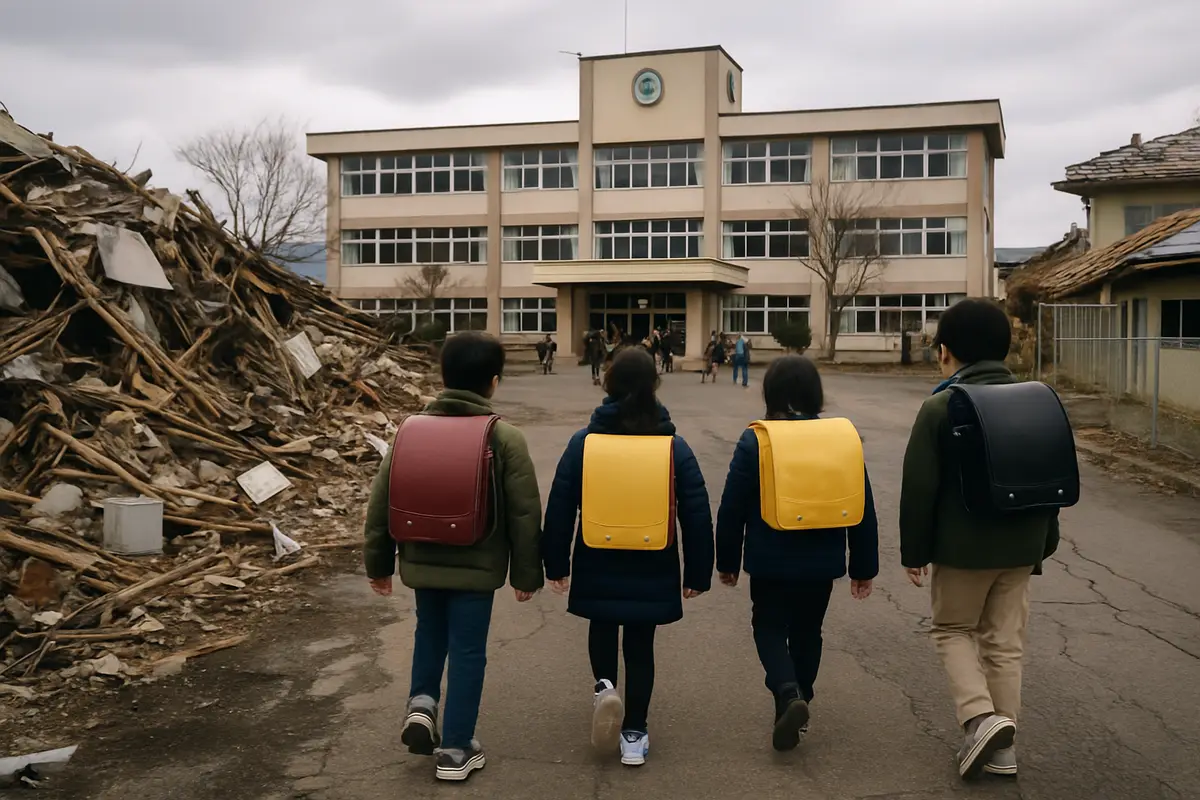
この画像はAIで生成され、学習目的で使用されています。
This image is AI-generated and used for educational purposes.
先月、青森県で大きい地震がありました2。たくさんの建物が壊れて、多くの人が困っていました3。道も電気も止まって、学校も使えなくなり、しばらく授業ができませんでした4。
しかし、先週から少しずつ生活が元に戻ってきました5。直した学校もあります6。きのう、青森県のいくつかの学校で、また授業が始まりました7。
久しぶりに学校に来た子どもたちは、友達に会えてうれしそうでした8。先生は「みんなが元気に来てくれて安心しました」と話しました9。これから普通の生活に戻ることを、みんな願っています10。
Discussion
to rate or comment.
No comments yet.