ワールドカップわーるどかっぷ
N3

(わーるどかっぷ)

World Cup

日本代表にほんだいひょう
N2

(にほんだいひょう)

Japan national team / representative

決勝けっしょう
N2

(けっしょう)

final (competition); championship

トーナメントとーなめんと
N2

(とーなめんと)

tournament

サッカーさっかー
N5

(さっかー)

soccer

進出しんしゅつ
N1

(しんしゅつ)

advance, progression

決めるきめる
N4

(きめる)

to decide

グループぐるーぷ
N4

(ぐるーぷ)

group

試合しあい
N4

(しあい)

match, game

勝つかつ
N3

(かつ)

to win

強いつよい
N4

(つよい)

strong

チームちーむ
N4

(ちーむ)

team

集まるあつまる
N4

(あつまる)

to gather; to come together

つぎ
N5

(つぎ)

next

段階だんかい
N2

(だんかい)

stage, phase

進むすすむ
N3

(すすむ)

to advance, to progress

後半こうはん
N2

(こうはん)

second half

相手あいて
N3

(あいて)

opponent, partner

先にさきに
N4

(さきに)

ahead, first

てん
N4

(てん)

point, score

取るとる
N5

(とる)

to take

苦しいくるしい
N3

(くるしい)

painful, difficult

展開てんかい
N1

(てんかい)

development, unfolding (of events)

選手せんしゅ
N3

(せんしゅ)

player; athlete

最後さいご
N3

(さいご)

last, final

あきらめるあきらめる
N3

(あきらめる)

to give up

終わりおわり
N4

(おわり)

end

時間じかん
N5

(じかん)

time

近づくちかづく
N3

(ちかづく)

to approach

逆転ぎゃくてん
N1

(ぎゃくてん)

reversal, comeback

成功せいこう
N3

(せいこう)

success

応援おうえん
N3

(おうえん)

cheering; support

ファンふぁん
N3

(ふぁん)

fan (supporter)

大きなおおきな
N5

(おおきな)

big (attrib.)

こえ
N4

(こえ)

voice

喜ぶよろこぶ
N3

(よろこぶ)

to be delighted

監督かんとく
N2

(かんとく)

Manager; director; coach

あと
N5

(あと)

after

全員ぜんいん
N3

(ぜんいん)

all members, everyone

走るはしる
N5

(はしる)

to run

結果けっか
N3

(けっか)

result

話すはなす
N5

(はなす)

to speak, talk

さらにさらに
N3

(さらに)

furthermore, even more

対戦たいせん
N1

(たいせん)

match-up, facing off

多いおおい
N5

(おおい)

many

ひと
N5

(ひと)

person / people

注目ちゅうもく
N2

(ちゅうもく)

attention, notice

勝ち進むかちすすむ
N1

(かちすすむ)

to win one's way through, to advance

~へ
N5

to / toward (direction/target)

津波への警戒 uses へ to mark the target of the alert (vigilance toward the tsunami).

津波への警戒が呼びかけられました

Vigilance against the tsunami was called for.

未来への希望

Hope for the future.

~ことができる
N4

can do ..., to be able to ...

Verb dictionary form + ことができる expresses ability or possibility. More formal than the potential verb form. Common in written Japanese and announcements.

日本語を話すことができます。

I can speak Japanese.

ここで写真を撮ることができます。

You can take photos here.

インターネットで予約することができます。

You can make a reservation on the internet.

~られる(受身)
N4

passive voice: was/were ~ed

Passive form indicating that the subject receives the action. '食べられて' means 'were eaten'. Central grammar of this article about tulips being eaten by deer.

ケーキが弟に食べられた。

The cake was eaten by my little brother.

~しかし
N4

however / but

Conjunction introducing a contrasting fact. Here it contrasts the bus arrangement with the traffic problem.

勉強した。しかし、試験は難しかった。

I studied. However, the exam was difficult.

しかし、雪で道が混みました。

However, the roads were crowded because of snow.

~ず(に)
N3

without doing ...

Negative connective; here 'without enduring it alone, consult right away'.

我慢せず相談する。

Consult without putting up with it.

食べずに行く。

Go without eating.

~たところで
N2

at the point when / just as

Indicates the moment or stage at which something happens.

時間が近づいたところで逆転した。

Just as time was running out, they came from behind.

~ている
N5

is doing, has been doing (ongoing state/action)

Expresses a continuing action or resulting state. Formed with て-form + いる. Can describe an action in progress or a state resulting from a past change.

今、ご飯を食べています。

I am eating rice now.

東京に住んでいます。

I live in Tokyo.

ドアが開いています。

The door is open.

~との
N3

with (connecting a noun phrase)

Connects nouns via と. '台湾との交流' means 'exchange with Taiwan'.

友達との約束。

A promise with a friend.

先生との会話。

Conversation with a teacher.

1

ワールドカップ 日本が決勝トーナメントへ

World Cup: Japan advances to the knockout tournament

2

サッカーのワールドカップで、日本代表が決勝トーナメントへの進出を決めた。

In the soccer World Cup, the Japan national team secured advancement to the knockout tournament.

3

グループでの試合に勝ち、強いチームが集まる次の段階に進むことができた。

By winning their group-stage match, they were able to advance to the next stage where strong teams gather.

4

試合では、後半に相手に先に点を取られて、苦しい展開になった。

In the match, the opponent scored first in the second half, leading to a difficult situation.

5

しかし、選手たちは最後まであきらめず、終わりの時間が近づいたところで逆転に成功した。

However, the players did not give up until the end, and just as time was running out, they succeeded in a comeback.

6

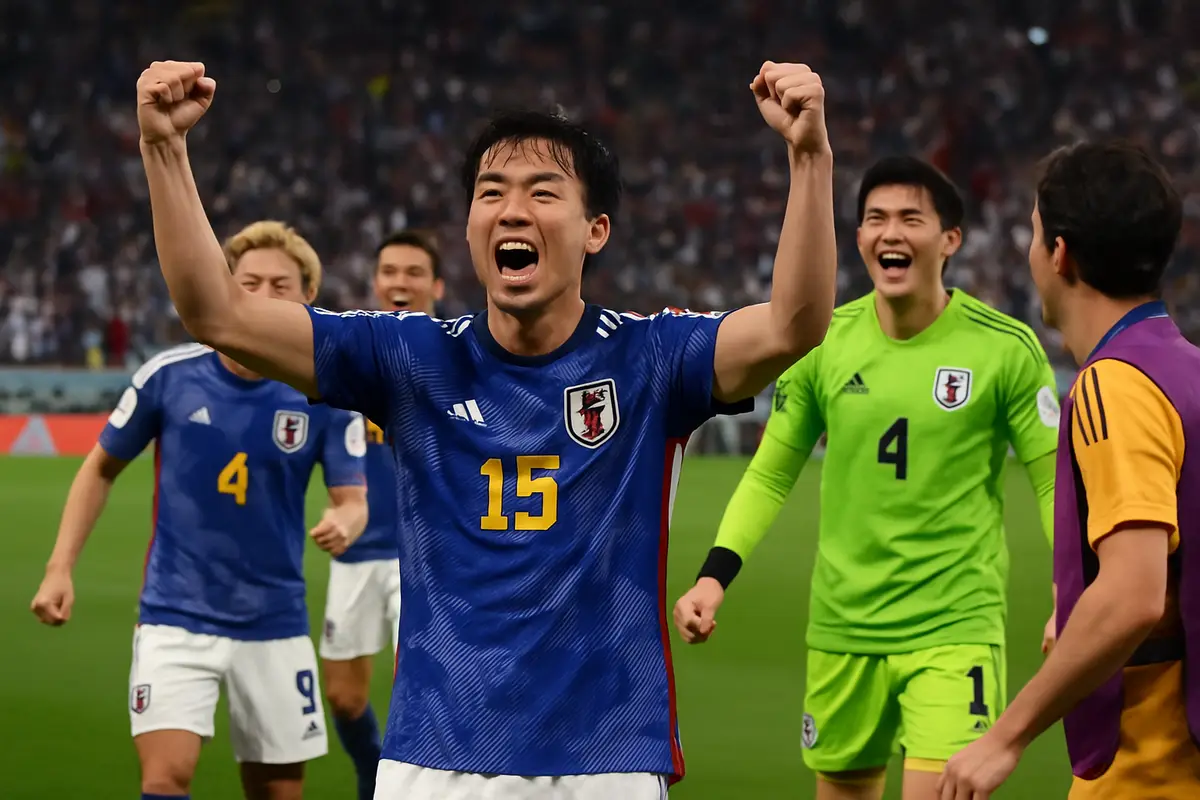
応援していたファンは大きな声で喜んだ。

The fans who had been cheering rejoiced with loud voices.

7

監督は試合の後、「選手全員がよく走ってくれた結果だ」と話した。

After the match, the manager said, "This is the result of every player running hard."

8

次の試合はさらに強い相手との対戦になる。

The next match will be against an even stronger opponent.

9

日本代表がどこまで勝ち進むか、多くの人が注目している。

Many people are paying attention to how far the Japan national team will advance.

ワールドカップ日本にほん決勝けっしょうトーナメント1

2026年06月27日 19:17

著者: jpreader

ワールドカップ 日本が決勝トーナメントへ

この画像はAIで生成され、学習目的で使用されています。

This image is AI-generated and used for educational purposes.

サッカーのワールドカップで、日本代表にほんだいひょう決勝けっしょうトーナメントへの進出しんしゅつめた2グループでの試合しあいつよチームあつまるつぎ段階だんかいすすことができた3

試合しあいでは、後半こうはん相手あいてさきてんられてくるしい展開てんかいになった4しかし選手せんしゅたちは最後さいごまであきらめず、わり時間じかんちかづいたところで逆転ぎゃくてん成功せいこうした5応援おうえんしていたファンおおきなこえよろこ6

監督かんとく試合しあいあと、「選手せんしゅ全員ぜんいんがよくはしてくれた結果けっかだ」とはな7つぎ試合しあいさらにつよ相手あいてとの対戦たいせんになる8日本代表にほんだいひょうがどこまですすか、おおひと注目ちゅうもくている9

Discussion

00

to rate or comment.

No comments yet.