ある病院で、ロボットが働き始めました2。このロボットは、薬や食事を運びます3。看護師の仕事を手伝うために作られました4。
病院では、人が足りないという問題があります5。夜は特に大変です6。ロボットがあれば、看護師は患者の世話にもっと時間を使えます7。
病院の人は「ロボットのおかげで、仕事が楽になりました」と話しました8。これから、ほかの病院でもロボットを使う予定です9。
(びょういん)
hospital
(ろぼっと)
robot
(はたらく)
to work
(くすり)
medicine
(しょくじ)
meal
(はこぶ)
to carry; to transport
(かんごし)
nurse
(しごと)
work, job
(てつだう)
to help
(つくる)
to make
(たりる)
to be enough; to be sufficient
(もんだい)
problem
(よる)
night
(とくに)
especially / particularly
(たいへん)
tough, serious
(かんじゃ)
patient
(せわ)
care; looking after
(もっと)
more / further
(じかん)
time
(つかう)
to use
(らく)
ease; comfort
(はなす)
to speak, talk
(ほか)
other
(よてい)
plan, schedule
start doing ~
Compound verb form expressing the start of an action; sending scallops has started.
ホタテを送り始めました。
They have started sending scallops.
雨が降り始めた。
The rain started falling.
in order to ~
Expresses purpose.
健康のために歩く。
I walk for my health.
止めるために話し合う。
Discuss in order to stop it.
passive voice: was/were ~ed
Passive form indicating that the subject receives the action. '食べられて' means 'were eaten'. Central grammar of this article about tulips being eaten by deer.
ケーキが弟に食べられた。
The cake was eaten by my little brother.
called/named ~
Used to introduce or name something. In this article, 「鳥貴族」という店 means 'a store called Torikizoku'.
田中という人を知っていますか。
Do you know a person called Tanaka?
これは寿司という料理です。
This is a dish called sushi.
conditional: if ~
Ba-form conditional expressing 'if ~ then ~'.
勉強すれば、合格できる。
If you study, you can pass.
早く起きれば間に合う。
If you wake up early, you'll make it.
Thanks to ~
Expresses gratitude for a positive cause. Thanks to the sudare, it feels cool.
先生のおかげで合格しました。
Thanks to my teacher, I passed.
to become
Expresses a change of state; Kawai became the new commissioner of the Sports Agency.
新しい長官になりました。
He became the new commissioner.
目が見えなくなりました。
He became unable to see.
to be scheduled to; plan to
Used to express a planned or scheduled future event.
明日会議をする予定です。
I plan to have a meeting tomorrow.
来週日本へ行く予定です。
I plan to go to Japan next week.
病院でロボットが働き始めた
A robot has started working at a hospital
ある病院で、ロボットが働き始めました。
At a certain hospital, a robot has started working.
このロボットは、薬や食事を運びます。
This robot carries medicine and meals.
看護師の仕事を手伝うために作られました。
It was made in order to help with the nurses' work.
病院では、人が足りないという問題があります。
Hospitals have the problem that there are not enough people.
夜は特に大変です。
Nights are especially tough.
ロボットがあれば、看護師は患者の世話にもっと時間を使えます。
If there is a robot, nurses can spend more time caring for patients.
病院の人は「ロボットのおかげで、仕事が楽になりました」と話しました。
A hospital staff member said, "Thanks to the robot, the work has become easier."
これから、ほかの病院でもロボットを使う予定です。
From now on, they plan to use robots at other hospitals too.
2026年06月29日 19:07
著者: jpreader
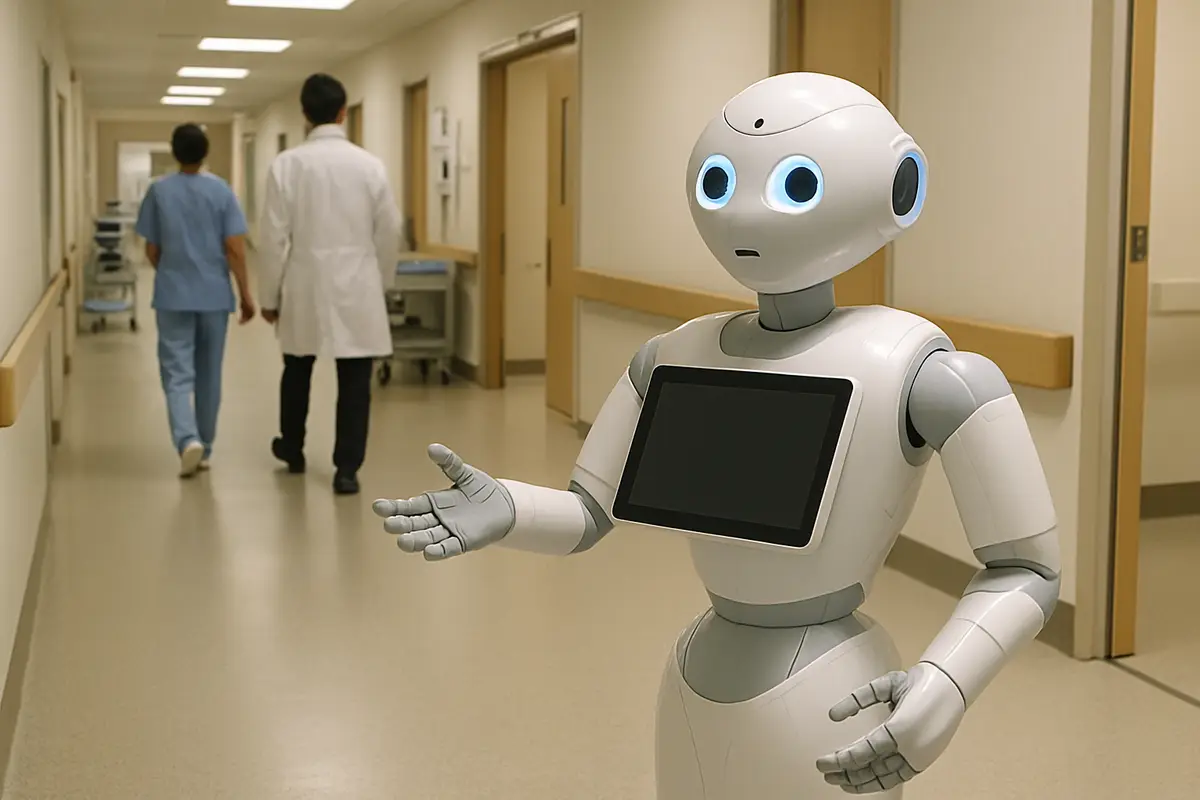
この画像はAIで生成され、学習目的で使用されています。
This image is AI-generated and used for educational purposes.
ある病院で、ロボットが働き始めました2。このロボットは、薬や食事を運びます3。看護師の仕事を手伝うために作られました4。
病院では、人が足りないという問題があります5。夜は特に大変です6。ロボットがあれば、看護師は患者の世話にもっと時間を使えます7。
病院の人は「ロボットのおかげで、仕事が楽になりました」と話しました8。これから、ほかの病院でもロボットを使う予定です9。
Discussion
to rate or comment.
No comments yet.