岩手県は、日本の北にあります2。この県の海には、「海女」という女の人たちがいます3。海女は、道具を使わないで海に入ります4。そして、海の中でウニや貝をとります5。
海女の仕事は、とても古い仕事です6。今、海女の数は少なくなっています7。
夏になると、多くの観光客がこの町に来ます8。海女は、観光に来た人たちに、海に入るところを見せます9。人々は、海女の仕事を見て、おどろきます10。
(いわてけん)
Iwate Prefecture
(あま)
female diver (ama)
(うみ)
sea, ocean
(ウニ)
sea urchin
(とる)
to take
(にほん)
Japan
(きた)
north
(ある)
a certain (some)
(けん)
prefecture
(おんな)
woman
(ひと)
person / people
(たち)
plural suffix (for people)
(いる)
to exist, to be (animate)
(どうぐ)
tool, equipment
(つかう)
to use
(はいる)
to enter, be contained in
(そして)
and; and then
(なか)
inside
(かい)
shellfish
(しごと)
work, job
(とても)
very; extremely
(ふるい)
old (things)
(いま)
now
(かず)
number, count
(すくない)
few, scarce
(なつ)
Summer
(なる)
to become
(おおい)
many
(かんこうきゃく)
tourist; sightseer
(まち)
town
(くる)
to come
(かんこう)
sightseeing; tourism
(ところ)
place
(みせる)
to show; to display
(ひとびと)
people
(みる)
to see, watch
(おどろく)
to be surprised
called/named ~
Used to introduce or name something. In this article, 「鳥貴族」という店 means 'a store called Torikizoku'.
田中という人を知っていますか。
Do you know a person called Tanaka?
これは寿司という料理です。
This is a dish called sushi.
without doing; don't do
Negative te-form used to indicate doing something without another action, or as a soft command.
朝ご飯を食べないで学校に行きました。
I went to school without eating breakfast.
心配しないでください。
Please don't worry.
to become (い-adjective)
Expresses a change of state for い-adjectives. Drop the final い and add くなる. Indicates something has changed or will change to a new state.
寒くなりました。
It has gotten cold.
日本語が上手になりました。
My Japanese has gotten better.
値段が高くなりました。
The price became expensive.
is doing, has been doing (ongoing state/action)
Expresses a continuing action or resulting state. Formed with て-form + いる. Can describe an action in progress or a state resulting from a past change.
今、ご飯を食べています。
I am eating rice now.
東京に住んでいます。
I live in Tokyo.
ドアが開いています。
The door is open.
when ..., if ... (natural consequence)
Conditional と indicating that when one thing happens, another naturally follows. States general truths, habitual results, or inevitable consequences.
春になると、桜が咲きます。
When spring comes, the cherry blossoms bloom.
このボタンを押すと、ドアが開きます。
If you press this button, the door opens.
and / by doing (means)
The te-form connects clauses; here it expresses the means by which the teacher creates problems (by using AI).
電車に乗って行きます。
I will go by train.
辞書を使って調べます。
I look it up using a dictionary.
岩手県の「海女」 海でウニをとる
Iwate's 'ama' (female divers): catching sea urchins in the sea
岩手県は、日本の北にあります。
Iwate Prefecture is in the north of Japan.
この県の海には、「海女」という女の人たちがいます。
In this prefecture's sea, there are women called 'ama'.
海女は、道具を使わないで海に入ります。
The ama enter the sea without using any tools.
そして、海の中でウニや貝をとります。
And in the sea, they catch sea urchins and shellfish.
海女の仕事は、とても古い仕事です。
The ama's work is a very old profession.
今、海女の数は少なくなっています。
Now, the number of ama is decreasing.
夏になると、多くの観光客がこの町に来ます。
When summer comes, many tourists come to this town.
海女は、観光に来た人たちに、海に入るところを見せます。
The ama show the people who came sightseeing how they enter the sea.
人々は、海女の仕事を見て、おどろきます。
People watch the ama's work and are amazed.
2026年07月03日 19:14
著者: jpreader
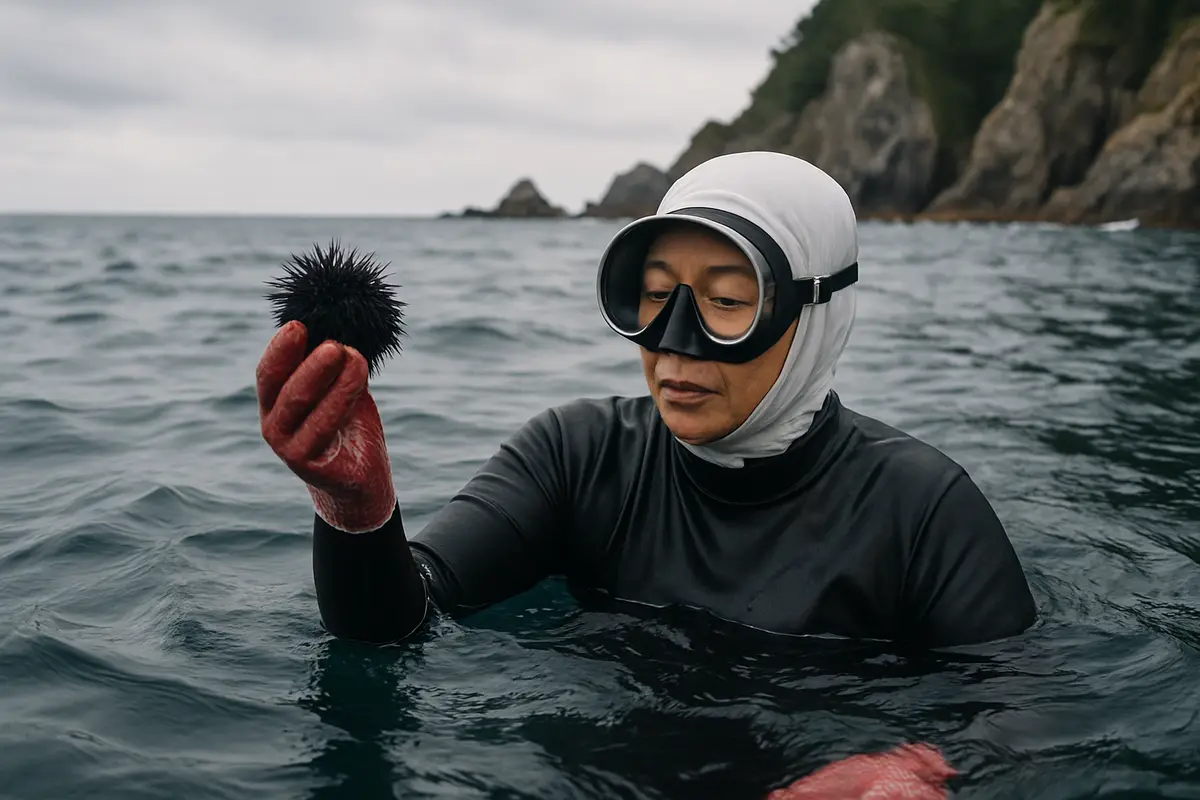
この画像はAIで生成され、学習目的で使用されています。
This image is AI-generated and used for educational purposes.
岩手県は、日本の北にあります2。この県の海には、「海女」という女の人たちがいます3。海女は、道具を使わないで海に入ります4。そして、海の中でウニや貝をとります5。
海女の仕事は、とても古い仕事です6。今、海女の数は少なくなっています7。
夏になると、多くの観光客がこの町に来ます8。海女は、観光に来た人たちに、海に入るところを見せます9。人々は、海女の仕事を見て、おどろきます10。
Discussion
to rate or comment.
No comments yet.