先週、ある小学校で火事がありました2。学校の教室から火が出ました3。近くの人がすぐに消防車を呼びました4。火はあまり大きくなりませんでした5。子どもたちは、けがをしませんでした6。
先生の一人が、ストーブを使って、自分の服を干していました7。ぬれた服がストーブに近すぎて、火が出ました8。
学校は「これから気をつけます」と言いました9。ストーブの近くに、物を置かないように、みんなで話しました10。
(しょうがっこう)
elementary school
(かじ)
fire (accident)
(せんせい)
teacher
(すとーぶ)
heater, stove
(ふく)
clothes
(ほす)
to hang out to dry
(せんしゅう)
last week
(がっこう)
school
(きょうしつ)
classroom; class, workshop
(ひ)
fire
(でる)
to come out; to occur
(ちかく)
nearby
(ひと)
person / people
(すぐ)
immediately, soon
(しょうぼうしゃ)
fire engine
(よぶ)
to call
(あまり)
not very / not much (with negative)
(おおきい)
big; large
(こども)
child
(けが)
injury
(ひとり)
one person / alone
(つかう)
to use
(じぶん)
oneself
(ぬれる)
to get wet
(ちかい)
near / close
(これから)
from now on
(きをつける)
to be careful
(いう)
to say
(もの)
thing
(おく)
to place, put
(みんな)
Everyone; everybody
(はなす)
to speak, talk
is doing, has been doing (ongoing state/action)
Expresses a continuing action or resulting state. Formed with て-form + いる. Can describe an action in progress or a state resulting from a past change.
今、ご飯を食べています。
I am eating rice now.
東京に住んでいます。
I live in Tokyo.
ドアが開いています。
The door is open.
to become (い-adjective)
Expresses a change of state for い-adjectives. Drop the final い and add くなる. Indicates something has changed or will change to a new state.
寒くなりました。
It has gotten cold.
日本語が上手になりました。
My Japanese has gotten better.
値段が高くなりました。
The price became expensive.
too much / excessively ~
Indicates excess. Used to describe the government's methods being too harsh (厳しすぎる) and the military deployment being excessive (やりすぎ).
政府の厳しすぎるやり方に反対する人たち
People opposing the government's overly harsh methods
軍を出すのはやりすぎだ。
Deploying the military is going too far.
quotative particle
Marks the content of what someone said or reported. Used with 言う here.
彼は行くと言いました。
He said he would go.
明日休みだと聞きました。
I heard tomorrow is a holiday.
so that ... not, in order to prevent
Expresses a negative purpose - doing something so that something else does NOT happen. Formed with verb negative form + ように.
忘れないようにメモしました。
I took notes so I wouldn't forget.
遅れないように早く出ました。
I left early so I wouldn't be late.
風邪をひかないように気をつけてください。
Please be careful not to catch a cold.
小学校で火事 先生がストーブで服を干していた
Fire at an elementary school: a teacher was drying clothes on a heater
先週、ある小学校で火事がありました。
Last week, there was a fire at a certain elementary school.
学校の教室から火が出ました。
The fire started in a classroom of the school.
近くの人がすぐに消防車を呼びました。
A nearby person quickly called a fire engine.
火はあまり大きくなりませんでした。
The fire did not grow very large.
子どもたちは、けがをしませんでした。
The children were not injured.
先生の一人が、ストーブを使って、自分の服を干していました。
One of the teachers had been using a heater to dry their own clothes.
ぬれた服がストーブに近すぎて、火が出ました。
The wet clothes were too close to the heater, and a fire broke out.
学校は「これから気をつけます」と言いました。
The school said, "We will be careful from now on."
ストーブの近くに、物を置かないように、みんなで話しました。
Everyone talked and agreed not to place things near the heater.
2026年07月04日 19:22
著者: jpreader
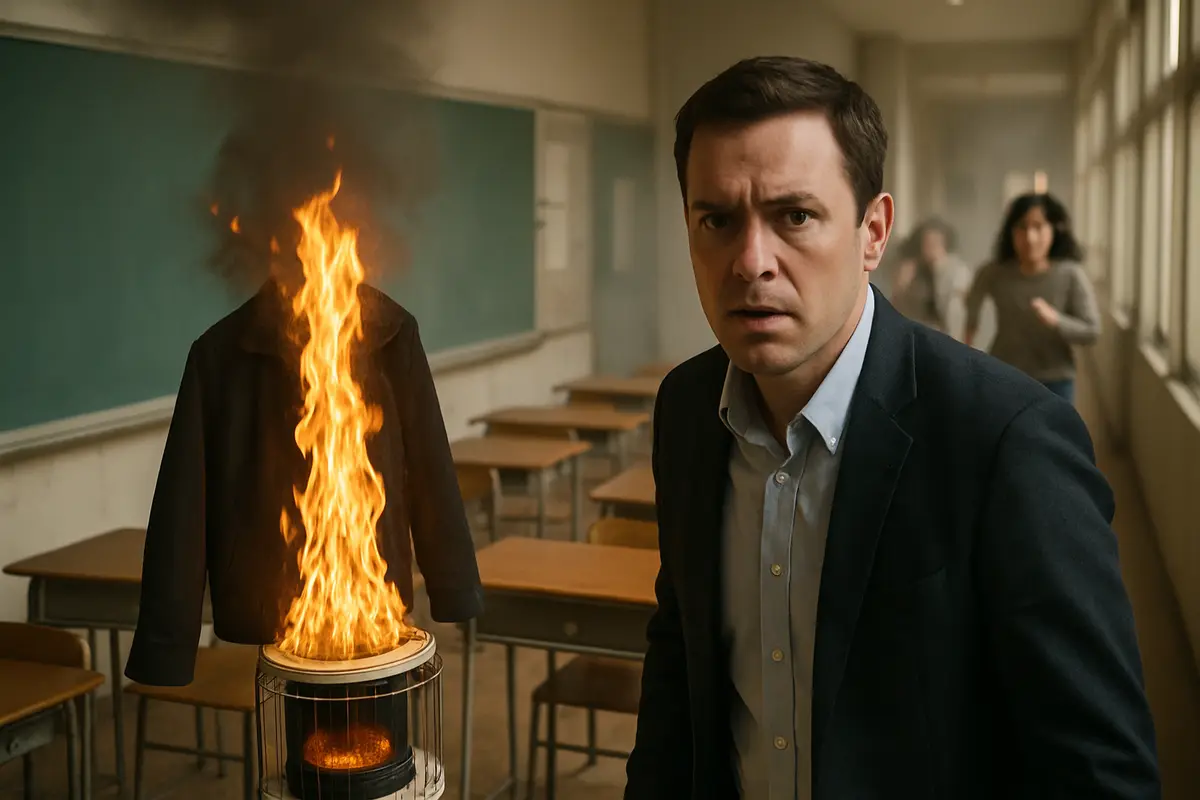
この画像はAIで生成され、学習目的で使用されています。
This image is AI-generated and used for educational purposes.
先週、ある小学校で火事がありました2。学校の教室から火が出ました3。近くの人がすぐに消防車を呼びました4。火はあまり大きくなりませんでした5。子どもたちは、けがをしませんでした6。
先生の一人が、ストーブを使って、自分の服を干していました7。ぬれた服がストーブに近すぎて、火が出ました8。
学校は「これから気をつけます」と言いました9。ストーブの近くに、物を置かないように、みんなで話しました10。
Discussion
to rate or comment.
No comments yet.