うみ
N5

(うみ)

sea, ocean

プラスチックぷらすちっく
N3

(ぷらすちっく)

plastic

分解ぶんかい
N1

(ぶんかい)

decomposition, breakdown

細菌さいきん
N1

(さいきん)

bacteria

発見はっけん
N3

(はっけん)

discovery

日本にほん
N5

(にほん)

Japan

大学だいがく
N5

(だいがく)

university; college

研究けんきゅう
N4

(けんきゅう)

research, study

チームちーむ
N4

(ちーむ)

team

増えるふえる
N3

(ふえる)

to increase; to grow

ごみごみ
N4

(ごみ)

trash, garbage

見つけるみつける
N4

(みつける)

to find; to discover

食べるたべる
N5

(たべる)

to eat

からだ
N4

(からだ)

body

なか
N5

(なか)

inside

小さなちいさな
N4

(ちいさな)

small / little

物質ぶっしつ
N2

(ぶっしつ)

substance, material

変えるかえる
N4

(かえる)

to change

これまでこれまで
N4

(これまで)

until now / so far

自然しぜん
N4

(しぜん)

Nature

言ういう
N5

(いう)

to say

効果こうか
N3

(こうか)

effect

あるある
N4

(ある)

a certain (some)

世界中せかいじゅう
N3

(せかいじゅう)

all over the world

大きなおおきな
N5

(おおきな)

big (attrib.)

問題もんだい
N5

(もんだい)

problem

さかな
N5

(さかな)

fish

とり
N5

(とり)

bird

死ぬしぬ
N5

(しぬ)

to die

細かいこまかい
N3

(こまかい)

fine / small

ひと
N5

(ひと)

person / people

入るはいる
N5

(はいる)

to enter, be contained in

心配しんぱい
N4

(しんぱい)

worry / concern

指摘してき
N1

(してき)

pointing out, indication

工場こうじょう
N4

(こうじょう)

factory

などなど
N5

(など)

et cetera, and so on

利用りよう
N3

(りよう)

use; utilization

できるできる
N5

(できる)

to be able; to be made

さらにさらに
N3

(さらに)

furthermore, even more

進めるすすめる
N3

(すすめる)

to advance; to move forward

ただしただし
N2

(ただし)

however, provided that

実際じっさい
N3

(じっさい)

actually; practically; in reality

使うつかう
N5

(つかう)

to use

までまで
N4

(まで)

until, up to, by the time

まだまだ
N5

(まだ)

still; yet

時間じかん
N5

(じかん)

time

かかるかかる
N5

(かかる)

to take (time/money), cost

考えるかんがえる
N4

(かんがえる)

to think; to consider

~ている
N5

is doing, has been doing (ongoing state/action)

Expresses a continuing action or resulting state. Formed with て-form + いる. Can describe an action in progress or a state resulting from a past change.

今、ご飯を食べています。

I am eating rice now.

東京に住んでいます。

I live in Tokyo.

ドアが開いています。

The door is open.

~によると
N3

according to ...

Cites a source of information. The noun before によると is the source. Often followed by a reported statement.

天気予報によると、明日は雨です。

According to the weather forecast, it will rain tomorrow.

ニュースによると、地震がありました。

According to the news, there was an earthquake.

先生によると、テストは来週です。

According to the teacher, the test is next week.

~(ら)れる(受身)
N4

passive form

Passive voice. 愛される means 'to be loved', describing the kind of store the worker aspires to create.

みんなに愛される人になりたい。

I want to be a person loved by everyone.

先生に褒められました。

I was praised by my teacher.

~にくい
N3

hard to ~; difficult to ~

Attached to a verb stem to describe difficulty — 'people who have difficulty hearing'.

読みにくい

hard to read

食べにくい

hard to eat

~てくる
N4

come toward (action approaching)

Indicates motion toward the speaker or a location. Here it describes rocks flying toward people.

鳥が飛んできた。

A bird flew toward (us).

雨が降ってきた。

It started raining.

~そうだ(伝聞)
N4

I hear that / it is said

Reports hearsay. 大きく育つそうです means '(I hear) they grow big'.

雨が降るそうだ

I hear it will rain

おいしいそうだ

they say it's delicious

~になる
N5

to become

Expresses a change of state; Kawai became the new commissioner of the Sports Agency.

新しい長官になりました。

He became the new commissioner.

目が見えなくなりました。

He became unable to see.

~てしまう
N4

completely / finish ~ing (often regretful)

Expresses completion, often with regret or unexpectedness. Here the rice sold out quickly.

すぐに全部売れてしまった。

It all sold out right away.

忘れてしまった。

I forgot (unfortunately).

~こともある
N3

there are cases/times when ~

Describes a possibility or occasional occurrence.

遅れることもある。

Sometimes I'm late.

雨が降ることもあります。

It sometimes rains.

~ように
N4

so that ~

Indicates a goal or desired outcome. Here: so that trainees reach the Specified Skilled Worker level.

分かるように説明します。

I'll explain so you understand.

聞こえるように大きい声で話す。

Speak loudly so it can be heard.

~予定だ
N4

plan to / is scheduled to

Indicates a scheduled plan or intent.

来月行く予定です。

I plan to go next month.

会議は3時からの予定です。

The meeting is scheduled from 3.

~ようになる
N4

come to / reach the point where

Indicates a change in state or ability.

運転できるようになった。

Trains became able to run.

日本語が話せるようになりました。

I became able to speak Japanese.

1

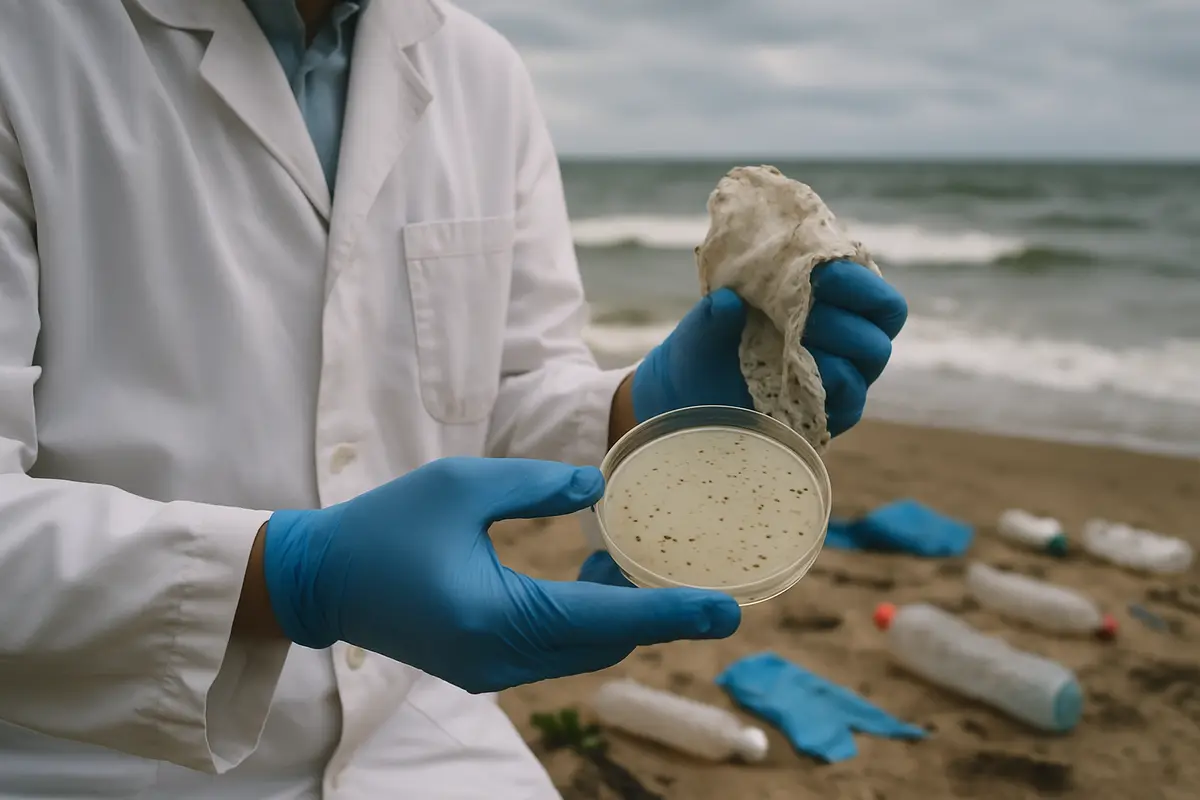
海のプラスチックを分解する細菌を発見

Discovery of bacteria that break down ocean plastic

2

日本の大学の研究チームが、海に増えているプラスチックごみを分解する細菌を見つけました。

A research team at a Japanese university has found bacteria that break down the plastic waste increasing in the ocean.

3

この細菌は、プラスチックを食べて、体の中で小さな物質に変えます。

These bacteria eat plastic and change it into small substances inside their bodies.

4

研究チームによると、これまで自然に分解されにくいと言われてきたプラスチックにも効果があるそうです。

According to the research team, the bacteria are also effective on plastics that until now had been said to be hard to break down naturally.

5

海のプラスチックごみは、世界中で大きな問題になっています。

Ocean plastic waste has become a big problem all over the world.

6

魚や鳥がごみを食べて死んでしまうこともあります。

Sometimes fish and birds eat the waste and die.

7

細かくなったプラスチックが、人の体に入る心配も指摘されています。

It has also been pointed out that there is concern about plastic broken into small pieces entering the human body.

8

研究チームは、この細菌を工場などで利用できるように、さらに研究を進める予定です。

The research team plans to do further research so that the bacteria can be used in factories and elsewhere.

9

ただし、実際に使えるようになるまでには、まだ時間がかかると考えられています。

However, it is thought that it will still take time before they can actually be used.

うみプラスチック分解ぶんかいする細菌さいきん発見はっけん1

2026年07月06日 19:22

著者: jpreader

海のプラスチックを分解する細菌を発見

この画像はAIで生成され、学習目的で使用されています。

This image is AI-generated and used for educational purposes.

日本にほん大学だいがく研究けんきゅうチームが、うみえているプラスチックごみを分解ぶんかいする細菌さいきんつけました2。この細菌さいきんは、プラスチックて、からだなかちいさな物質ぶっしつます3研究けんきゅうチームによると、これまで自然しぜん分解ぶんかいされにくいわれてきたプラスチックにも効果こうかあるそうです4

うみプラスチックごみは、世界中せかいじゅうおおきな問題もんだいになっています5さかなとりごみでしまうこともあります6こまかくなったプラスチックが、ひとからだはい心配しんぱい指摘してきされています7

研究けんきゅうチームは、この細菌さいきん工場こうじょうなど利用りようできるように、さらに研究けんきゅうすすめる予定よていです8ただし実際じっさい使つかえるようになるまでには、まだ時間じかんかかるかんがられています9

Discussion

00

to rate or comment.

No comments yet.