今週、九州の北の地方でたくさんの雨が降りました2。短い時間に強い雨が続いたので、川の水がとても増えました3。ある町では、道が水でいっぱいになりました4。
天気予報によると、これからも雨が続くかもしれません5。気象台は、土や石が山から落ちてくる災害に気をつけるように言っています6。低い場所に住んでいる人は、特に注意が必要です7。
役所は、危ない場所の人に早く安全なところへ逃げてほしいと話しています8。テレビやスマートフォンで、新しい情報を確認することが大切です9。
(きゅうしゅう)
Kyushu
(ほくぶ)
northern part
(おおあめ)
heavy rain
(さいがい)
disaster
(ちゅうい)
caution, warning
(こんしゅう)
this week
(きた)
north
(ちほう)
region; area
(たくさん)
a lot / many
(あめ)
rain
(ふる)
to fall (rain, snow)
(みじかい)
short
(じかん)
time
(つよい)
strong
(つづく)
to continue
(かわ)
river
(みず)
water
(とても)
very; extremely
(ふえる)
to increase; to grow
(ある)
a certain (some)
(まち)
town
(みち)
road, street, path
(いっぱい)
full; a lot
(なる)
to become
(てんきよほう)
Weather forecast
(これから)
from now on
(きしょうだい)
meteorological observatory, weather station
(つち)
soil; earth; dirt
(いし)
stone
(やま)
mountain
(おちる)
to fall; to drop; to strike (lightning)
(きをつける)
to be careful
(いう)
to say
(ひくい)
low
(ばしょ)
place
(すむ)
to live; to reside
(ひと)
person / people
(とくに)
especially / particularly
(ひつよう)
necessary / needed
(やくしょ)
government office
(あぶない)
dangerous
(はやく)
quickly, early
(あんぜん)
safety
(ところ)
place
(にげる)
to escape / to run away
(はなす)
to speak, talk
(テレビ)
television
(スマートフォン)
smartphone
(あたらしい)
new
(じょうほう)
information
(かくにん)
confirmation, checking
(たいせつ)
important
because ~ / since ~
Causal connector. Because JA is buying at higher prices, store prices will also rise.
雨が降ったので、家にいた。
Since it rained, I stayed home.
忙しいので、行けません。
Since I'm busy, I can't go.
according to ...
Cites a source of information. The noun before によると is the source. Often followed by a reported statement.
天気予報によると、明日は雨です。
According to the weather forecast, it will rain tomorrow.
ニュースによると、地震がありました。
According to the news, there was an earthquake.
先生によると、テストは来週です。
According to the teacher, the test is next week.
might, maybe, possibly
Expresses possibility or uncertainty. Attached directly to the plain form of verbs, adjectives, or nouns. Less certain than でしょう.
明日は雨かもしれません。
It might rain tomorrow.
彼は来ないかもしれない。
He might not come.
この問題は難しいかもしれません。
This problem might be difficult.
come toward (action approaching)
Indicates motion toward the speaker or a location. Here it describes rocks flying toward people.
鳥が飛んできた。
A bird flew toward (us).
雨が降ってきた。
It started raining.
to tell someone to do
気をつけるように言いました uses ~ように with a verb of telling to report an instruction — the school told the children to be careful.
気をつけるように言いました。
They told (them) to be careful.
早く来るように言いました。
I told them to come early.
is doing, has been doing (ongoing state/action)
Expresses a continuing action or resulting state. Formed with て-form + いる. Can describe an action in progress or a state resulting from a past change.
今、ご飯を食べています。
I am eating rice now.
東京に住んでいます。
I live in Tokyo.
ドアが開いています。
The door is open.
want (someone) to do ...
Expresses a wish for someone else to do something. Formed with て-form + ほしい. The person you want to act is marked with に.
静かにしてほしい。
I want you to be quiet.
もう少し待ってほしいです。
I'd like you to wait a bit more.
先生に説明してほしいです。
I want the teacher to explain.
nominalizer (the act of ~)
Turns a verb phrase into a noun. Here 話を聞くこと (the act of listening to a speech).
日本に行くことが好きだ。
I like going to Japan.
勉強することは大切だ。
Studying is important.
九州北部で大雨 災害に注意
Heavy rain in northern Kyushu; caution urged against disasters
今週、九州の北の地方でたくさんの雨が降りました。
This week, a lot of rain fell in the northern region of Kyushu.
短い時間に強い雨が続いたので、川の水がとても増えました。
Because strong rain continued in a short time, the water in the rivers rose greatly.
ある町では、道が水でいっぱいになりました。
In one town, the roads became full of water.
天気予報によると、これからも雨が続くかもしれません。
According to the weather forecast, the rain may continue from now on as well.
気象台は、土や石が山から落ちてくる災害に気をつけるように言っています。
The meteorological agency is telling people to watch out for disasters in which soil and rocks come falling down from the mountains.
低い場所に住んでいる人は、特に注意が必要です。
People living in low-lying places especially need to be careful.
役所は、危ない場所の人に早く安全なところへ逃げてほしいと話しています。
The government office is saying it wants people in dangerous areas to quickly flee to a safe place.
テレビやスマートフォンで、新しい情報を確認することが大切です。
It is important to check for new information on television and smartphones.
2026年07月07日 19:14
著者: jpreader
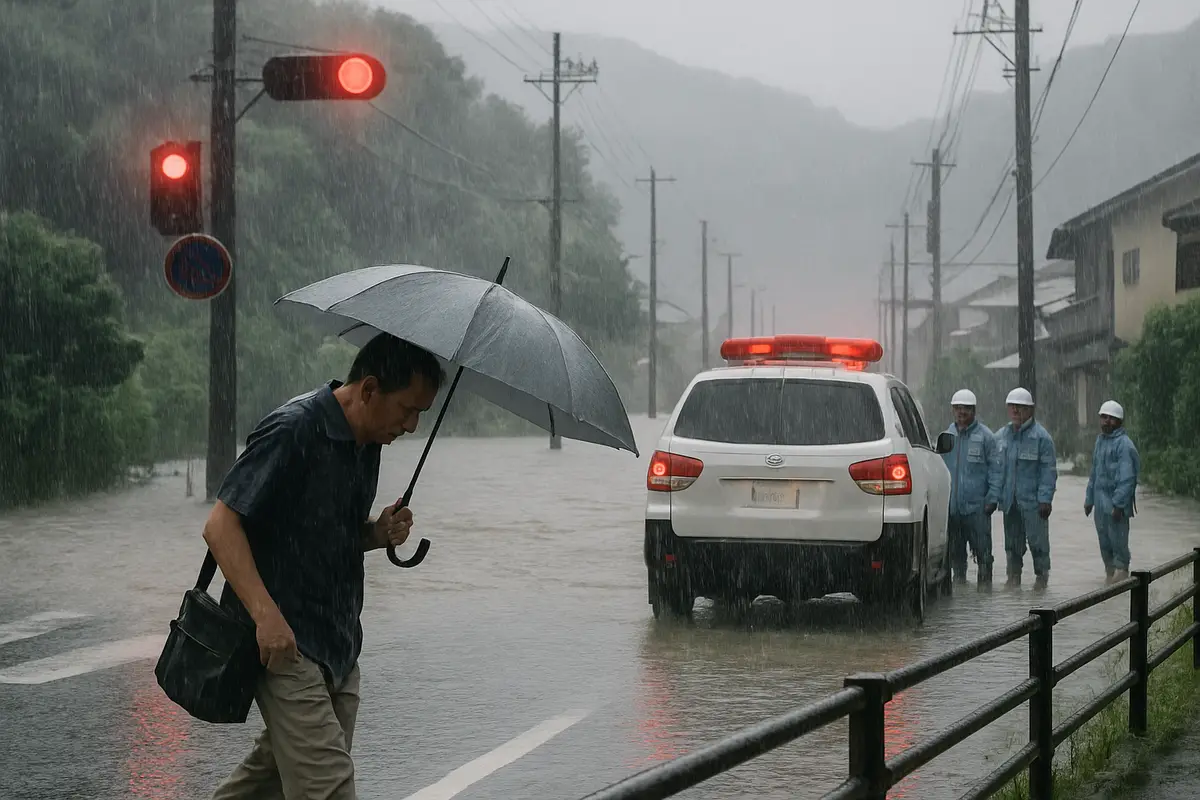
この画像はAIで生成され、学習目的で使用されています。
This image is AI-generated and used for educational purposes.
今週、九州の北の地方でたくさんの雨が降りました2。短い時間に強い雨が続いたので、川の水がとても増えました3。ある町では、道が水でいっぱいになりました4。
天気予報によると、これからも雨が続くかもしれません5。気象台は、土や石が山から落ちてくる災害に気をつけるように言っています6。低い場所に住んでいる人は、特に注意が必要です7。
役所は、危ない場所の人に早く安全なところへ逃げてほしいと話しています8。テレビやスマートフォンで、新しい情報を確認することが大切です9。
Discussion
to rate or comment.
No comments yet.