今週の終わりごろ、日本はとても暑くなります2。気温が35度より高くなる所もあります3。とても危ない暑さです4。
暑い日は、熱中症に気をつけてください5。熱中症になると、頭が痛くなったり、気分が悪くなったりします6。ときどき、病院に行く人もいます7。
外に出るときは、水をたくさん飲んでください8。帽子をかぶることも大切です9。家の中でも、暑いときはエアコンを使ってください10。特にお年寄りや子どもは、気をつけてください11。
(こんしゅう)
this week
(おわり)
end
(ごろ)
around (approximate time)
(にほん)
Japan
(とても)
very; extremely
(あつい)
hot
(なる)
to become
(きおん)
temperature (air)
(ど)
degree
(たかい)
expensive; high
(ところ)
place; area
(あぶない)
dangerous
(あつさ)
heat
(ひ)
day
(ねっちゅうしょう)
heatstroke
(きをつける)
to be careful
(あたま)
head
(いたい)
painful
(きぶん)
feeling, mood
(わるい)
bad
(ときどき)
sometimes
(びょういん)
hospital
(いく)
to go
(ひと)
person / people
(いる)
to exist, to be (animate)
(そと)
outside
(でる)
to come out; to occur
(みず)
water
(たくさん)
a lot / many
(のむ)
to drink
(ぼうし)
hat
(かぶる)
to wear (on the head)
(たいせつ)
important
(いえ)
house
(なか)
inside
(えあこん)
air conditioner
(つかう)
to use
(とくに)
especially / particularly
(おとしより)
elderly person
(こども)
child
than / more than
Indicates comparison. Used to say prices rose on average 2.8% compared to last year.
去年より寒い。
Colder than last year.
彼より背が高い。
Taller than him.
please do ...
Polite request form. Formed with て-form + ください. Used to ask someone to perform an action.
ここに名前を書いてください。
Please write your name here.
もう一度言ってください。
Please say it once more.
窓を開けてください。
Please open the window.
if / when (natural consequence)
Conditional と indicating a natural or expected result. 一緒に捨てると…火が出て means 'if you throw them away together, fire starts.'
ボタンを押すと、ドアが開きます。
When you press the button, the door opens.
春になると、桜が咲きます。
When spring comes, cherry blossoms bloom.
doing things like ~ and ~
Lists representative actions among several. Implies there are other actions too. Used twice in this article.
週末は本を読んだり映画を見たりします。
On weekends I do things like read books and watch movies.
歌ったり踊ったりして楽しんだ。
We had fun singing and dancing.
when ~
Indicates the time when something happened — when he was in junior high school.
中学生のとき病気になりました。
When I was a junior-high student I got sick.
子どものとき日本にいました。
I was in Japan when I was a child.
nominalizer (the act of ~)
Turns verbs into nouns — changing one's awareness (意識を変えること), not over-buying (買いすぎないこと), and using leftovers well (使うこと).
走ることが好きだ。
I like running.
話すことが大切だ。
Talking is important.
今週はとても暑くなります
This week it will get very hot
今週の終わりごろ、日本はとても暑くなります。
Around the end of this week, Japan will become very hot.
気温が35度より高くなる所もあります。
There are also places where the temperature will rise above 35 degrees.
とても危ない暑さです。
It is dangerously hot.
暑い日は、熱中症に気をつけてください。
On hot days, please be careful of heatstroke.
熱中症になると、頭が痛くなったり、気分が悪くなったりします。
When you get heatstroke, you may get a headache or feel unwell.
ときどき、病院に行く人もいます。
Sometimes there are people who go to the hospital.
外に出るときは、水をたくさん飲んでください。
When you go outside, please drink plenty of water.
帽子をかぶることも大切です。
Wearing a hat is also important.
家の中でも、暑いときはエアコンを使ってください。
Even inside the house, when it is hot please use the air conditioner.
特にお年寄りや子どもは、気をつけてください。
Especially the elderly and children should be careful.
2026年07月10日 19:21
著者: jpreader
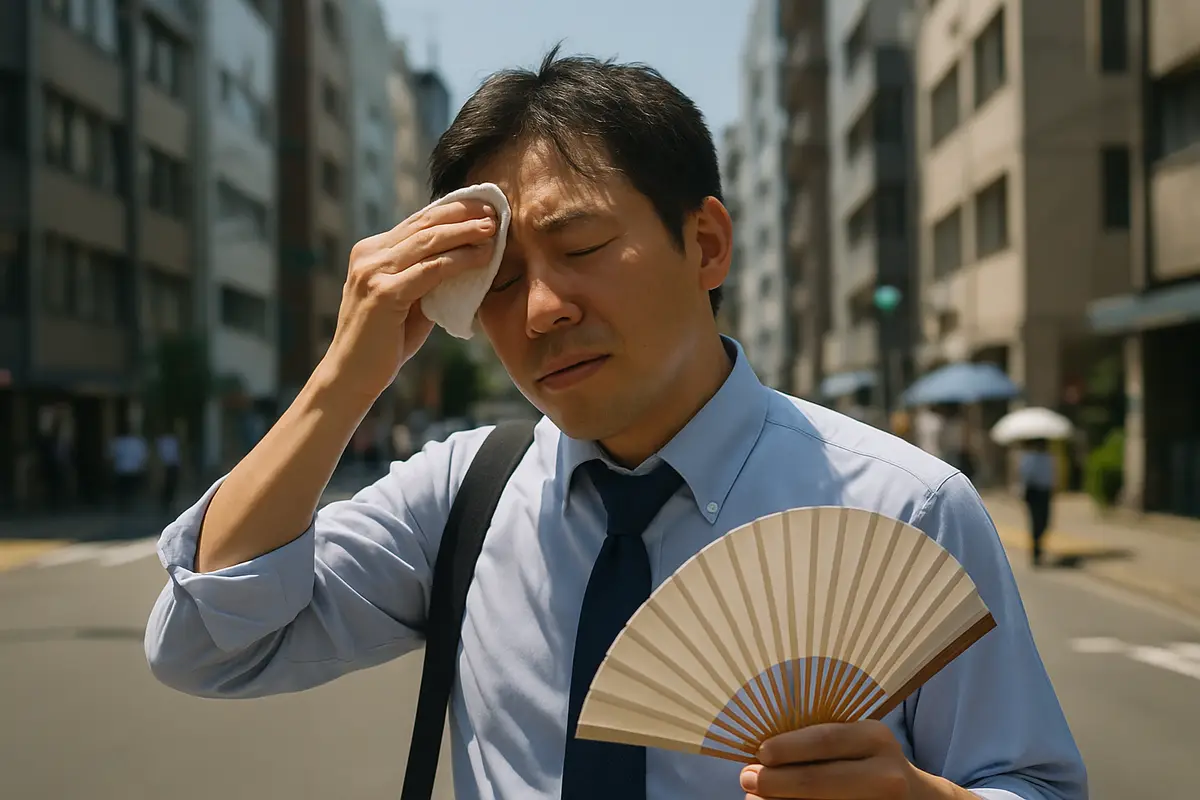
この画像はAIで生成され、学習目的で使用されています。
This image is AI-generated and used for educational purposes.
今週の終わりごろ、日本はとても暑くなります2。気温が35度より高くなる所もあります3。とても危ない暑さです4。
暑い日は、熱中症に気をつけてください5。熱中症になると、頭が痛くなったり、気分が悪くなったりします6。ときどき、病院に行く人もいます7。
外に出るときは、水をたくさん飲んでください8。帽子をかぶることも大切です9。家の中でも、暑いときはエアコンを使ってください10。特にお年寄りや子どもは、気をつけてください11。
Discussion
to rate or comment.
No comments yet.