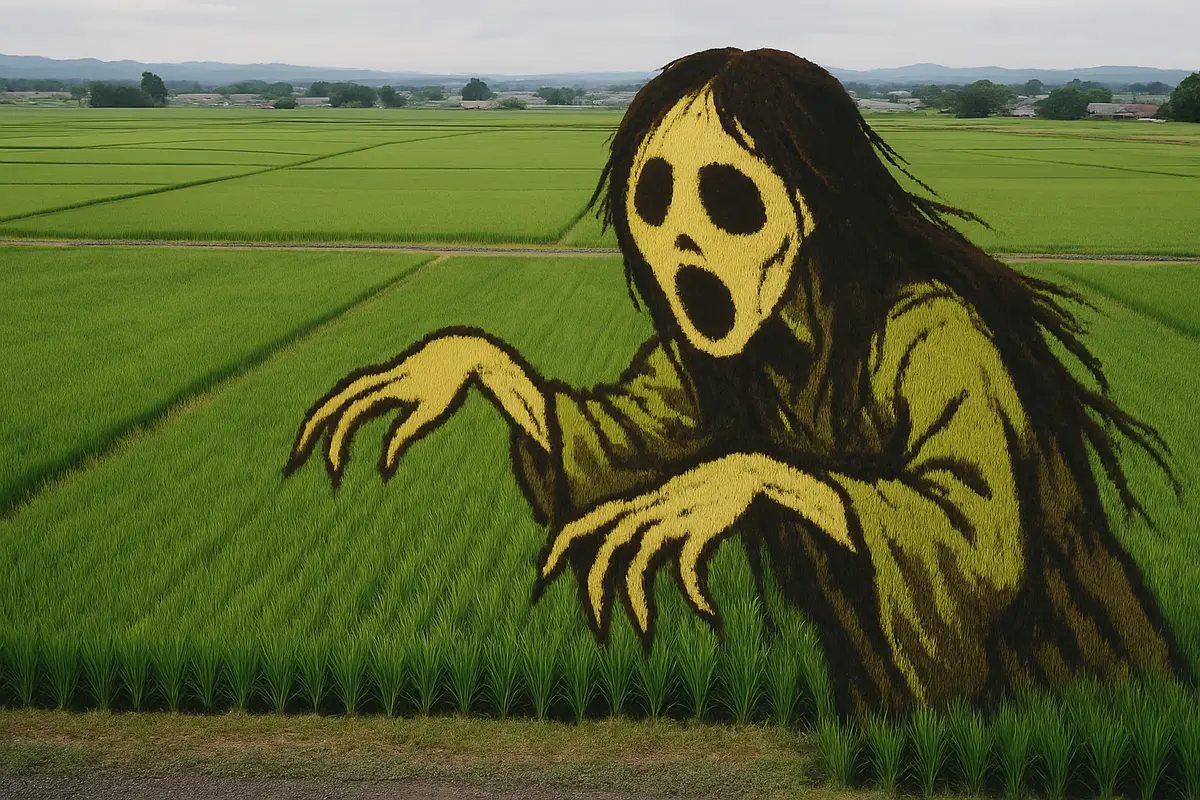
青森県で、今年も「田んぼアート」が始まりました2。田んぼアートとは、色の違う稲を植えて、田んぼに大きな絵を描くものです3。遠くから見ると、まるで絵のように見えます4。
今年のテーマは「幽霊」です5。日本の昔話に出てくる幽霊が、田んぼの上に大きく描かれています6。少し怖いですが、細かいところまでとてもきれいに作られています7。
この田んぼアートは、毎年多くの観光客を集めています8。稲が育つにつれて、絵の色も変わっていきます9。地元の人たちは、秋に稲を刈るまで楽しめると話しています10。
(あおもり)
Aomori
(たんぼ)
rice paddy / rice field
(あーと)
art
(てーま)
theme, topic
(ゆうれい)
ghost
(あおもりけん)
Aomori Prefecture
(ことし)
this year
(はじまる)
to begin
(いろ)
color
(ちがう)
to differ; to be different
(いね)
rice plant, paddy
(うえる)
to plant
(おおきな)
big (attrib.)
(え)
picture, drawing
(かく)
to draw, paint
(もの)
thing
(とおく)
far away / distance
(みる)
to see, watch
(まるで)
just like, as if
(みえる)
to be visible, can see
(にほん)
Japan
(むかしばなし)
old tale, folk story
(でてくる)
to appear, come out
(うえ)
top, above
(おおきい)
big; large
(すこし)
a little
(こわい)
scary / frightening
(こまかい)
fine / small
(ところ)
place
(とても)
very; extremely
(きれい)
pretty, clean
(つくる)
to make
(まいとし)
every year
(おおい)
many
(かんこうきゃく)
tourist; sightseer
(あつめる)
to collect
(そだつ)
to grow up / to be raised
(かわる)
to change
(じもと)
local / one's hometown
(ひと)
person / people
(あき)
autumn; fall
(かる)
to cut, to shear, to mow
(たのしむ)
to enjoy
(はなす)
to speak, talk
the term ~ means (definition)
~とは introduces a definition or explanation of a term. 宇宙ごみとは means 'what is called space debris is...'.
宇宙ごみとは、古い衛星のことだ。
Space debris refers to old satellites.
和紙とは、日本の伝統的な紙のことだ。
Washi means traditional Japanese paper.
and (connecting actions)
The te-form links successive actions — planting the rice and then making the picture, comparing and then enjoying.
朝起きて、顔を洗う。
I get up in the morning and wash my face.
本を買って読んだ。
I bought a book and read it.
if / when (natural consequence)
Conditional と indicating a natural or expected result. 一緒に捨てると…火が出て means 'if you throw them away together, fire starts.'
ボタンを押すと、ドアが開きます。
When you press the button, the door opens.
春になると、桜が咲きます。
When spring comes, cherry blossoms bloom.
like / as if
Combined with まるで to compare the paddy to a real painting.
雪のように白い。
White like snow.
まるで夢のようだ。
It is just like a dream.
passive form
Passive voice. 愛される means 'to be loved', describing the kind of store the worker aspires to create.
みんなに愛される人になりたい。
I want to be a person loved by everyone.
先生に褒められました。
I was praised by my teacher.
is doing, has been doing (ongoing state/action)
Expresses a continuing action or resulting state. Formed with て-form + いる. Can describe an action in progress or a state resulting from a past change.
今、ご飯を食べています。
I am eating rice now.
東京に住んでいます。
I live in Tokyo.
ドアが開いています。
The door is open.
as / in proportion to
Shows that as the rice grows, the colors of the picture change along with it.
年をとるにつれて忘れやすくなる。
As you age, you forget more easily.
時間がたつにつれて寒くなった。
As time passed, it got colder.
to go on doing / continue to (from now)
In '増えていく' – 'will continue to increase (into the future)'. Indicates continuing trend going forward.
これから寒くなっていく。
From now on, it will become colder.
日本語を勉強していきたい。
I want to continue studying Japanese.
until / as far as
Indicates an end point in space or time. Here it expresses how far the balls flew.
駅まで歩きます。
I walk to the station.
遠くまで飛びました。
It flew far away.
quotative particle
Marks the content of what someone said or reported. Used with 言う here.
彼は行くと言いました。
He said he would go.
明日休みだと聞きました。
I heard tomorrow is a holiday.
青森の田んぼアート テーマは「幽霊」
Aomori's rice paddy art — the theme is 'ghosts'
青森県で、今年も「田んぼアート」が始まりました。
In Aomori Prefecture, rice paddy art has begun again this year.
田んぼアートとは、色の違う稲を植えて、田んぼに大きな絵を描くものです。
Rice paddy art is planting rice plants of different colors to draw a big picture in a paddy field.
遠くから見ると、まるで絵のように見えます。
When you look from far away, it looks just like a painting.
今年のテーマは「幽霊」です。
This year's theme is 'ghosts'.
日本の昔話に出てくる幽霊が、田んぼの上に大きく描かれています。
A ghost that appears in a Japanese folk tale is drawn large on the rice field.
少し怖いですが、細かいところまでとてもきれいに作られています。
It is a little scary, but it is made very beautifully down to the fine details.
この田んぼアートは、毎年多くの観光客を集めています。
This rice paddy art draws many tourists every year.
稲が育つにつれて、絵の色も変わっていきます。
As the rice grows, the colors of the picture also change.
地元の人たちは、秋に稲を刈るまで楽しめると話しています。
Local people say they can enjoy it until they harvest the rice in autumn.
2026年07月10日 19:27
著者: jpreader
この画像はAIで生成され、学習目的で使用されています。
This image is AI-generated and used for educational purposes.
青森県で、今年も「田んぼアート」が始まりました2。田んぼアートとは、色の違う稲を植えて、田んぼに大きな絵を描くものです3。遠くから見ると、まるで絵のように見えます4。
今年のテーマは「幽霊」です5。日本の昔話に出てくる幽霊が、田んぼの上に大きく描かれています6。少し怖いですが、細かいところまでとてもきれいに作られています7。
この田んぼアートは、毎年多くの観光客を集めています8。稲が育つにつれて、絵の色も変わっていきます9。地元の人たちは、秋に稲を刈るまで楽しめると話しています10。
Discussion
to rate or comment.
No comments yet.