気象庁によると、台風9号が沖縄県に近づいています2。11日の夜まで、宮古島や石垣島などでは、とても強い風が吹くおそれがあります3。家が倒れるほどの強い風です4。
雨もたくさん降りそうです5。海では波がとても高くなりますから、海の近くに行かないでください6。川の水も増えるかもしれませんから、川にも近づかないでください7。
沖縄県に住んでいる人は、外に出ないで、安全な場所にいてください8。飛行機や船は、止まるかもしれません9。旅行をする人は、新しい情報をよく確認してください10。
(たいふう)
typhoon
(ごう)
number, issue (suffix)
(ちかづく)
to approach
(きしょうちょう)
Japan Meteorological Agency
(おきなわけん)
Okinawa Prefecture
(にち)
day
(よる)
night
(みやこじま)
Miyakojima (island)
(いしがきじま)
Ishigaki Island
(とても)
very; extremely
(つよい)
strong
(かぜ)
wind
(ふく)
to blow (wind)
(いえ)
house
(たおれる)
to collapse; to fall down
(あめ)
rain
(たくさん)
a lot / many
(ふる)
to fall (rain, snow)
(うみ)
sea, ocean
(なみ)
wave
(たかい)
expensive; high
(なる)
to become
(ちかく)
nearby
(いく)
to go
(かわ)
river
(みず)
water
(ふえる)
to increase; to grow
(すむ)
to live; to reside
(ひと)
person / people
(そと)
outside
(でる)
to come out; to occur
(あんぜん)
safety
(ばしょ)
place
(いる)
to exist, to be (animate)
(ひこうき)
airplane
(ふね)
ship
(とまる)
to stop
(りょこう)
Travel; trip
(する)
to do
(あたらしい)
new
(じょうほう)
information
(よく)
often, well, frequently
(かくにんする)
to confirm; to check
is doing, has been doing (ongoing state/action)
Expresses a continuing action or resulting state. Formed with て-form + いる. Can describe an action in progress or a state resulting from a past change.
今、ご飯を食べています。
I am eating rice now.
東京に住んでいます。
I live in Tokyo.
ドアが開いています。
The door is open.
according to ...
Cites a source of information. The noun before によると is the source. Often followed by a reported statement.
天気予報によると、明日は雨です。
According to the weather forecast, it will rain tomorrow.
ニュースによると、地震がありました。
According to the news, there was an earthquake.
先生によると、テストは来週です。
According to the teacher, the test is next week.
until / as far as
Indicates an end point in space or time. Here it expresses how far the balls flew.
駅まで歩きます。
I walk to the station.
遠くまで飛びました。
It flew far away.
such as / etc.
Used to give examples from a larger group.
りんごやバナナなどを買いました。
I bought apples, bananas, etc.
長野県や北海道など
Nagano, Hokkaido, etc.
there is a risk/fear that
続くおそれがあります warns of the risk that strong wind and heavy rain will continue.
雨が続くおそれがあります。
There is a risk the rain will continue.
事故が起きるおそれがある。
There is a risk an accident will happen.
to the extent that / as much as
ほど expresses degree — heavy rain to the extent never experienced before (…ないほどの大雨).
泣きたいほど嬉しい。
I'm so happy I could cry.
歩けないほど疲れた。
I'm so tired I can't walk.
looks like / seems about to (appearance)
Used with verb stems to express that something appears about to happen, as in 水があふれそうなとき (when the water looks like it will overflow) and 山がくずれそうなとき.
雨が降りそうです。
It looks like it will rain.
山がくずれそうだ。
The mountain looks about to collapse.
polite non-past tense
The polite non-past ~ます states what will happen — the funeral will continue.
葬式は続きます。
The funeral will continue.
明日行きます。
I will go tomorrow.
because ~; since ~
Indicates the reason or cause for an action. 殺されたから攻撃した means 'attacked because they were killed'.
寒いから窓を閉めます。
Because it's cold, I'll close the window.
please don't ~
Used in 「食べないで返してください」and 「食べないで返してほしい」as a polite request to not eat the butter and return it.
ここに座らないでください。
Please don't sit here.
心配しないでください。
Please don't worry.
might, maybe, possibly
Expresses possibility or uncertainty. Attached directly to the plain form of verbs, adjectives, or nouns. Less certain than でしょう.
明日は雨かもしれません。
It might rain tomorrow.
彼は来ないかもしれない。
He might not come.
この問題は難しいかもしれません。
This problem might be difficult.
without doing ~ / do not do ~ and instead
Connects a negative action with what to do instead. Here people should not go outside, and should stay in a safe place (外に出ないで、安全な場所にいてください).
外に出ないで、家にいてください。
Do not go outside; please stay at home.
朝ごはんを食べないで学校に行きました。
I went to school without eating breakfast.
please do ...
Polite request form. Formed with て-form + ください. Used to ask someone to perform an action.
ここに名前を書いてください。
Please write your name here.
もう一度言ってください。
Please say it once more.
窓を開けてください。
Please open the window.
台風9号が沖縄に近づいている
Typhoon No. 9 is approaching Okinawa
気象庁によると、台風9号が沖縄県に近づいています。
According to the Japan Meteorological Agency, Typhoon No. 9 is approaching Okinawa Prefecture.
11日の夜まで、宮古島や石垣島などでは、とても強い風が吹くおそれがあります。
Until the night of the 11th, there is a risk that very strong winds will blow on islands such as Miyakojima and Ishigaki Island.
家が倒れるほどの強い風です。
The winds are strong enough to knock down houses.
雨もたくさん降りそうです。
A lot of rain is also likely to fall.
海では波がとても高くなりますから、海の近くに行かないでください。
At sea, the waves will become very high, so please do not go near the ocean.
川の水も増えるかもしれませんから、川にも近づかないでください。
River water may also rise, so please do not go near rivers either.
沖縄県に住んでいる人は、外に出ないで、安全な場所にいてください。
People living in Okinawa Prefecture should not go outside and should stay in a safe place.
飛行機や船は、止まるかもしれません。
Airplanes and ships may stop running.
旅行をする人は、新しい情報をよく確認してください。
People who are traveling should carefully check the latest information.
2026年07月16日 05:35
著者: jpreader
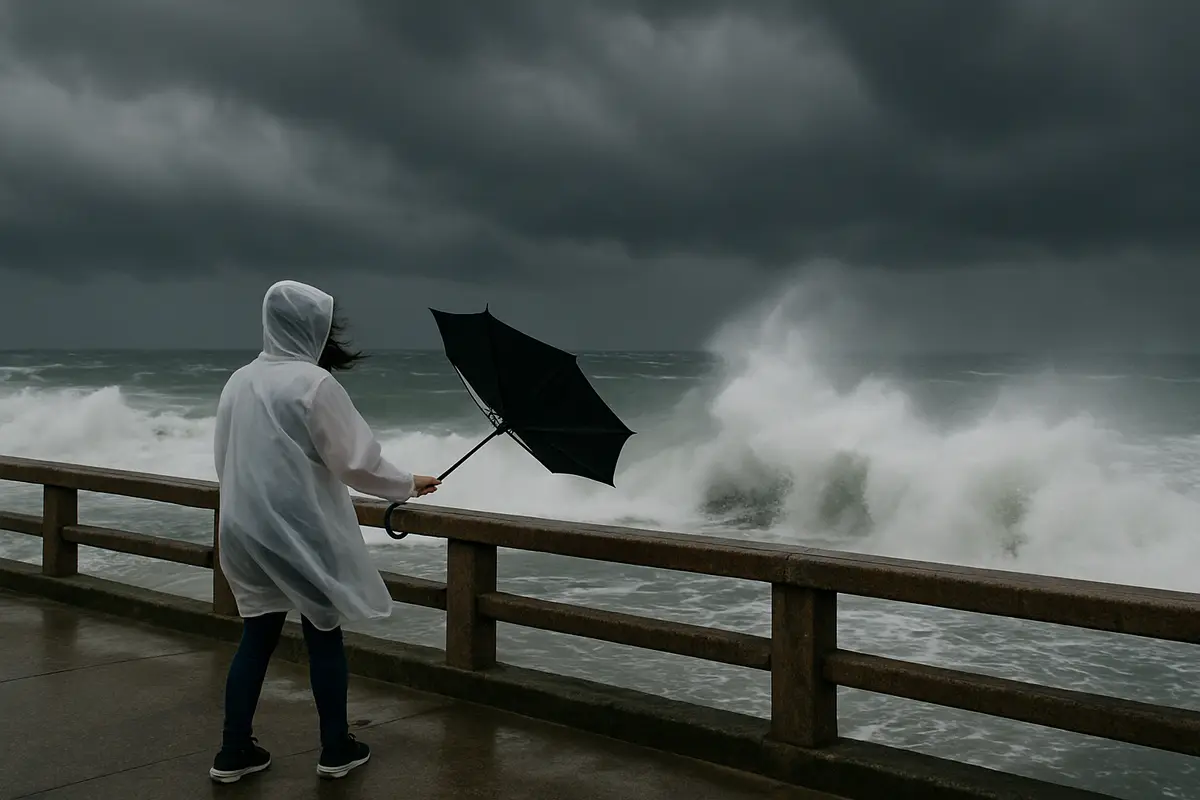
この画像はAIで生成され、学習目的で使用されています。
This image is AI-generated and used for educational purposes.
気象庁によると、台風9号が沖縄県に近づいています2。11日の夜まで、宮古島や石垣島などでは、とても強い風が吹くおそれがあります3。家が倒れるほどの強い風です4。
雨もたくさん降りそうです5。海では波がとても高くなりますから、海の近くに行かないでください6。川の水も増えるかもしれませんから、川にも近づかないでください7。
沖縄県に住んでいる人は、外に出ないで、安全な場所にいてください8。飛行機や船は、止まるかもしれません9。旅行をする人は、新しい情報をよく確認してください10。
Discussion
to rate or comment.
No comments yet.