北海道の白老町で、毛ガニをとる漁が始まりました2。11日の朝、漁に出た船が港に戻って、とれたばかりの毛ガニが次々と運ばれました3。
この日にとれた毛ガニは約4600kgで、去年より350kgほど多かったそうです4。今年は大きいカニが多いということです5。市場で最も高い値段がついたカニは、1kgで9880円でした6。
漁師の男性は「久しぶりにたくさんとれました7。多くの人に食べてもらいたいです」と話していました8。白老町の毛ガニは、町の名物として知られています9。
(ほっかいどう)
Hokkaido
(けがに)
hairy crab
(りょう)
fishing
(はじまる)
to begin
(しらおいちょう)
Shiraoi Town (in Hokkaido)
(とる)
to take (in)
(にち)
day
(あさ)
morning
(でる)
to come out; to occur
(ふね)
ship
(みなと)
port, harbor
(もどる)
to return / to come back
(とれる)
to be harvested
(つぎつぎ)
one after another
(はこぶ)
to carry; to transport
(ひ)
day
(やく)
approximately, about
(きょねん)
last year
(おおい)
many
(ことし)
this year
(おおきい)
big; large
(かに)
crab
(いちば)
market
(もっとも)
most; extremely
(たかい)
expensive; high
(ねだん)
price
(つく)
to be attached / stained
(えん)
yen (currency); circle
(りょうし)
fisherman
(だんせい)
man; male
(ひさしぶり)
after a long time
(たくさん)
a lot / many
(ひと)
person / people
(たべる)
to eat
(はなす)
to speak, talk
(まち)
town
(めいぶつ)
famous product; specialty
(しる)
to know, learn
polite non-past tense
The polite non-past ~ます states what will happen — the funeral will continue.
葬式は続きます。
The funeral will continue.
明日行きます。
I will go tomorrow.
te-form connecting actions
The te-form links successive actions. Here 決めて使う means 'decide (a time) and then use', and 細かく決めて links deciding rules with announcing them.
時間を決めて使います。
I set a time and use it.
朝起きて、ごはんを食べます。
I get up in the morning and eat breakfast.
just did ~ / only recently ~
Expresses that an action was completed very recently. She had just returned to practice in February.
日本に来たばかりです。
I just came to Japan.
起きたばかりだ。
I just woke up.
passive voice
Expresses that something is done to the subject. Here the crabs were carried in (運ばれました) and Shiraoi's crabs are known as a specialty (知られています).
カニが運ばれました。
The crabs were carried in.
この町は毛ガニで知られています。
This town is known for hairy crabs.
than / more than
Indicates comparison. Used to say prices rose on average 2.8% compared to last year.
去年より寒い。
Colder than last year.
彼より背が高い。
Taller than him.
to the extent that / as much as
ほど expresses degree — heavy rain to the extent never experienced before (…ないほどの大雨).
泣きたいほど嬉しい。
I'm so happy I could cry.
歩けないほど疲れた。
I'm so tired I can't walk.
I hear that / it is said
Reports hearsay. 大きく育つそうです means '(I hear) they grow big'.
雨が降るそうだ
I hear it will rain
おいしいそうだ
they say it's delicious
I hear that / it is said that
Reports hearsay or information received. Here it conveys what the agency said.
彼は来ないということだ
I hear he won't come
明日休みということだ
they say tomorrow is a holiday
want someone to ~ (for my/our benefit)
Combines てもらう (receive the favor of someone doing something) with たい (want). Expresses a desire for others to do something.
多くの人に見てもらいたいです。
We want many people to see it.
is doing, has been doing (ongoing state/action)
Expresses a continuing action or resulting state. Formed with て-form + いる. Can describe an action in progress or a state resulting from a past change.
今、ご飯を食べています。
I am eating rice now.
東京に住んでいます。
I live in Tokyo.
ドアが開いています。
The door is open.
as / in the role of
Marks the role, capacity, or status in which something is treated. Used here as 特別な史跡として (as a special historic site).
先生として働く。
To work as a teacher.
プレゼントとしてもらった。
I received it as a present.
北海道で毛ガニの漁が始まる
Hairy crab fishing season begins in Hokkaido
北海道の白老町で、毛ガニをとる漁が始まりました。
In the town of Shiraoi in Hokkaido, the fishing season for catching hairy crabs has begun.
11日の朝、漁に出た船が港に戻って、とれたばかりの毛ガニが次々と運ばれました。
On the morning of the 11th, the boats that had gone out fishing returned to port, and freshly caught hairy crabs were carried in one after another.
この日にとれた毛ガニは約4600kgで、去年より350kgほど多かったそうです。
The hairy crabs caught that day totaled about 4,600 kg, reportedly about 350 kg more than last year.
今年は大きいカニが多いということです。
It is said that there are many large crabs this year.
市場で最も高い値段がついたカニは、1kgで9880円でした。
The crab that fetched the highest price at the market sold for 9,880 yen per kilogram.
漁師の男性は「久しぶりにたくさんとれました。
A fisherman said, "We caught a lot for the first time in a while.
多くの人に食べてもらいたいです」と話していました。
I want many people to eat them."
白老町の毛ガニは、町の名物として知られています。
Shiraoi's hairy crabs are known as a specialty of the town.
2026年07月16日 07:26
著者: jpreader
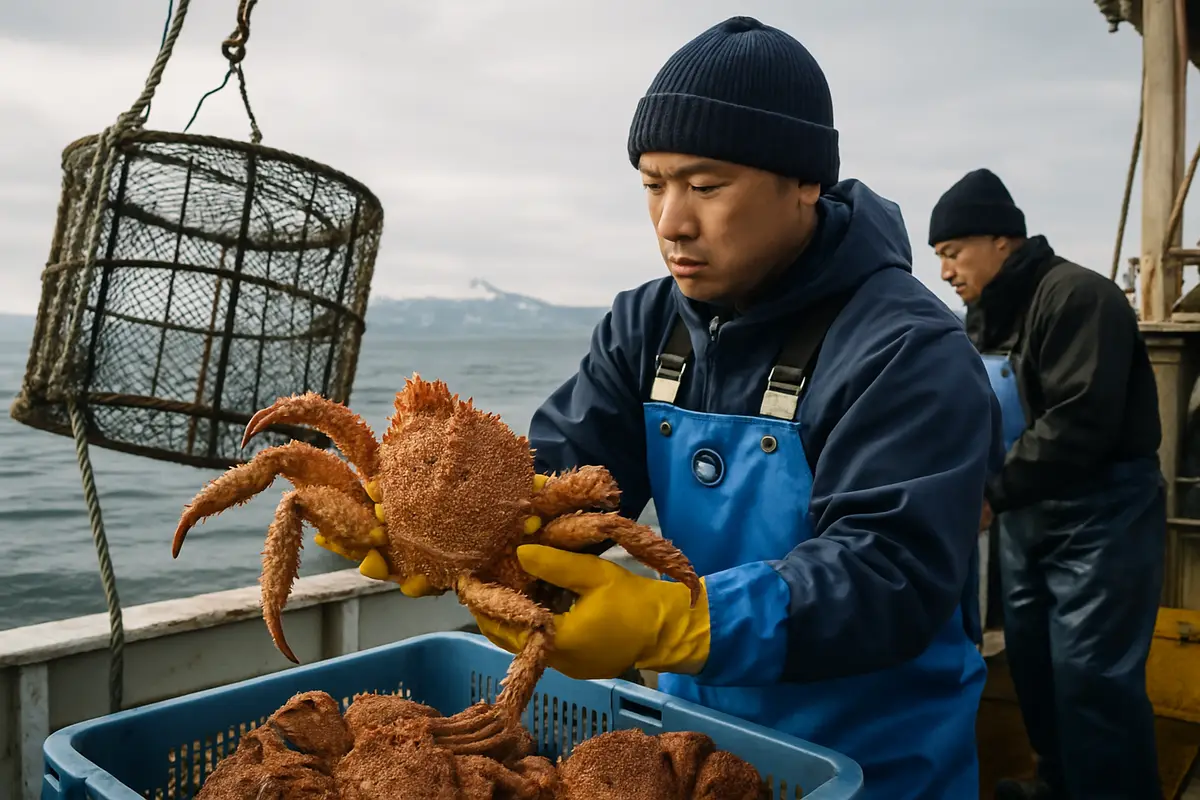
この画像はAIで生成され、学習目的で使用されています。
This image is AI-generated and used for educational purposes.
北海道の白老町で、毛ガニをとる漁が始まりました2。11日の朝、漁に出た船が港に戻って、とれたばかりの毛ガニが次々と運ばれました3。
この日にとれた毛ガニは約4600kgで、去年より350kgほど多かったそうです4。今年は大きいカニが多いということです5。市場で最も高い値段がついたカニは、1kgで9880円でした6。
漁師の男性は「久しぶりにたくさんとれました7。多くの人に食べてもらいたいです」と話していました8。白老町の毛ガニは、町の名物として知られています9。
Discussion
to rate or comment.
No comments yet.