カナダの西の方で、大きな山火事が起きています2。火は森の木を燃やして、広がっています3。たくさんの人が家から逃げました4。
火事のけむりは、風に乗ってアメリカまで来ました5。アメリカの町では、空が白く見えます6。目やのどが痛くなる人もいます7。
政府は「外に出るときは、マスクをしてください」と話しています8。雨が降れば、火は小さくなるかもしれません9。
(かなだ)
Canada
(やま)
mountain
(かじ)
fire (accident)
(つづく)
to continue
(にし)
west
(ほう)
direction, side
(おおきな)
big (attrib.)
(やまかじ)
forest fire / wildfire
(おきる)
to happen, occur
(ひ)
fire
(もり)
forest
(き)
tree / wood
(もやす)
to burn
(ひろがる)
to spread
(たくさん)
a lot / many
(ひと)
person / people
(いえ)
house
(にげる)
to escape / to run away
(けむり)
smoke
(かぜ)
wind
(のる)
to ride, board
(あめりか)
America, USA
(くる)
to come
(まち)
town
(そら)
sky
(しろい)
white
(みえる)
to be visible, can see
(め)
eye
(のど)
throat
(いたい)
painful
(なる)
to become
(せいふ)
government; administration
(そと)
outside
(でる)
to come out; to occur
(ますく)
mask
(はなす)
to speak, talk
(あめ)
rain
(ふる)
to fall (rain, snow)
(ちいさい)
small
is doing, has been doing (ongoing state/action)
Expresses a continuing action or resulting state. Formed with て-form + いる. Can describe an action in progress or a state resulting from a past change.
今、ご飯を食べています。
I am eating rice now.
東京に住んでいます。
I live in Tokyo.
ドアが開いています。
The door is open.
when ~
Indicates the time when something happened — when he was in junior high school.
中学生のとき病気になりました。
When I was a junior-high student I got sick.
子どものとき日本にいました。
I was in Japan when I was a child.
please do ...
Polite request form. Formed with て-form + ください. Used to ask someone to perform an action.
ここに名前を書いてください。
Please write your name here.
もう一度言ってください。
Please say it once more.
窓を開けてください。
Please open the window.
conditional: if ~
Ba-form conditional expressing 'if ~ then ~'.
勉強すれば、合格できる。
If you study, you can pass.
早く起きれば間に合う。
If you wake up early, you'll make it.
might, maybe, possibly
Expresses possibility or uncertainty. Attached directly to the plain form of verbs, adjectives, or nouns. Less certain than でしょう.
明日は雨かもしれません。
It might rain tomorrow.
彼は来ないかもしれない。
He might not come.
この問題は難しいかもしれません。
This problem might be difficult.
カナダの山で火事が続く
Wildfires continue in Canada's mountains
カナダの西の方で、大きな山火事が起きています。
In the west of Canada, a large wildfire is burning.
火は森の木を燃やして、広がっています。
The fire burns the trees of the forest and is spreading.
たくさんの人が家から逃げました。
Many people fled from their homes.
火事のけむりは、風に乗ってアメリカまで来ました。
The smoke from the fire rode the wind and reached America.
アメリカの町では、空が白く見えます。
In American towns, the sky looks white.
目やのどが痛くなる人もいます。
Some people's eyes and throats start to hurt.
政府は「外に出るときは、マスクをしてください」と話しています。
The government is saying, "When you go outside, please wear a mask."
雨が降れば、火は小さくなるかもしれません。
If it rains, the fire may get smaller.
2026年07月18日 04:45
著者: jpreader
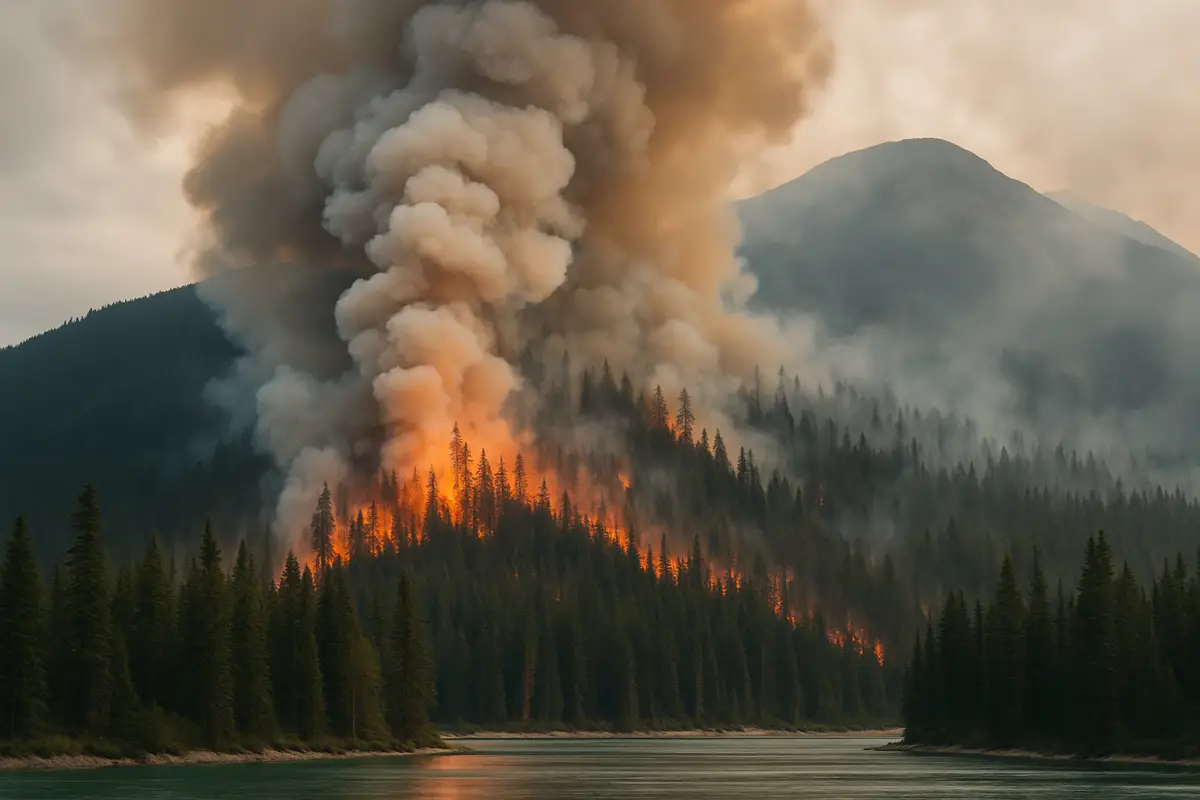
この画像はAIで生成され、学習目的で使用されています。
This image is AI-generated and used for educational purposes.
カナダの西の方で、大きな山火事が起きています2。火は森の木を燃やして、広がっています3。たくさんの人が家から逃げました4。
火事のけむりは、風に乗ってアメリカまで来ました5。アメリカの町では、空が白く見えます6。目やのどが痛くなる人もいます7。
政府は「外に出るときは、マスクをしてください」と話しています8。雨が降れば、火は小さくなるかもしれません9。
Discussion
to rate or comment.
No comments yet.