7月26日は「土用のうしの日」です2。日本には、この日にうなぎを食べる習慣があります3。夏の暑さで疲れた体に、力をつけるためだと言われています4。
近年、うなぎのねだんは高くなっていました5。しかし今年は、稚魚がたくさんとれたため、去年より安くなりそうです6。スーパーの担当者は「多くのお客さんに買ってほしい」と話しています7。
専門家は、うなぎを守るために、とりすぎに注意する必要があると指摘しています8。
(どよう)
midsummer (18-day period before the start of autumn)
(うし)
ox (zodiac; here in 'Day of the Ox')
(ひ)
day
(ことし)
this year
(うなぎ)
eel
(やすい)
cheap / inexpensive
(しちがつ)
July
(にじゅうろくにち)
the 26th (of the month)
(にほん)
Japan
(たべる)
to eat
(しゅうかん)
custom / habit
(ある)
a certain (some)
(なつ)
Summer
(あつさ)
heat
(つかれる)
to be tired
(からだ)
body
(ちから)
strength; power
(つける)
to attach / put on
(いう)
to say
(きんねん)
recent years
(ねだん)
price
(たかい)
expensive; high
(なる)
to become
(しかし)
however, but
(ちぎょ)
fry; young fish
(たくさん)
a lot / many
(とれる)
to be harvested
(きょねん)
last year
(すーぱー)
supermarket
(たんとうしゃ)
person in charge
(おおく)
many, much
(おきゃくさん)
guest / spectator / customer
(かう)
to buy
(はなす)
to speak, talk
(せんもんか)
expert, specialist
(まもる)
to protect
(とる)
to take (in)
(ちゅういする)
to be careful; to pay attention
(ひつよう)
necessary / needed
(してきする)
to point out
because of ~ / for the sake of ~
ため after a noun or plain form indicates reason or purpose. Used twice: once for 'because of bear worries' and once for 'for the children's safety'.
熊の心配があるため
because there is worry about bears
子どもたちの安全のために
for the sake of the children's safety
passive form
The passive form marks the subject as receiving an action. 「海女」と呼ばれる女性 = "women who are called 'ama'".
「海女」と呼ばれる女性。
Women who are called 'ama'.
この魚はよく食べられる。
This fish is often eaten.
is doing, has been doing (ongoing state/action)
Expresses a continuing action or resulting state. Formed with て-form + いる. Can describe an action in progress or a state resulting from a past change.
今、ご飯を食べています。
I am eating rice now.
東京に住んでいます。
I live in Tokyo.
ドアが開いています。
The door is open.
looks like, seems (visual impression)
Describes the fans' outward appearance — they looked very sad — based on what could be seen.
ファンも悲しそうでした。
The fans also looked sad.
この料理はおいしそうだ。
This dish looks delicious.
雨が降りそうです。
It looks like it will rain.
than / more than
Indicates comparison. Used to say prices rose on average 2.8% compared to last year.
去年より寒い。
Colder than last year.
彼より背が高い。
Taller than him.
want (someone) to do ...
Expresses a wish for someone else to do something. Formed with て-form + ほしい. The person you want to act is marked with に.
静かにしてほしい。
I want you to be quiet.
もう少し待ってほしいです。
I'd like you to wait a bit more.
先生に説明してほしいです。
I want the teacher to explain.
too much / excessively ~
Indicates excess. Used to describe the government's methods being too harsh (厳しすぎる) and the military deployment being excessive (やりすぎ).
政府の厳しすぎるやり方に反対する人たち
People opposing the government's overly harsh methods
軍を出すのはやりすぎだ。
Deploying the military is going too far.
土用のうしの日 今年はうなぎが安い
Day of the Ox during doyo: eel is cheap this year
7月26日は「土用のうしの日」です。
July 26th is the "Day of the Ox during doyo."
日本には、この日にうなぎを食べる習慣があります。
In Japan, there is a custom of eating eel on this day.
夏の暑さで疲れた体に、力をつけるためだと言われています。
It is said to be a way to build up strength in a body worn out by the summer heat.
近年、うなぎのねだんは高くなっていました。
In recent years, the price of eel had been rising.
しかし今年は、稚魚がたくさんとれたため、去年より安くなりそうです。
However, this year, because a lot of young fish were caught, it looks set to be cheaper than last year.
スーパーの担当者は「多くのお客さんに買ってほしい」と話しています。
A supermarket representative said, "I want many customers to buy it."
専門家は、うなぎを守るために、とりすぎに注意する必要があると指摘しています。
Experts point out that, in order to protect eel, it is necessary to be careful not to overfish.
2026年07月18日 04:47
著者: jpreader
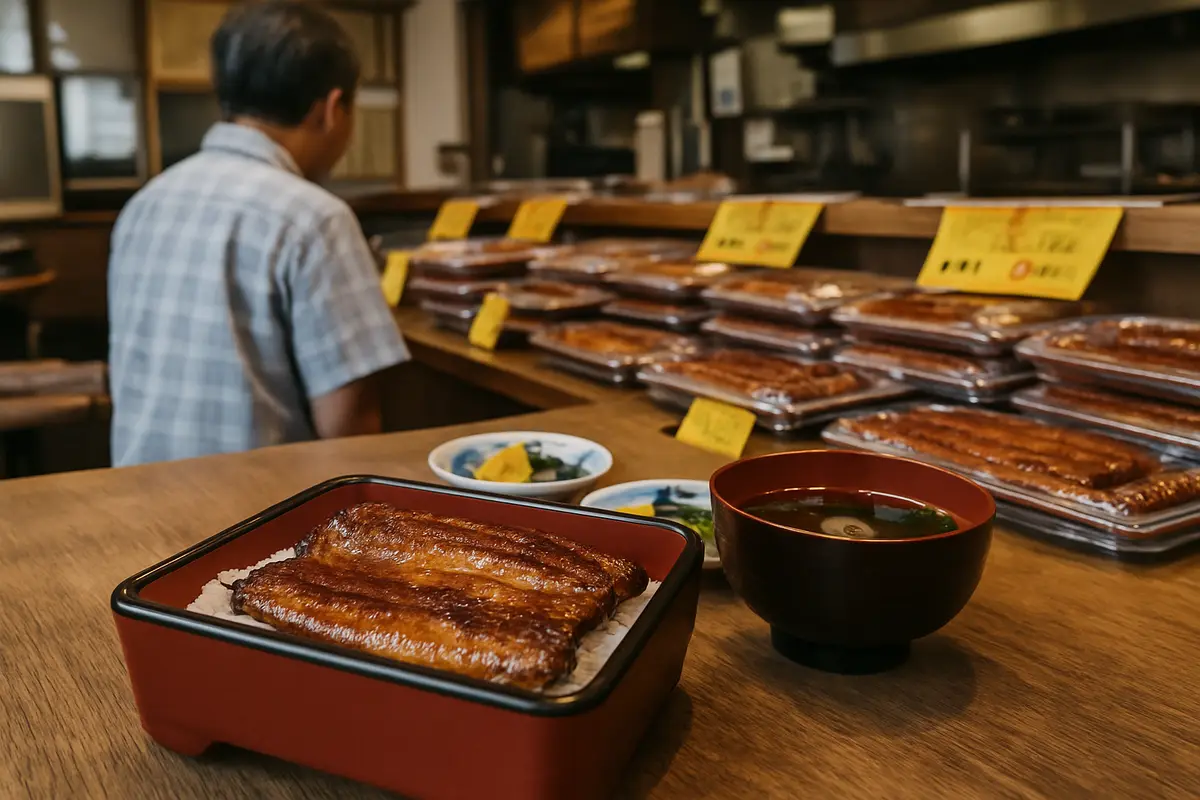
この画像はAIで生成され、学習目的で使用されています。
This image is AI-generated and used for educational purposes.
7月26日は「土用のうしの日」です2。日本には、この日にうなぎを食べる習慣があります3。夏の暑さで疲れた体に、力をつけるためだと言われています4。
近年、うなぎのねだんは高くなっていました5。しかし今年は、稚魚がたくさんとれたため、去年より安くなりそうです6。スーパーの担当者は「多くのお客さんに買ってほしい」と話しています7。
専門家は、うなぎを守るために、とりすぎに注意する必要があると指摘しています8。
Discussion
to rate or comment.
No comments yet.