島根県の松江城には、古いお堀があります2。お堀は、城の周りにある川のような所です3。船に乗って、お堀を回ることができます4。
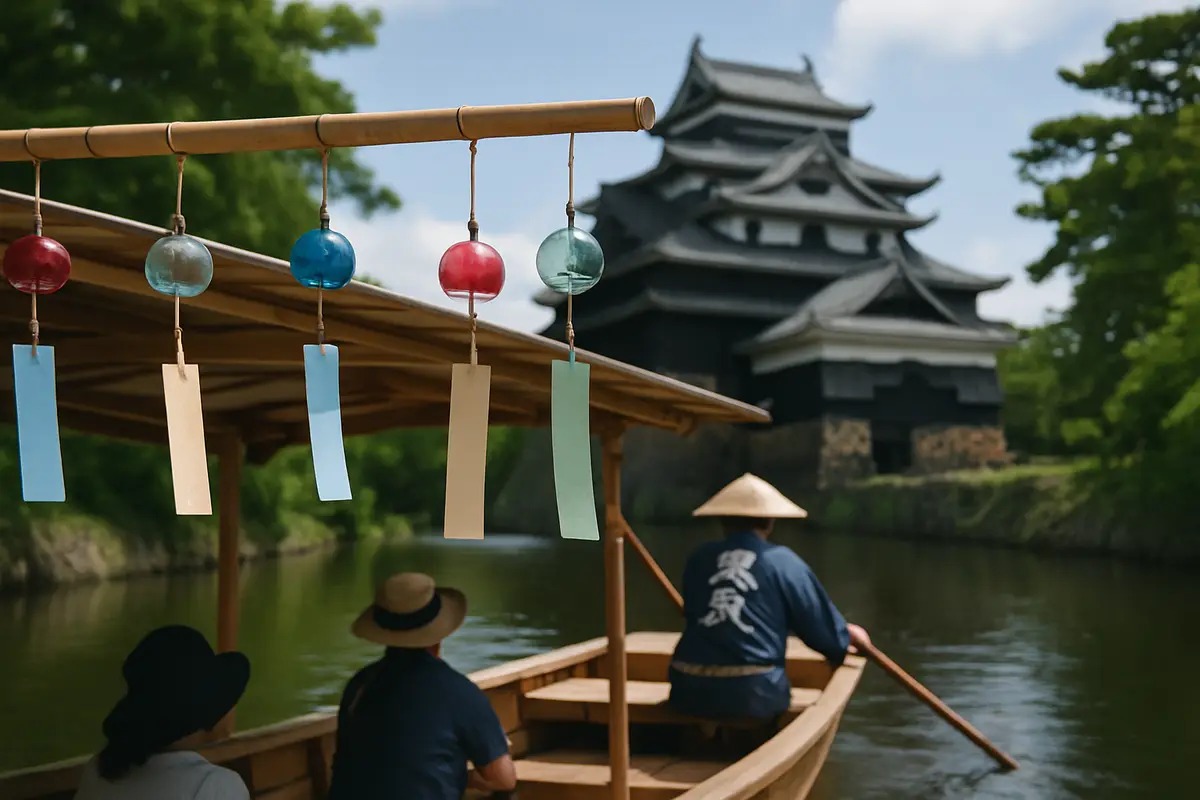
夏の間、船に「風鈴」をつけます5。風鈴は、風が吹くと、きれいな音がなります6。今年は7月21日から始まりました7。風鈴の音は、暑い日に涼しい気持ちになります8。
船に乗った人は、風鈴の音を聞きながら、昔の家や景色を見ます9。岡山県の男の人は「夏が始まったと感じました」と話しました10。風鈴の船は、8月の終わりまでです11。
(まつえじょう)
Matsue Castle
(ふね)
ship
(ふうりん)
wind chime
(おと)
sound
(すずしい)
cool, refreshing
(しまねけん)
Shimane Prefecture
(ふるい)
old (things)
(おほり)
moat (around a castle)
(ある)
a certain (some)
(しろ)
castle
(まわり)
Surroundings; people around; vicinity
(かわ)
river
(ところ)
place; area
(のる)
to ride, board
(まわる)
to go around; to turn
(なつ)
Summer
(あいだ)
interval, during
(つける)
to attach / put on
(かぜ)
wind
(ふく)
to blow (wind)
(きれい)
pretty, clean
(なる)
to ring; to sound
(ことし)
this year
(がつ)
month (counter)
(ひ)
day
(はじまる)
to begin
(あつい)
hot
(きもち)
feeling; emotion
(なる)
to become
(ひと)
person / people
(きく)
to listen, hear
(むかし)
long ago, past
(いえ)
house
(けしき)
scenery
(みる)
to see, watch
(おかやまけん)
Okayama Prefecture
(おとこのひと)
man
(かんじる)
to feel, to sense
(はなす)
to speak, talk
(おわり)
end
like ~ / resembling ~
Used in 「糸のような細い金属」to describe the metal as being thin like a thread.
花のようなきれいな色です。
It's a pretty color like a flower.
夢のような話です。
It's a story like a dream.
can do ..., to be able to ...
Verb dictionary form + ことができる expresses ability or possibility. More formal than the potential verb form. Common in written Japanese and announcements.
日本語を話すことができます。
I can speak Japanese.
ここで写真を撮ることができます。
You can take photos here.
インターネットで予約することができます。
You can make a reservation on the internet.
if / when (natural consequence)
Conditional と indicating a natural or expected result. 一緒に捨てると…火が出て means 'if you throw them away together, fire starts.'
ボタンを押すと、ドアが開きます。
When you press the button, the door opens.
春になると、桜が咲きます。
When spring comes, cherry blossoms bloom.
from (starting point)
Indicates the origin or source. 建物の中から means 'from inside the building'.
かばんの中から鍵が出てきた。
A key came out from inside the bag.
while doing ...
Verb stem + ながら indicates doing two things simultaneously. The action before ながら is the secondary action; the main action follows.
音楽を聞きながら勉強します。
I study while listening to music.
歩きながら話しましょう。
Let's talk while walking.
テレビを見ながらごはんを食べます。
I eat while watching TV.
quotative particle
Marks the content of what someone said or reported. Used with 言う here.
彼は行くと言いました。
He said he would go.
明日休みだと聞きました。
I heard tomorrow is a holiday.
until / as far as
Indicates an end point in space or time. Here it expresses how far the balls flew.
駅まで歩きます。
I walk to the station.
遠くまで飛びました。
It flew far away.
松江城の船に風鈴 音が涼しい
Wind chimes on the boats at Matsue Castle — the sound feels cool
島根県の松江城には、古いお堀があります。
Matsue Castle in Shimane Prefecture has an old moat.
お堀は、城の周りにある川のような所です。
A moat is a place like a river that runs around a castle.
船に乗って、お堀を回ることができます。
You can ride a boat and go around the moat.
夏の間、船に「風鈴」をつけます。
During the summer, 'wind chimes' are hung on the boats.
風鈴は、風が吹くと、きれいな音がなります。
When the wind blows, a wind chime makes a beautiful sound.
今年は7月21日から始まりました。
This year it started on July 21.
風鈴の音は、暑い日に涼しい気持ちになります。
The sound of the wind chimes gives you a cool feeling on a hot day.
船に乗った人は、風鈴の音を聞きながら、昔の家や景色を見ます。
People who ride the boat look at the old houses and the scenery while listening to the wind chimes.
岡山県の男の人は「夏が始まったと感じました」と話しました。
A man from Okayama Prefecture said, "I felt that summer had begun."
風鈴の船は、8月の終わりまでです。
The wind-chime boats run until the end of August.
2026年07月25日 14:56
著者: jpreader
この画像はAIで生成され、学習目的で使用されています。
This image is AI-generated and used for educational purposes.
島根県の松江城には、古いお堀があります2。お堀は、城の周りにある川のような所です3。船に乗って、お堀を回ることができます4。
夏の間、船に「風鈴」をつけます5。風鈴は、風が吹くと、きれいな音がなります6。今年は7月21日から始まりました7。風鈴の音は、暑い日に涼しい気持ちになります8。
船に乗った人は、風鈴の音を聞きながら、昔の家や景色を見ます9。岡山県の男の人は「夏が始まったと感じました」と話しました10。風鈴の船は、8月の終わりまでです11。
Discussion
to rate or comment.
No comments yet.