熊本県で強い地震がありました2。家がこわれた所もあります3。ゆれが大きくて、こわい思いをした人がたくさんいます4。
気象庁は「これからも強い地震が来るかもしれません」と言っています5。地震のあとは、山や川の近くもあぶないです6。気をつけてください7。
地震のときは、まず頭を守ってください8。テーブルの下に入ると安全です9。ねるときは、くつを近くに置きましょう10。水や食べ物を用意しておくと安心です11。
(くまもと)
Kumamoto (prefecture)
(じしん)
earthquake
(これから)
from now on
(きをつける)
to be careful
(くまもとけん)
Kumamoto Prefecture
(つよい)
strong
(ある)
a certain (some)
(いえ)
house
(こわれる)
to break, to be destroyed
(ところ)
place; area
(ゆれ)
shaking, tremor
(おおきい)
big; large
(こわい)
scary, frightening
(おもい)
feeling, experience, thought
(ひと)
person / people
(たくさん)
a lot / many
(きしょうちょう)
Japan Meteorological Agency
(くる)
to come
(いう)
to say
(あと)
remaining; left; more
(やま)
mountain
(かわ)
river
(ちかく)
nearby
(あぶない)
dangerous
(とき)
time, when
(まず)
first of all
(あたま)
head
(まもる)
to protect
(てーぶる)
table
(した)
under, below
(はいる)
to enter, be contained in
(あんぜん)
safety
(ねる)
to sleep, to go to bed
(くつ)
shoes
(おく)
to place, put
(みず)
water
(たべもの)
food
(ようい)
preparation; readiness
(あんしん)
relief / peace of mind
did ... (polite past)
Polite past tense of verbs. Formed with verb stem + ました. Used in formal or polite speech to describe completed actions.
昨日、映画を見ました。
I watched a movie yesterday.
朝ごはんを食べました。
I ate breakfast.
友達が来ました。
A friend came.
polite non-past tense
The polite non-past ~ます states what will happen — the funeral will continue.
葬式は続きます。
The funeral will continue.
明日行きます。
I will go tomorrow.
might ~, perhaps ~
Expresses possibility.
明日雨が降るかもしれません。
It might rain tomorrow.
彼は来ないかもしれません。
He might not come.
is doing, has been doing (ongoing state/action)
Expresses a continuing action or resulting state. Formed with て-form + いる/います. Can describe an action in progress or a state that continues from a past change.
今、本を読んでいます。
I am reading a book now.
窓が開いています。
The window is open.
日本に住んでいます。
I live in Japan.
polite copula / is, am, are
Describes states such as the mother panda being healthy and the baby being small.
これは本です。
This is a book.
今日は寒いです。
It is cold today.
please do ...
Polite request form. Formed with て-form + ください. Used to ask someone to perform an action.
ここに名前を書いてください。
Please write your name here.
もう一度言ってください。
Please say it once more.
窓を開けてください。
Please open the window.
let's ~
Volitional form expressing a suggestion or invitation. Used by the African Union to suggest resolving through discussion.
一緒に行きましょう。
Let's go together.
話し合いで解決しましょう。
Let's resolve it through discussion.
Do ~ in advance (preparation)
Indicates doing something in advance for future readiness. Companies need to decide procedures in advance.
旅行の前にホテルを予約しておく。
I book a hotel in advance before the trip.
熊本で地震 これからも気をつけて
Earthquake in Kumamoto: Stay Careful from Now On
熊本県で強い地震がありました。
There was a strong earthquake in Kumamoto Prefecture.
家がこわれた所もあります。
There are also places where houses were destroyed.
ゆれが大きくて、こわい思いをした人がたくさんいます。
The shaking was strong, and many people had a frightening experience.
気象庁は「これからも強い地震が来るかもしれません」と言っています。
The Japan Meteorological Agency says, "Strong earthquakes may still come."
地震のあとは、山や川の近くもあぶないです。
After an earthquake, areas near mountains and rivers are dangerous too.
気をつけてください。
Please be careful.
地震のときは、まず頭を守ってください。
During an earthquake, first please protect your head.
テーブルの下に入ると安全です。
It is safe if you get under a table.
ねるときは、くつを近くに置きましょう。
When you go to bed, let's put your shoes nearby.
水や食べ物を用意しておくと安心です。
It is reassuring if you prepare water and food in advance.
2026年08月06日 19:18
著者: jpreader
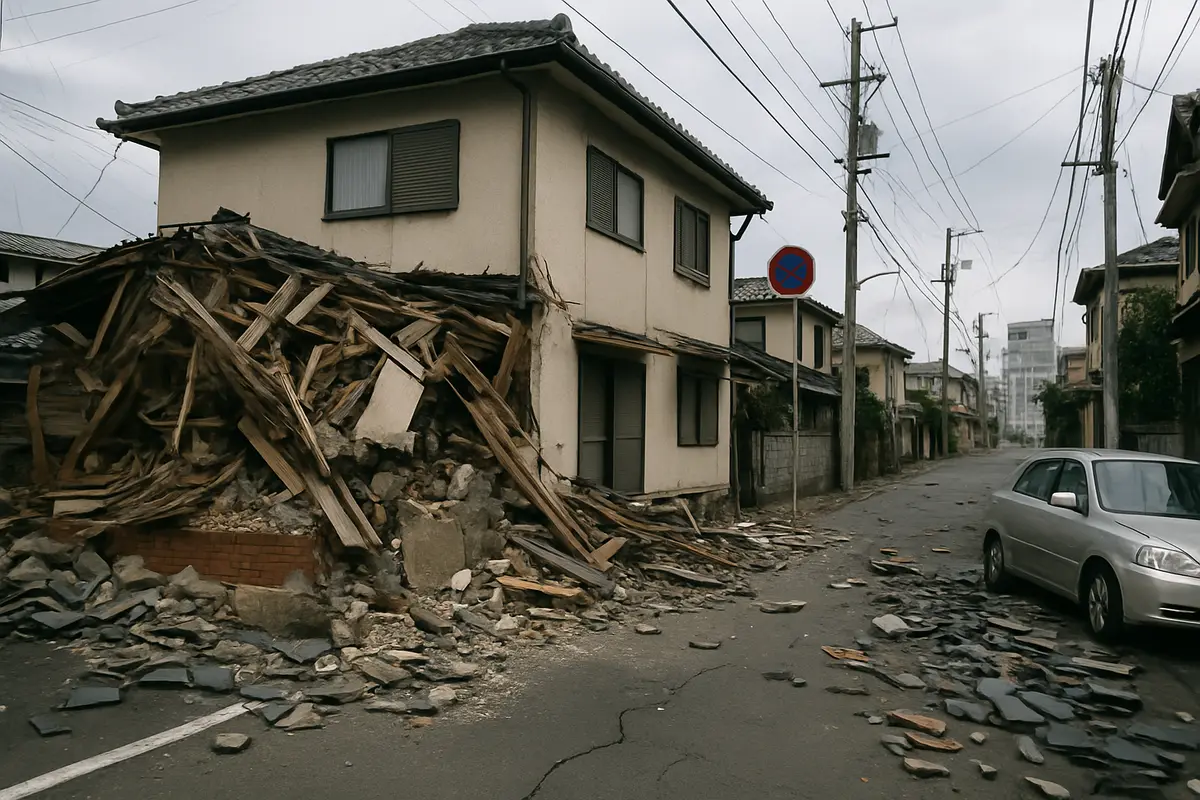
この画像はAIで生成され、学習目的で使用されています。
This image is AI-generated and used for educational purposes.
熊本県で強い地震がありました2。家がこわれた所もあります3。ゆれが大きくて、こわい思いをした人がたくさんいます4。
気象庁は「これからも強い地震が来るかもしれません」と言っています5。地震のあとは、山や川の近くもあぶないです6。気をつけてください7。
地震のときは、まず頭を守ってください8。テーブルの下に入ると安全です9。ねるときは、くつを近くに置きましょう10。水や食べ物を用意しておくと安心です11。
Discussion
to rate or comment.
No comments yet.