地震じしん
N4

(じしん)

earthquake

ときとき
N5

(とき)

time, when

あたま
N4

(あたま)

head

守るまもる
N4

(まもる)

to protect

かた
N4

(かた)

person (polite)

注意ちゅうい
N3

(ちゅうい)

caution, warning

起きるおきる
N5

(おきる)

to happen, occur

いちばんいちばん
N5

(いちばん)

most; number one

大事だいじ
N4

(だいじ)

important, serious

落ちるおちる
N4

(おちる)

to fall; to drop; to strike (lightning)

もの
N5

(もの)

thing

打つうつ
N4

(うつ)

to hit / strike

大きなおおきな
N5

(おおきな)

big (attrib.)

けがけが
N3

(けが)

injury

専門家せんもんか
N2

(せんもんか)

expert, specialist

まずまず
N4

(まず)

first of all

N2

(み)

body, oneself

低いひくい
N5

(ひくい)

low

話すはなす
N5

(はなす)

to speak, talk

いえ
N5

(いえ)

house

なか
N5

(なか)

inside

いるいる
N5

(いる)

to exist, to be (animate)

場合ばあい
N4

(ばあい)

case; situation

じょうぶじょうぶ
N3

(じょうぶ)

sturdy, durable

つくえ
N4

(つくえ)

desk

した
N5

(した)

under, below

入るはいる
N5

(はいる)

to enter, be contained in

あし
N5

(あし)

foot; leg

しっかりしっかり
N3

(しっかり)

firmly; properly; thoroughly

持つもつ
N5

(もつ)

to have; to hold

近くちかく
N5

(ちかく)

nearby

かばんかばん
N5

(かばん)

bag

クッションくっしょん
N3

(くっしょん)

cushion

おおうおおう
N2

(おおう)

to cover

台所だいどころ
N4

(だいどころ)

kitchen

まど
N4

(まど)

window

危ないあぶない
N5

(あぶない)

dangerous

すぐにすぐに
N5

(すぐに)

immediately

離れるはなれる
N3

(はなれる)

to be apart

そと
N5

(そと)

outside

建物たてもの
N4

(たてもの)

building

かべ
N3

(かべ)

wall

ガラスがらす
N4

(がらす)

glass

広いひろい
N5

(ひろい)

wide; spacious

場所ばしょ
N4

(ばしょ)

place

移動いどう
N3

(いどう)

movement, to move

ゆれゆれ
N3

(ゆれ)

shaking, tremor

止まるとまる
N5

(とまる)

to stop

またまた
N5

(また)

again

強いつよい
N4

(つよい)

strong

来るくる
N5

(くる)

to come

しばらくしばらく
N4

(しばらく)

for a while

必要ひつよう
N4

(ひつよう)

necessary / needed

~こと
N5

nominalizer (the act of ~)

Turns a verb phrase into a noun. Here 話を聞くこと (the act of listening to a speech).

日本に行くことが好きだ。

I like going to Japan.

勉強することは大切だ。

Studying is important.

~です
N5

polite copula / is, am, are

Describes states such as the mother panda being healthy and the baby being small.

これは本です。

This is a book.

今日は寒いです。

It is cold today.

~てくる
N4

come toward (action approaching)

Indicates motion toward the speaker or a location. Here it describes rocks flying toward people.

鳥が飛んできた。

A bird flew toward (us).

雨が降ってきた。

It started raining.

~れる/~られる(受身)
N4

passive form

The passive marks the subject as the one affected. 頭を打たれる means having your head struck by something.

落ちてきた物に頭を打たれます。

Your head gets struck by a falling object.

先生にほめられました。

I was praised by the teacher.

~ことがあります
N4

there are times when ~

Describes occasional occurrences or possibilities. Used to say large rocks can sometimes fly out during eruptions.

時々学校に遅れることがあります。

Sometimes I'm late to school.

京都へ行くことがあります。

There are times I go to Kyoto.

~てください
N5

please do ...

Polite request form. Formed with て-form + ください. Used to ask someone to perform an action.

ここに名前を書いてください。

Please write your name here.

もう一度言ってください。

Please say it once more.

窓を開けてください。

Please open the window.

~ています
N5

is doing, has been doing (ongoing state/action)

Expresses a continuing action or resulting state. Formed with て-form + いる/います. Can describe an action in progress or a state that continues from a past change.

今、本を読んでいます。

I am reading a book now.

窓が開いています。

The window is open.

日本に住んでいます。

I live in Japan.

~ましょう
N5

let's ~

Volitional form expressing a suggestion or invitation. Used by the African Union to suggest resolving through discussion.

一緒に行きましょう。

Let's go together.

話し合いで解決しましょう。

Let's resolve it through discussion.

~ので
N4

because ~ / since ~

Causal connector. Because JA is buying at higher prices, store prices will also rise.

雨が降ったので、家にいた。

Since it rained, I stayed home.

忙しいので、行けません。

Since I'm busy, I can't go.

~たほうがいい
N5

had better ~ / should ~

Used in 「仲よくしたほうがいい」to express the survey question about which country Taiwan should have good relations with.

早く寝たほうがいいですよ。

You should go to bed early.

薬を飲んだほうがいい。

You should take medicine.

~かもしれません
N4

might ~, perhaps ~

Expresses possibility.

明日雨が降るかもしれません。

It might rain tomorrow.

彼は来ないかもしれません。

He might not come.

~ながら
N4

while doing ...

Verb stem + ながら indicates doing two things simultaneously. The action before ながら is the secondary action; the main action follows.

音楽を聞きながら勉強します。

I study while listening to music.

歩きながら話しましょう。

Let's talk while walking.

テレビを見ながらごはんを食べます。

I eat while watching TV.

~ても
N4

even if; even though

Used to express concession or hypothetical situation.

雨が降っても行きます。

I'll go even if it rains.

高くても買います。

Even if it's expensive, I'll buy it.

1

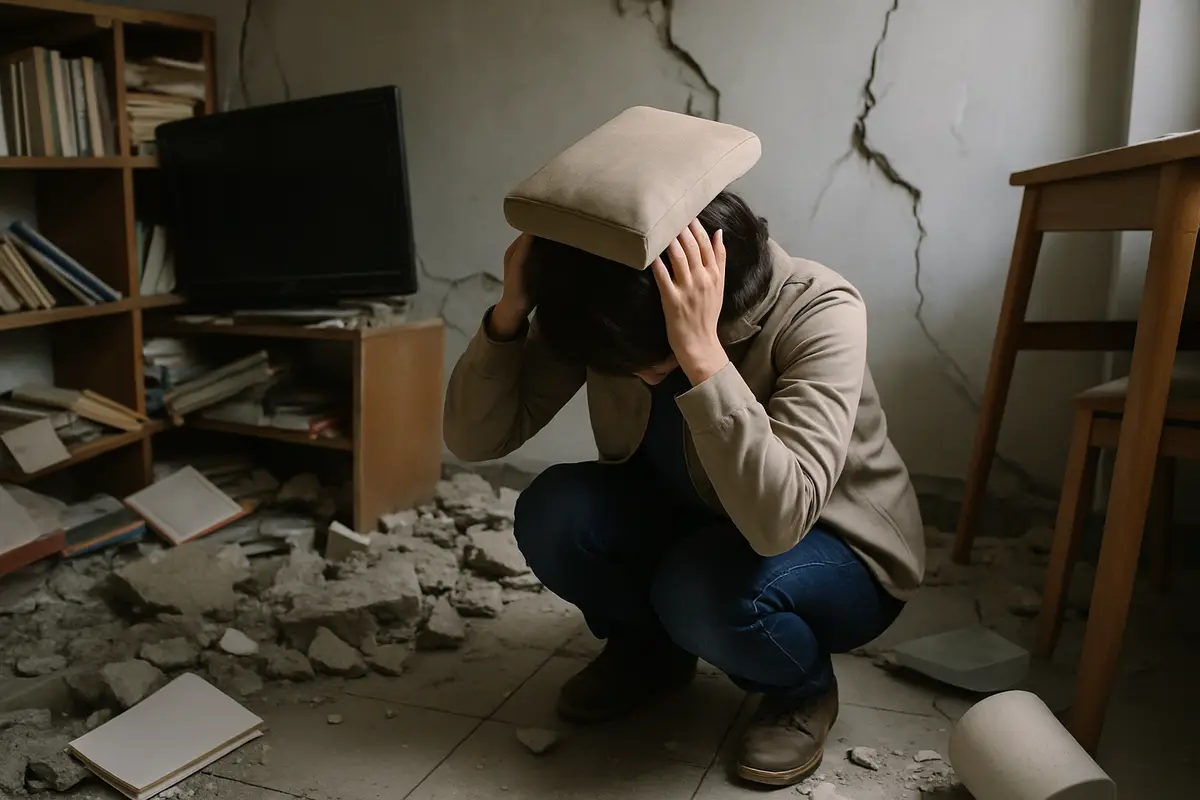
地震のとき 頭の守り方に注意

During an Earthquake: Pay Attention to How You Protect Your Head

2

地震が起きたとき、いちばん大事なことは頭を守ることです。

When an earthquake happens, the most important thing is to protect your head.

3

落ちてきた物に頭を打たれると、大きなけがをすることがあります。

If your head is struck by a falling object, you can suffer a serious injury.

4

専門家は「まず身を低くして、頭を守ってください」と話しています。

An expert says, "First get your body low, and protect your head."

5

家の中にいる場合は、じょうぶな机の下に入って、机の足をしっかり持ちましょう。

If you are inside a house, get under a sturdy desk and hold the desk's legs firmly.

6

近くに机がないときは、かばんやクッションで頭をおおってください。

When there is no desk nearby, please cover your head with a bag or a cushion.

7

台所や窓の近くは危ないので、すぐに離れたほうがいいです。

The kitchen and areas near windows are dangerous, so you had better move away immediately.

8

外にいるときは、建物の壁やガラスが落ちてくるかもしれません。

When you are outside, walls and glass from buildings may come falling down.

9

かばんで頭を守りながら、広い場所に移動しましょう。

Protect your head with a bag and move to an open space.

10

ゆれが止まっても、また強いゆれが来ることがあります。

Even after the shaking stops, strong shaking can come again.

11

しばらくは注意が必要です。

Caution is necessary for some time afterward.

地震じしんときあたままもかた注意ちゅうい1

2026年08月06日 19:21

著者: jpreader

地震のとき 頭の守り方に注意

この画像はAIで生成され、学習目的で使用されています。

This image is AI-generated and used for educational purposes.

地震じしんきたとき、いちばん大事だいじことあたままもことです2てきたものあたまれると、おおきなけがをすることがあります3専門家せんもんかは「まずひくして、あたままもてください」とはなています4

いえなかいる場合ばあいは、じょうぶつくえしたはいて、つくえあししっかりましょう5ちかつくえがないときは、かばんやクッションあたまおおってください6台所だいどころまどちかあぶないので、すぐにはなたほうがいいです7

そとにいるときは、建物たてものかべガラスちてくるかもしれません8かばんあたままもながら、ひろ場所ばしょ移動いどうしましょう9ゆれまっても、またつよゆれることがあります10しばらく注意ちゅうい必要ひつようです11

Discussion

00

to rate or comment.

No comments yet.