熊本県くまもとけん
N2

(くまもとけん)

Kumamoto Prefecture

氷川町ひかわちょう
N1

(ひかわちょう)

Hikawa Town (Kumamoto)

ボランティアぼらんてぃあ
N3

(ぼらんてぃあ)

volunteer

健康けんこう
N3

(けんこう)

health, healthy

チェックちぇっく
N3

(ちぇっく)

check

大雨おおあめ
N3

(おおあめ)

heavy rain

あとあと
N5

(あと)

remaining; left; more

たくさんたくさん
N5

(たくさん)

a lot / many

ひと
N5

(ひと)

person / people

まだまだ
N5

(まだ)

still; yet

いえ
N5

(いえ)

house

帰るかえる
N5

(かえる)

to return home

まち
N5

(まち)

town

体育館たいいくかん
N3

(たいいくかん)

gymnasium

などなど
N5

(など)

et cetera, and so on

避難ひなん
N2

(ひなん)

evacuation

生活せいかつ
N4

(せいかつ)

daily life; livelihood

続けるつづける
N4

(つづける)

to continue

暑いあつい
N5

(あつい)

hot

N5

(ひ)

day

続くつづく
N4

(つづく)

to continue

からだ
N4

(からだ)

body

悪いわるい
N5

(わるい)

bad

するする
N5

(する)

to do

心配しんぱい
N4

(しんぱい)

worry / concern

たちたち
N4

(たち)

plural suffix (for people)

来るくる
N5

(くる)

to come

看護師かんごし
N2

(かんごし)

nurse

大学生だいがくせい
N4

(だいがくせい)

university student

血圧けつあつ
N2

(けつあつ)

blood pressure

測るはかる
N2

(はかる)

to measure

調子ちょうし
N3

(ちょうし)

condition, state

聞くきく
N5

(きく)

to listen, hear

みず
N5

(みず)

water

飲むのむ
N5

(のむ)

to drink

伝えるつたえる
N4

(つたえる)

to convey / to tell

さい
N5

(さい)

years old

女性じょせい
N4

(じょせい)

woman

知るしる
N5

(しる)

to know, learn

場所ばしょ
N4

(ばしょ)

place

寝るねる
N5

(ねる)

to sleep

よくよく
N5

(よく)

often, well, frequently

眠るねむる
N3

(ねむる)

to sleep, to hibernate

はなし
N5

(はなし)

talk, story

少しすこし
N5

(すこし)

a little

安心あんしん
N3

(あんしん)

relief / peace of mind

話すはなす
N5

(はなす)

to speak, talk

これからこれから
N4

(これから)

from now on

一緒いっしょ
N5

(いっしょ)

Together; at the same time

みんなみんな
N5

(みんな)

Everyone; everybody

守るまもる
N4

(まもる)

to protect

言ういう
N5

(いう)

to say

~ことができる
N4

can do ..., to be able to ...

Verb dictionary form + ことができる expresses ability or possibility. More formal than the potential verb form. Common in written Japanese and announcements.

日本語を話すことができます。

I can speak Japanese.

ここで写真を撮ることができます。

You can take photos here.

インターネットで予約することができます。

You can make a reservation on the internet.

~ている
N5

is doing, has been doing (ongoing state/action)

Expresses a continuing action or resulting state. Formed with て-form + いる. Can describe an action in progress or a state resulting from a past change.

今、ご飯を食べています。

I am eating rice now.

東京に住んでいます。

I live in Tokyo.

ドアが開いています。

The door is open.

~ので
N4

because ~ / since ~

Causal connector. Because JA is buying at higher prices, store prices will also rise.

雨が降ったので、家にいた。

Since it rained, I stayed home.

忙しいので、行けません。

Since I'm busy, I can't go.

~される(受身)
N4

passive form of する-verbs

検討されています is the passive of 検討する - the proposal is being examined, with no explicit agent.

案も検討されています。

The proposal is also being considered.

新しいルールが発表されました。

New rules were announced.

~ました
N5

did ... (polite past)

Polite past tense of verbs. Formed with verb stem + ました. Used in formal or polite speech to describe completed actions.

昨日、映画を見ました。

I watched a movie yesterday.

朝ごはんを食べました。

I ate breakfast.

友達が来ました。

A friend came.

~たり~たりする
N4

doing things like ~ and ~

Lists representative actions among several. Implies there are other actions too. Used twice in this article.

週末は本を読んだり映画を見たりします。

On weekends I do things like read books and watch movies.

歌ったり踊ったりして楽しんだ。

We had fun singing and dancing.

~ように伝える
N4

to tell someone to do

Used to report that the city office told residents to evacuate quickly (早く避難するように伝えました).

早く避難するように伝えました。

They told (people) to evacuate quickly.

静かにするように言った。

I told them to be quiet.

~ない
N5

negative form: does not ~, will not ~

The plain negative 出ない in the headline and the polite negative 出ません in the article both say that Ohtani will not appear in the game.

オールスターゲームに出ない。

He will not play in the All-Star Game.

今年は出ません。

He will not take part this year.

~ません
N5

does not ~ (polite negative)

ません is the polite negative form of verbs. It negates the action in a formal/polite context.

今日は学校に行きません。

I won't go to school today.

~てもらう
N4

have someone do (for me)

Expresses receiving a favor/action from someone.

助けてもらって本当にありがとうございます。

Thank you so much for helping us.

教えてもらいました。

I had them teach me.

~たい
N5

want to ~

Verb stem + たい to express desire.

日本に行きたい。

I want to go to Japan.

水を飲みたいです。

I want to drink water.

1

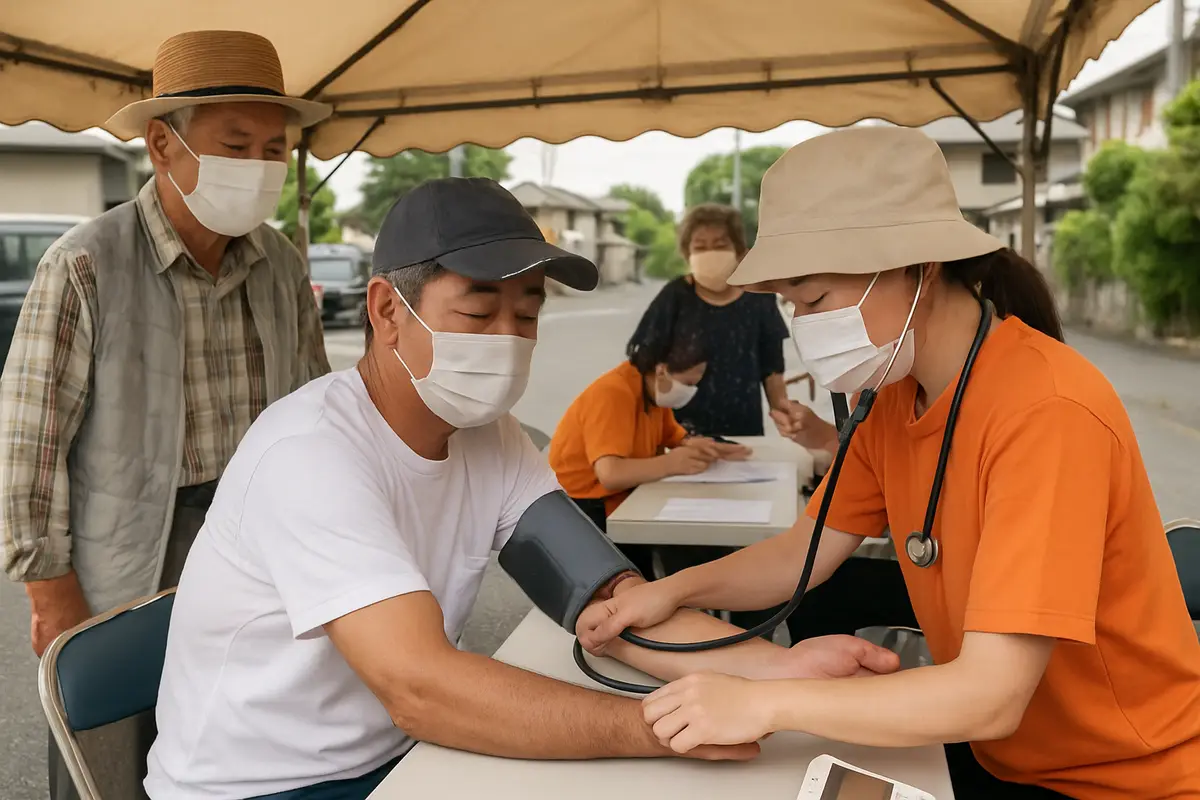
熊本県氷川町 ボランティアが健康をチェック

Hikawa Town, Kumamoto Prefecture: Volunteers check people's health

2

熊本県の氷川町では、大雨のあとで、たくさんの人がまだ家に帰ることができません。

In Hikawa Town, Kumamoto Prefecture, after the heavy rain many people still cannot return home.

3

町の体育館などで避難の生活を続けています。

They are continuing to live as evacuees in places such as the town gymnasium.

4

暑い日が続いているので、体を悪くする人が心配されています。

Because hot days are continuing, there is concern that people will become ill.

5

この町に、ボランティアの人たちが来ました。

Volunteers came to this town.

6

ボランティアは、看護師や大学生です。

The volunteers are nurses and university students.

7

避難している人の血圧を測ったり、体の調子を聞いたりしました。

They measured the blood pressure of the evacuees and asked how they were feeling.

8

水をたくさん飲むように伝えました。

They told them to drink plenty of water.

9

80歳の女性は「知らない場所で寝るので、よく眠れません。

An 80-year-old woman said, "Because I sleep in an unfamiliar place, I can't sleep well.

10

話を聞いてもらって、少し安心しました」と話しました。

Having someone listen to me made me feel a little more at ease," she said.

11

町は、これからもボランティアと一緒に、みんなの健康を守りたいと言っています。

The town says it wants to keep working with volunteers to protect everyone's health.

熊本県くまもとけん氷川町ひかわちょうボランティア健康けんこうチェック1

2026年08月07日 19:26

著者: jpreader

熊本県氷川町 ボランティアが健康をチェック

この画像はAIで生成され、学習目的で使用されています。

This image is AI-generated and used for educational purposes.

熊本県くまもとけん氷川町ひかわちょうでは、大雨おおあめのあとで、たくさんひとまだいえかえことができません2まち体育館たいいくかんなど避難ひなん生活せいかつつづています3あつつづているので、からだわるするひと心配しんぱいされています4

このまちに、ボランティアひとたちました5ボランティアは、看護師かんごし大学生だいがくせいです6避難ひなんているひと血圧けつあつはかたり、からだ調子ちょうしたりしました7みずたくさんようにつたました8

80さい女性じょせいは「ない場所ばしょので、よくねむません9はなしてもらって、すこ安心あんしんました」とはなました10まちは、これからもボランティア一緒いっしょに、みんな健康けんこうまもたいとています11

Discussion

00

to rate or comment.

No comments yet.