台風13号が、沖縄県と鹿児島県の奄美地方の近くを進んでいます2。台風はゆっくり北のほうへ動いています3。これから天気がもっと悪くなるかもしれません4。
沖縄県と奄美地方では、強い雨が降っています5。風もとても強いです6。海の波は高くなっています7。船や飛行機が止まることもあります8。出かける人は、時間を早めに調べてください9。
気象庁は「川や海の近くに行かないでください」と言っています10。安全な建物の中にいてください11。そして、天気のニュースをよく聞いてください12。
(たいふう)
typhoon
(ごう)
number, issue (suffix)
(おきなわ)
Okinawa
(あまみ)
Amami (island chain south of Kyushu)
(ちかく)
nearby
(すすむ)
to advance, to progress
(おきなわけん)
Okinawa Prefecture
(かごしまけん)
Kagoshima Prefecture
(あまみちほう)
Amami region
(ゆっくり)
slowly, at ease, peacefully
(きた)
north
(ほう)
direction / side
(うごく)
to move
(これから)
from now on
(てんき)
weather
(もっと)
more / further
(わるい)
bad
(つよい)
strong
(あめ)
rain
(ふる)
to fall (rain, snow)
(かぜ)
wind
(とても)
very; extremely
(うみ)
sea, ocean
(なみ)
wave
(たかい)
expensive; high
(ふね)
ship
(ひこうき)
airplane
(とまる)
to stop
(でかける)
to go out
(ひと)
person / people
(じかん)
time
(はやめに)
early, ahead of time
(しらべる)
to investigate; to survey
(きしょうちょう)
Japan Meteorological Agency
(かわ)
river
(いく)
to go
(あんぜん)
safety
(たてもの)
building
(なか)
inside
(そして)
and; and then
(ニュース)
news
(よく)
often, well, frequently
(きく)
to listen, hear
and (joining nouns)
と links two nouns into a complete pair. The article uses it to join the two areas the typhoon is passing: 沖縄と奄美, 沖縄県と鹿児島県, 沖縄県と奄美地方.
パンと牛乳を買いました。
I bought bread and milk.
東京と大阪に行きます。
I will go to Tokyo and Osaka.
is doing, has been doing (ongoing state/action)
Expresses a continuing action or resulting state. Formed with て-form + いる. Can describe an action in progress or a state resulting from a past change.
今、ご飯を食べています。
I am eating rice now.
東京に住んでいます。
I live in Tokyo.
ドアが開いています。
The door is open.
to become (い-adjective)
Expresses a change of state for い-adjectives. Drop the final い and add くなる. Indicates something has changed or will change to a new state.
寒くなりました。
It has gotten cold.
日本語が上手になりました。
My Japanese has gotten better.
値段が高くなりました。
The price became expensive.
might, maybe, possibly
Expresses possibility or uncertainty. Attached directly to the plain form of verbs, adjectives, or nouns. Less certain than でしょう.
明日は雨かもしれません。
It might rain tomorrow.
彼は来ないかもしれない。
He might not come.
この問題は難しいかもしれません。
This problem might be difficult.
polite copula / is, am, are
Describes states such as the mother panda being healthy and the baby being small.
これは本です。
This is a book.
今日は寒いです。
It is cold today.
and (non-exhaustive list)
や lists representative examples — Shikoku and Kyushu among other regions (四国や九州).
りんごやみかんを買った。
I bought apples and oranges (among others).
東京や大阪は大きい都市だ。
Tokyo and Osaka are big cities.
there are cases/times when ~
Describes a possibility or occasional occurrence.
遅れることもある。
Sometimes I'm late.
雨が降ることもあります。
It sometimes rains.
please do ...
Polite request form. Formed with て-form + ください. Used to ask someone to perform an action.
ここに名前を書いてください。
Please write your name here.
もう一度言ってください。
Please say it once more.
窓を開けてください。
Please open the window.
please don't ~
Used in 「食べないで返してください」and 「食べないで返してほしい」as a polite request to not eat the butter and return it.
ここに座らないでください。
Please don't sit here.
心配しないでください。
Please don't worry.
to say that ...
Quotation pattern. と marks the quoted content, followed by 言う (to say). Used for both direct and indirect speech.
先生は明日休みだと言いました。
The teacher said tomorrow is a day off.
母は早く帰ってきてと言った。
My mother said to come home early.
彼はもう行かないと言っています。
He says he won't go anymore.
な-adjective modifying a noun
A な-adjective takes な before the noun it describes. The article uses 有名なお祭り, きれいな色 and いろいろな飾り.
静かな部屋で本を読みます。
I read books in a quiet room.
有名な人に会いました。
I met a famous person.
台風13号が沖縄と奄美の近くを進んでいます
Typhoon No. 13 is moving near Okinawa and Amami
台風13号が、沖縄県と鹿児島県の奄美地方の近くを進んでいます。
Typhoon No. 13 is moving near Okinawa Prefecture and the Amami region of Kagoshima Prefecture.
台風はゆっくり北のほうへ動いています。
The typhoon is moving slowly towards the north.
これから天気がもっと悪くなるかもしれません。
From now on the weather may get even worse.
沖縄県と奄美地方では、強い雨が降っています。
In Okinawa Prefecture and the Amami region, heavy rain is falling.
風もとても強いです。
The wind is also very strong.
海の波は高くなっています。
The waves at sea are getting higher.
船や飛行機が止まることもあります。
There are times when ships and planes stop running.
出かける人は、時間を早めに調べてください。
If you are going out, please check the times well in advance.
気象庁は「川や海の近くに行かないでください」と言っています。
The Japan Meteorological Agency says, "Please do not go near rivers or the sea."
安全な建物の中にいてください。
Please stay inside a safe building.
そして、天気のニュースをよく聞いてください。
And please listen carefully to the weather news.
2026年08月08日 19:32
著者: jpreader
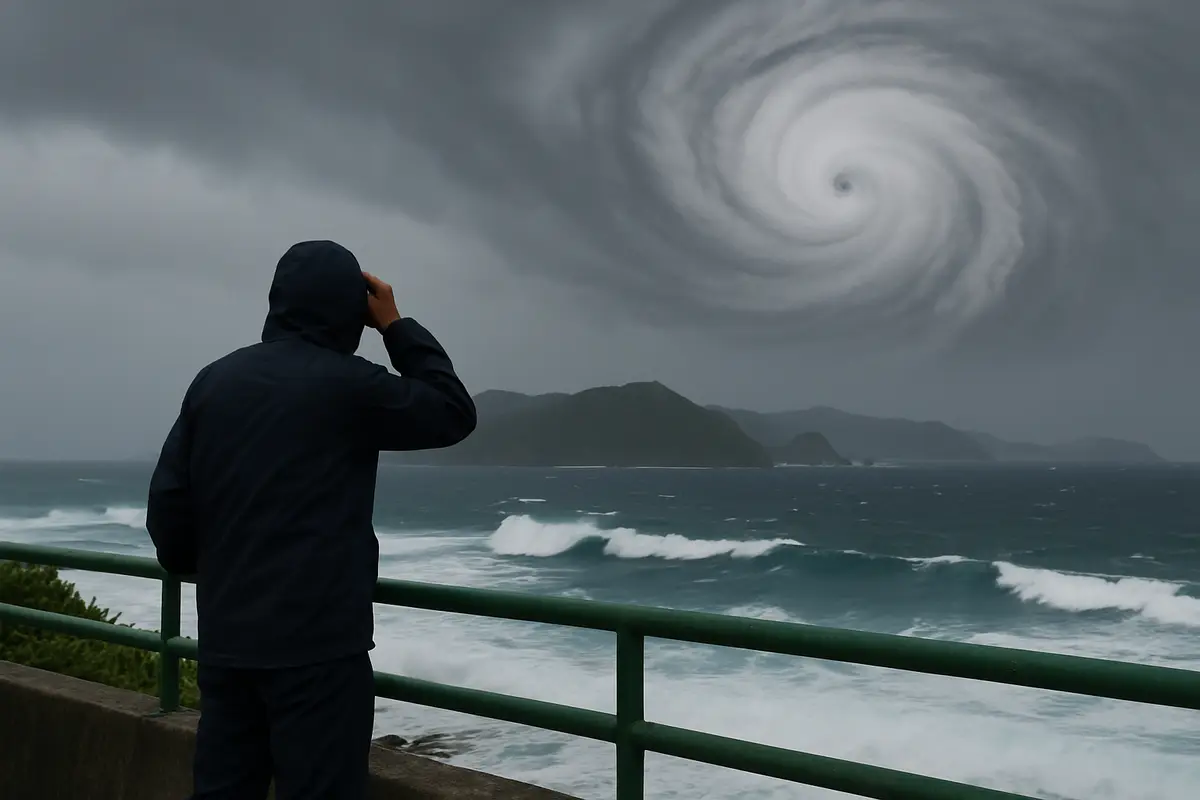
この画像はAIで生成され、学習目的で使用されています。
This image is AI-generated and used for educational purposes.
台風13号が、沖縄県と鹿児島県の奄美地方の近くを進んでいます2。台風はゆっくり北のほうへ動いています3。これから天気がもっと悪くなるかもしれません4。
沖縄県と奄美地方では、強い雨が降っています5。風もとても強いです6。海の波は高くなっています7。船や飛行機が止まることもあります8。出かける人は、時間を早めに調べてください9。
気象庁は「川や海の近くに行かないでください」と言っています10。安全な建物の中にいてください11。そして、天気のニュースをよく聞いてください12。
Discussion
to rate or comment.
No comments yet.