お盆おぼん
N3

(おぼん)

Obon (festival for spirits of ancestors)

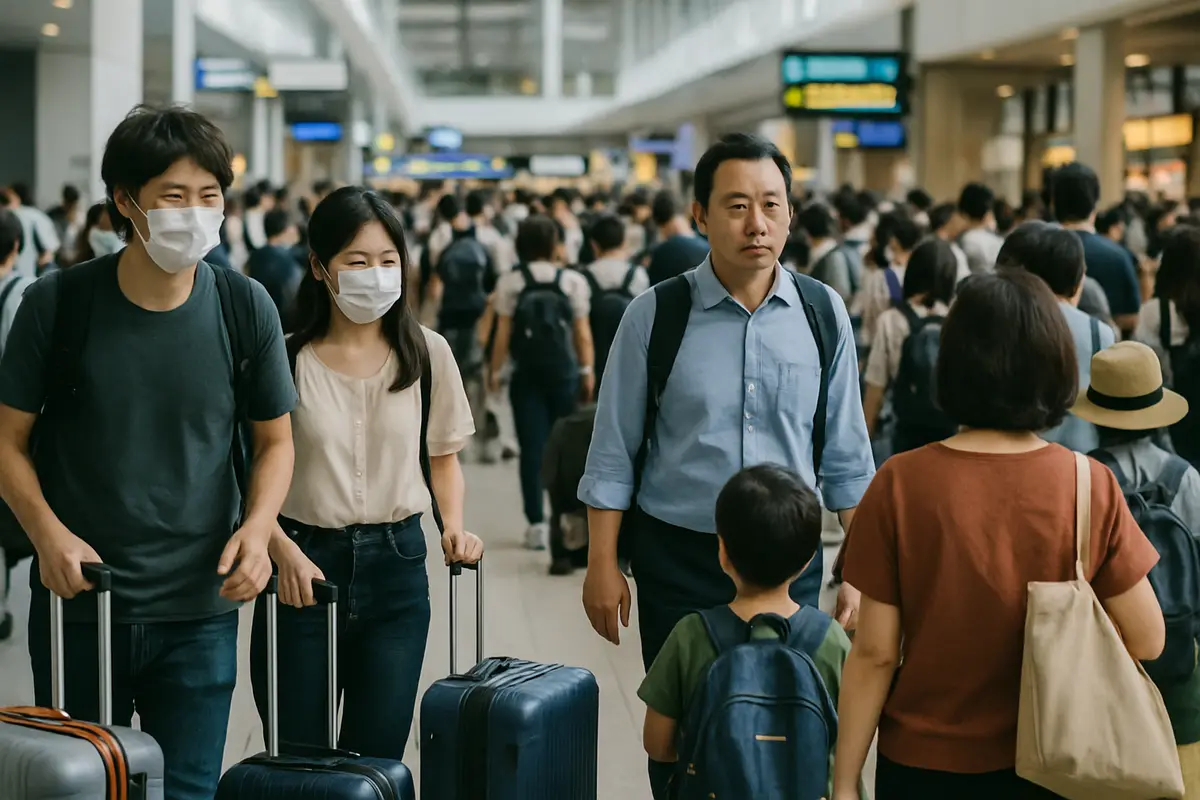
帰省きせい
N2

(きせい)

returning to one's hometown

ラッシュらっしゅ
N3

(らっしゅ)

rush (of travellers)

始まるはじまる
N5

(はじまる)

to begin

空港くうこう
N3

(くうこう)

airport

えき
N5

(えき)

station

混雑こんざつ
N2

(こんざつ)

congestion, crowding

がつ
N5

(がつ)

month (counter)

ふるさとふるさと
N3

(ふるさと)

hometown, birthplace

帰るかえる
N5

(かえる)

to return home

ひと
N5

(ひと)

person / people

旅行りょこう
N5

(りょこう)

Travel; trip

行くいく
N5

(いく)

to go

あさ
N5

(あさ)

morning

混むこむ
N4

(こむ)

to be crowded / to be busy

羽田空港はねだくうこう
N2

(はねだくうこう)

Haneda Airport

大きいおおきい
N5

(おおきい)

big; large

荷物にもつ
N4

(にもつ)

luggage; package; cargo

持つもつ
N5

(もつ)

to have; to hold

家族かぞく
N5

(かぞく)

family

姿すがた
N3

(すがた)

figure; appearance

たくさんたくさん
N5

(たくさん)

a lot / many

見るみる
N5

(みる)

to see, watch

高速道路こうそくどうろ
N3

(こうそくどうろ)

Highway; expressway

渋滞じゅうたい
N2

(じゅうたい)

traffic jam, congestion

あるある
N4

(ある)

a certain (some)

会社かいしゃ
N5

(かいしゃ)

company

今年ことし
N5

(ことし)

this year

去年きょねん
N5

(きょねん)

last year

長いながい
N5

(ながい)

long

特にとくに
N3

(とくに)

especially / particularly

にち
N5

(にち)

day

下りくだり
N3

(くだり)

down train / outbound (from major city)

みち
N5

(みち)

road, street, path

一番いちばん
N5

(いちばん)

number one, most

くるま
N5

(くるま)

car

出かけるでかける
N5

(でかける)

to go out

早めはやめ
N3

(はやめ)

early, ahead of time

いえ
N5

(いえ)

house

出るでる
N5

(でる)

to come out; to occur

新幹線しんかんせん
N4

(しんかんせん)

bullet train / Shinkansen

指定席していせき
N2

(していせき)

reserved seat

ほとんどほとんど
N4

(ほとんど)

almost; most

売り切れるうりきれる
N3

(うりきれる)

to be sold out

鉄道会社てつどうがいしゃ
N2

(てつどうがいしゃ)

railway company

自由席じゆうせき
N2

(じゆうせき)

non-reserved seat

時間じかん
N5

(じかん)

time

余裕よゆう
N2

(よゆう)

room to spare, leeway

来るくる
N5

(くる)

to come

話すはなす
N5

(はなす)

to speak, talk

来週らいしゅう
N5

(らいしゅう)

next week

初めはじめ
N4

(はじめ)

beginning; start

続くつづく
N4

(つづく)

to continue

~や
N5

and (non-exhaustive list)

や lists representative examples — Shikoku and Kyushu among other regions (四国や九州).

りんごやみかんを買った。

I bought apples and oranges (among others).

東京や大阪は大きい都市だ。

Tokyo and Osaka are big cities.

~になる
N5

to become

Expresses a change of state; Kawai became the new commissioner of the Sports Agency.

新しい長官になりました。

He became the new commissioner.

目が見えなくなりました。

He became unable to see.

~から(起点)
N5

from (starting point)

Indicates the origin or source. 建物の中から means 'from inside the building'.

かばんの中から鍵が出てきた。

A key came out from inside the bag.

~ている
N5

is doing, has been doing (ongoing state/action)

Expresses a continuing action or resulting state. Formed with て-form + いる. Can describe an action in progress or a state resulting from a past change.

今、ご飯を食べています。

I am eating rice now.

東京に住んでいます。

I live in Tokyo.

ドアが開いています。

The door is open.

~られる (passive)
N4

passive — was done to

Passive form used to indicate that Epstein was sued/accused, not that he did the suing.

犯人は捕まえられた。

The criminal was caught.

先生にほめられた。

I was praised by the teacher.

~によると
N3

according to ...

Cites a source of information. The noun before によると is the source. Often followed by a reported statement.

天気予報によると、明日は雨です。

According to the weather forecast, it will rain tomorrow.

ニュースによると、地震がありました。

According to the news, there was an earthquake.

先生によると、テストは来週です。

According to the teacher, the test is next week.

~より
N5

than / more than

Indicates comparison. Used to say prices rose on average 2.8% compared to last year.

去年より寒い。

Colder than last year.

彼より背が高い。

Taller than him.

~くなる
N4

to become (い-adjective)

Expresses a change of state for い-adjectives. Drop the final い and add くなる. Indicates something has changed or will change to a new state.

寒くなりました。

It has gotten cold.

日本語が上手になりました。

My Japanese has gotten better.

値段が高くなりました。

The price became expensive.

~そうだ (hearsay)
N4

I heard that; it is said that

倒したそうです and 相談できると答えました report secondhand information about what happened.

彼は来ないそうです。

I heard he is not coming.

雨が降るそうです。

I hear it will rain.

~と言われている
N3

it is said that ~

Passive form expressing common knowledge or reputation. It is said that aquaculture of nodoguro is difficult.

難しいと言われています。

It is said to be difficult.

日本語は難しいと言われています。

It is said that Japanese is difficult.

~たほうがいい
N5

had better ~ / should ~

Used in 「仲よくしたほうがいい」to express the survey question about which country Taiwan should have good relations with.

早く寝たほうがいいですよ。

You should go to bed early.

薬を飲んだほうがいい。

You should take medicine.

~から (理由)
N5

because / since

Gives a reason. Here it explains the gate closes because it is dangerous due to too many people (危ないからです).

寒いから、窓を閉めます。

Because it's cold, I'll close the window.

時間がないから、急ぎましょう。

Since there's no time, let's hurry.

~てください
N5

please do ...

Polite request form. Formed with て-form + ください. Used to ask someone to perform an action.

ここに名前を書いてください。

Please write your name here.

もう一度言ってください。

Please say it once more.

窓を開けてください。

Please open the window.

~まで
N5

until / as far as

Indicates an end point in space or time. Here it expresses how far the balls flew.

駅まで歩きます。

I walk to the station.

遠くまで飛びました。

It flew far away.

~予定
N4

plan to ~

Indicates a plan or schedule. Here 出す予定 (plan to release).

明日行く予定です。

I plan to go tomorrow.

会議をする予定。

There is a plan to hold a meeting.

1

お盆の帰省ラッシュが始まる 空港や駅が混雑

The Obon homecoming rush begins — airports and stations are packed

2

8月になって、お盆の帰省ラッシュが始まりました。

August has arrived, and the Obon homecoming rush has begun.

3

ふるさとへ帰る人や旅行に行く人で、空港や駅は朝から混んでいます。

With people heading back to their hometowns and people setting off on trips, airports and stations have been crowded since morning.

4

羽田空港では、大きい荷物を持った家族の姿がたくさん見られました。

At Haneda Airport, many families could be seen carrying large luggage.

5

高速道路も渋滞しています。

The expressways are congested as well.

6

ある会社によると、今年の渋滞は去年より長くなるそうです。

According to one company, this year's traffic jams are expected to be longer than last year's.

7

特に11日と12日は、下りの道が一番混むと言われています。

The 11th and 12th in particular are said to be the busiest on the outbound roads.

8

車で出かける人は、早めに家を出たほうがいいです。

People travelling by car had better leave home early.

9

新幹線の指定席は、ほとんど売り切れました。

Reserved seats on the Shinkansen are almost completely sold out.

10

鉄道会社の人は「自由席は混みますから、時間に余裕を持って来てください」と話しています。

A railway company staff member says, "The non-reserved cars get crowded, so please come with time to spare."

11

ラッシュは来週の初めまで続く予定です。

The rush is expected to continue until the beginning of next week.

ぼん帰省きせいラッシュはじまる空港くうこうえき混雑こんざつ1

2026年08月09日 19:26

著者: jpreader

お盆の帰省ラッシュが始まる 空港や駅が混雑

この画像はAIで生成され、学習目的で使用されています。

This image is AI-generated and used for educational purposes.

8がつになって、おぼん帰省きせいラッシュはじまりました2ふるさとかえひと旅行りょこうひとで、空港くうこうえきあさからでいます3羽田空港はねだくうこうでは、おおきい荷物にもつった家族かぞく姿すがたたくさんられました4

高速道路こうそくどうろ渋滞じゅうたいしています5ある会社かいしゃによると今年ことし渋滞じゅうたい去年きょねんよりながくなるそうです6とく11にちと12にちは、くだみち一番いちばんわれています7くるまかけるひとは、はやいえたほうがいいです8

新幹線しんかんせん指定席していせきは、ほとんどました9鉄道会社てつどうがいしゃひとは「自由席じゆうせきますから時間じかん余裕よゆうっててください」とはなしています10ラッシュ来週らいしゅうはじまでつづ予定よていです11

Discussion

00

to rate or comment.

No comments yet.