東京の近くの町で、運転手がいないバスの実験が始まりました2。このバスは、人が運転しなくても道を走ることができます3。
バスは駅から病院まで、約3キロの道をゆっくり走ります4。バスの中には会社の人が乗って、安全を見ています5。危ないときは、その人がバスを止めます6。
この町では、バスの運転手が少なくなりました7。年をとった人は、車の運転ができない人も多いです8。町の人は「バスがあると、買い物や病院に行くときに便利です」と話しました9。実験は来年の3月まで続きます10。
(じどう)
automatic
(はしる)
to run
(ばす)
bus
(じっけん)
experiment
(はじまる)
to begin
(とうきょう)
Tokyo
(ちかく)
nearby
(まち)
town
(うんてんしゅ)
driver
(うんてん)
operation, driving
(ひと)
person / people
(みち)
road, street, path
(えき)
station
(びょういん)
hospital
(やく)
approximately, about
(きろ)
kilogram, kilo
(ゆっくり)
slowly, at ease, peacefully
(なか)
inside
(かいしゃ)
company
(のる)
to ride, board
(あんぜん)
safety
(みる)
to see, watch
(あぶない)
dangerous
(とめる)
to stop, to halt
(すくない)
few, scarce
(とし)
year
(とる)
to take (in)
(くるま)
car
(おおい)
many
(ある)
a certain (some)
(かいもの)
shopping
(いく)
to go
(べんり)
convenient
(はなす)
to speak, talk
(らいねん)
next year
(がつ)
month (counter)
(つづく)
to continue
negative form: does not ~, will not ~
The plain negative 出ない in the headline and the polite negative 出ません in the article both say that Ohtani will not appear in the game.
オールスターゲームに出ない。
He will not play in the All-Star Game.
今年は出ません。
He will not take part this year.
did ... (polite past)
Polite past tense of verbs. Formed with verb stem + ました. Used in formal or polite speech to describe completed actions.
昨日、映画を見ました。
I watched a movie yesterday.
朝ごはんを食べました。
I ate breakfast.
友達が来ました。
A friend came.
even without ~ / even if not ~
Negative te-form with も meaning even if not. Here 予約をしなくても (even without making a reservation).
行かなくてもいい。
You don't have to go.
食べなくても大丈夫。
It's OK even without eating.
can do ..., to be able to ...
Verb dictionary form + ことができる expresses ability or possibility. More formal than the potential verb form. Common in written Japanese and announcements.
日本語を話すことができます。
I can speak Japanese.
ここで写真を撮ることができます。
You can take photos here.
インターネットで予約することができます。
You can make a reservation on the internet.
from ... to ...
Indicates a range of time, place, or quantity. から marks the starting point, and here it is used to show a range (2週間から3週間).
9時から5時まで働きます。
I work from 9 to 5.
東京から大阪まで3時間です。
It takes 3 hours from Tokyo to Osaka.
1月から3月まで寒いです。
It is cold from January to March.
polite non-past tense
The polite non-past ~ます states what will happen — the funeral will continue.
葬式は続きます。
The funeral will continue.
明日行きます。
I will go tomorrow.
is doing, has been doing (ongoing state/action)
Expresses a continuing action or resulting state. Formed with て-form + いる. Can describe an action in progress or a state resulting from a past change.
今、ご飯を食べています。
I am eating rice now.
東京に住んでいます。
I live in Tokyo.
ドアが開いています。
The door is open.
when ~
Indicates the time when something happened — when he was in junior high school.
中学生のとき病気になりました。
When I was a junior-high student I got sick.
子どものとき日本にいました。
I was in Japan when I was a child.
to become (い-adjective)
Expresses a change of state for い-adjectives. Drop the final い and add くなる. Indicates something has changed or will change to a new state.
寒くなりました。
It has gotten cold.
日本語が上手になりました。
My Japanese has gotten better.
値段が高くなりました。
The price became expensive.
polite copula / is, am, are
Describes states such as the mother panda being healthy and the baby being small.
これは本です。
This is a book.
今日は寒いです。
It is cold today.
when ..., if ... (natural consequence)
Conditional と indicating that when one thing happens, another naturally follows. States general truths, habitual results, or inevitable consequences.
春になると、桜が咲きます。
When spring comes, the cherry blossoms bloom.
このボタンを押すと、ドアが開きます。
If you press this button, the door opens.
and (non-exhaustive list)
や lists representative examples — Shikoku and Kyushu among other regions (四国や九州).
りんごやみかんを買った。
I bought apples and oranges (among others).
東京や大阪は大きい都市だ。
Tokyo and Osaka are big cities.
自動で走るバスの実験が始まる
A trial of a self-driving bus begins
東京の近くの町で、運転手がいないバスの実験が始まりました。
In a town near Tokyo, a trial of a bus with no driver has begun.
このバスは、人が運転しなくても道を走ることができます。
This bus can travel along the road even when nobody is driving it.
バスは駅から病院まで、約3キロの道をゆっくり走ります。
The bus runs slowly along a route of about three kilometres, from the station to the hospital.
バスの中には会社の人が乗って、安全を見ています。
A company employee rides on board the bus, keeping an eye on safety.
危ないときは、その人がバスを止めます。
When it is dangerous, that person stops the bus.
この町では、バスの運転手が少なくなりました。
In this town, bus drivers have become fewer.
年をとった人は、車の運転ができない人も多いです。
Among older people, there are also many who cannot drive a car.
町の人は「バスがあると、買い物や病院に行くときに便利です」と話しました。
A resident said, "If there is a bus, it is convenient when going shopping or to the hospital."
実験は来年の3月まで続きます。
The trial will continue until March next year.
2026年08月10日 19:16
著者: jpreader
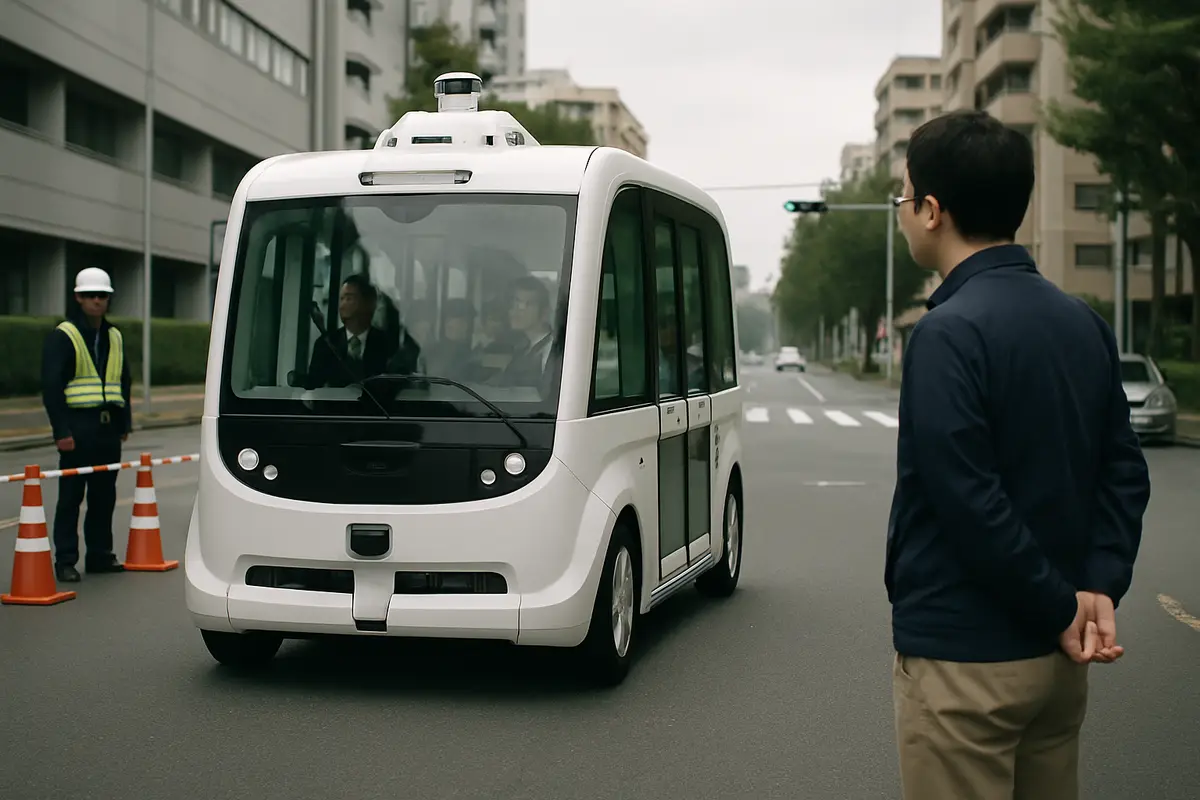
この画像はAIで生成され、学習目的で使用されています。
This image is AI-generated and used for educational purposes.
東京の近くの町で、運転手がいないバスの実験が始まりました2。このバスは、人が運転しなくても道を走ることができます3。
バスは駅から病院まで、約3キロの道をゆっくり走ります4。バスの中には会社の人が乗って、安全を見ています5。危ないときは、その人がバスを止めます6。
この町では、バスの運転手が少なくなりました7。年をとった人は、車の運転ができない人も多いです8。町の人は「バスがあると、買い物や病院に行くときに便利です」と話しました9。実験は来年の3月まで続きます10。
Discussion
to rate or comment.
No comments yet.