日本の会社が作ったロケットが、鹿児島県の島から打ち上げられました2。ロケットには、小さい人工衛星が5つ乗っていました3。打ち上げは成功しました4。
この会社は、5年前にできた新しい会社です5。今までに2回失敗しましたが、今回は問題がありませんでした6。人工衛星は、地球の写真を撮ったり、天気を調べたりするために使われます7。
会社の社長は「たくさんの人が協力してくれたので、うまくいきました」と話しました8。会社は来年、もっと大きいロケットを打ち上げる予定です9。
(にほん)
Japan
(かいしゃ)
company
(ろけっと)
rocket
(うちゅう)
space; universe
(つくる)
to make
(かごしまけん)
Kagoshima Prefecture
(しま)
island
(うちあげる)
to launch (a rocket)
(ちいさい)
small
(じんこうえいせい)
artificial satellite
(のる)
to ride, board
(せいこう)
success
(ねんまえ)
years ago
(できる)
to be able; to be made
(あたらしい)
new
(いま)
now
(かい)
time(s), counter for occurrences
(しっぱい)
failure
(こんかい)
this time
(もんだい)
problem
(ちきゅう)
Earth, the globe
(しゃしん)
photograph
(とる)
to take (a photo)
(てんき)
weather
(しらべる)
to investigate; to survey
(つかう)
to use
(しゃちょう)
company president
(たくさん)
a lot / many
(ひと)
person / people
(きょうりょく)
cooperation
(うまくいく)
to go well, succeed
(はなす)
to speak, talk
(らいねん)
next year
(もっと)
more / further
(おおきい)
big; large
passive: be done (to)
The passive lets the news report an event without naming who did it. 打ち上げられました focuses on the rocket rather than the launch team, and 使われます says what the satellites will be used for.
ロケットが島から打ち上げられました。
A rocket was launched from the island.
人工衛星は天気を調べるために使われます。
The satellites will be used to study the weather.
native Japanese counter for objects
つ counts small objects when no special counter is used. 5つ tells us how many satellites the rocket was carrying.
人工衛星が5つ乗っていました。
Five satellites were on board.
小さい島が3つあります。
There are three small islands.
was doing, had been doing
Past progressive or past continuous state. Formed with て-form + いた. Describes an action or state that was ongoing in the past.
昨日は雨が降っていた。
It was raining yesterday.
子供の頃、毎日泳いでいた。
When I was a child, I used to swim every day.
彼女は3年間日本に住んでいた。
She had been living in Japan for 3 years.
did ... (polite past)
Polite past tense of verbs. Formed with verb stem + ました. Used in formal or polite speech to describe completed actions.
昨日、映画を見ました。
I watched a movie yesterday.
朝ごはんを食べました。
I ate breakfast.
友達が来ました。
A friend came.
polite copula / is, am, are
Describes states such as the mother panda being healthy and the baby being small.
これは本です。
This is a book.
今日は寒いです。
It is cold today.
but / although
Connects two clauses with a contrastive 'but/although' nuance.
まだ5月ですが、暑いです。
It's still May, but it is hot.
Did not ~ (polite past negative)
Polite past negative form of verbs. Expresses that something did not happen in the past.
昨日学校に行きませんでした。
I did not go to school yesterday.
doing things like ~ and ~
Lists representative actions among several. Implies there are other actions too. Used twice in this article.
週末は本を読んだり映画を見たりします。
On weekends I do things like read books and watch movies.
歌ったり踊ったりして楽しんだ。
We had fun singing and dancing.
in order to ~
Expresses purpose.
健康のために歩く。
I walk for my health.
止めるために話し合う。
Discuss in order to stop it.
to do ~ for me/us (favor)
Indicates that someone does something kindly for the speaker. Here 応援してくれて (cheered me on).
友達が手伝ってくれた。
My friend helped me.
教えてくれてありがとう。
Thank you for teaching me.
because ~ / since ~
Causal connector. Because JA is buying at higher prices, store prices will also rise.
雨が降ったので、家にいた。
Since it rained, I stayed home.
忙しいので、行けません。
Since I'm busy, I can't go.
plan to / is scheduled to
Indicates a scheduled plan or intent.
来月行く予定です。
I plan to go next month.
会議は3時からの予定です。
The meeting is scheduled from 3.
日本の会社のロケットが宇宙へ
A Japanese company's rocket heads into space
日本の会社が作ったロケットが、鹿児島県の島から打ち上げられました。
A rocket built by a Japanese company was launched from an island in Kagoshima Prefecture.
ロケットには、小さい人工衛星が5つ乗っていました。
The rocket was carrying five small satellites.
打ち上げは成功しました。
The launch was a success.
この会社は、5年前にできた新しい会社です。
This company is a new one, founded five years ago.
今までに2回失敗しましたが、今回は問題がありませんでした。
It had failed twice up to now, but this time there were no problems.
人工衛星は、地球の写真を撮ったり、天気を調べたりするために使われます。
The satellites will be used for things like taking photographs of the Earth and studying the weather.
会社の社長は「たくさんの人が協力してくれたので、うまくいきました」と話しました。
The company president said, "It went well because so many people helped us."
会社は来年、もっと大きいロケットを打ち上げる予定です。
Next year the company plans to launch an even bigger rocket.
2026年08月10日 19:19
著者: jpreader
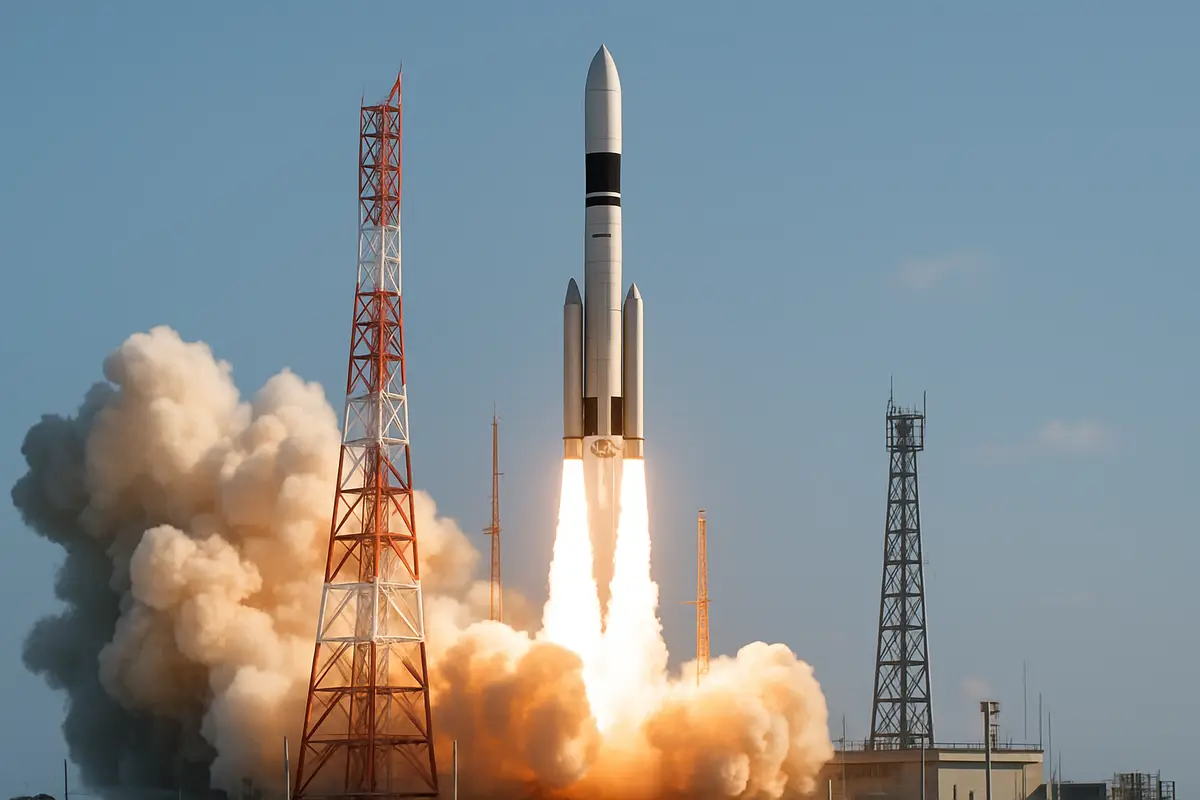
この画像はAIで生成され、学習目的で使用されています。
This image is AI-generated and used for educational purposes.
日本の会社が作ったロケットが、鹿児島県の島から打ち上げられました2。ロケットには、小さい人工衛星が5つ乗っていました3。打ち上げは成功しました4。
この会社は、5年前にできた新しい会社です5。今までに2回失敗しましたが、今回は問題がありませんでした6。人工衛星は、地球の写真を撮ったり、天気を調べたりするために使われます7。
会社の社長は「たくさんの人が協力してくれたので、うまくいきました」と話しました8。会社は来年、もっと大きいロケットを打ち上げる予定です9。
Discussion
to rate or comment.
No comments yet.