まだ食べられるのに捨てられてしまう食品は「食品ロス」と呼ばれています2。日本では1年間に約460万トンの食品が捨てられていて、その半分近くは家庭から出ています3。
こうした問題を減らすため、コンビニやスーパーでは、賞味期限が近い商品を安く売る店が増えてきました4。売れ残りそうな弁当をアプリで紹介し、必要な人に届ける仕組みも広がっています5。
専門家は「食品を作るときには、水やエネルギーもたくさん使われている6。買いすぎないようにするだけでも、大きな効果がある」と話しています7。
(しょくひんろす)
food loss, food waste
(へらす)
to reduce; to decrease
(うごき)
movement; trend
(ひろがる)
to spread
(まだ)
still; yet
(たべる)
to eat
(すてる)
to throw away; to discard
(しょくひん)
food products, foodstuffs
(よぶ)
to call
(にほん)
Japan
(ねんかん)
period of ~ years
(やく)
approximately, about
(まん)
ten thousand
(とん)
ton (unit)
(はんぶん)
half
(ちかい)
near / close
(かてい)
household; home; family
(でる)
to come out; to occur
(こうした)
such / this kind of
(もんだい)
problem
(こんびに)
convenience store
(すーぱー)
supermarket
(しょうみきげん)
best-before date
(しょうひん)
goods; merchandise; product
(やすい)
cheap / inexpensive
(うる)
to sell
(みせ)
shop, store
(ふえる)
to increase; to grow
(うれのこり)
unsold goods, leftovers
(べんとう)
boxed lunch; bento
(あぷり)
app / application
(しょうかい)
introduction, presentation
(ひつよう)
necessary / needed
(ひと)
person / people
(とどける)
to deliver
(しくみ)
structure, system, mechanism
(せんもんか)
expert, specialist
(つくる)
to make
(みず)
water
(えねるぎー)
energy
(たくさん)
a lot / many
(つかう)
to use
(かう)
to buy
(おおきな)
big (attrib.)
(こうか)
effect
(ある)
a certain (some)
(はなす)
to speak, talk
potential / can (ru-verb)
The potential form expresses ability or possibility. Here, used in the negative, it describes elderly people who cannot quit driving.
運転をやめられない。
Cannot quit driving.
朝早く起きられない。
Cannot get up early.
even though / despite ~
Expresses contrast or unexpected result. Iran says they were attacked even though they are not at war.
勉強したのに、試験に落ちた。
Even though I studied, I failed the test.
雨なのに出かけた。
Even though it was raining, I went out.
completely / finish ~ing (often regretful)
Expresses completion, often with regret or unexpectedness. Here the rice sold out quickly.
すぐに全部売れてしまった。
It all sold out right away.
忘れてしまった。
I forgot (unfortunately).
is doing, has been doing (ongoing state/action)
Expresses a continuing action or resulting state. Formed with て-form + いる. Can describe an action in progress or a state resulting from a past change.
今、ご飯を食べています。
I am eating rice now.
東京に住んでいます。
I live in Tokyo.
ドアが開いています。
The door is open.
because ~
Provides a reason or cause.
疲れたから休む。
I'll rest because I'm tired.
寒いから帰る。
I'm going home because it's cold.
because of, due to
Indicates a reason or cause. More formal than から or ので. Can follow nouns (の + ため) or plain-form verbs/adjectives.
病気のため、学校を休みました。
I was absent from school because of illness.
雨が降ったため、試合は中止です。
The game was cancelled because it rained.
勉強するため、図書館に行きます。
I go to the library in order to study.
and (non-exhaustive list)
や lists representative examples — Shikoku and Kyushu among other regions (四国や九州).
りんごやみかんを買った。
I bought apples and oranges (among others).
東京や大阪は大きい都市だ。
Tokyo and Osaka are big cities.
come toward (action approaching)
Indicates motion toward the speaker or a location. Here it describes rocks flying toward people.
鳥が飛んできた。
A bird flew toward (us).
雨が降ってきた。
It started raining.
seems like / looks like ~
Verb stem + そう expresses appearance/likelihood.
雨が降りそうだ。
It looks like it will rain.
おいしそう。
Looks tasty.
when ~
Indicates the time when something happened — when he was in junior high school.
中学生のとき病気になりました。
When I was a junior-high student I got sick.
子どものとき日本にいました。
I was in Japan when I was a child.
too much / excessively ~
Indicates excess. Used to describe the government's methods being too harsh (厳しすぎる) and the military deployment being excessive (やりすぎ).
政府の厳しすぎるやり方に反対する人たち
People opposing the government's overly harsh methods
軍を出すのはやりすぎだ。
Deploying the military is going too far.
to make sure ~ does not happen
Expresses taking action to prevent something. Here, to prevent enemies from coming.
忘れないようにメモします。
I'll take notes so I don't forget.
遅刻しないようにする。
I'll make sure not to be late.
even just ~, if only ~
だけ (only) plus でも (even) plays down how small an action is while stressing that it still counts. するだけでも、大きな効果がある says even that one small habit makes a real difference.
買いすぎないようにするだけでも、大きな効果がある。
Even just avoiding overbuying has a big effect.
少し減らすだけでも助かります。
Even cutting back a little helps.
食品ロスを減らす動きが広がる
Efforts to cut food waste are spreading
まだ食べられるのに捨てられてしまう食品は「食品ロス」と呼ばれています。
Food that is thrown away even though it could still be eaten is called "food loss."
日本では1年間に約460万トンの食品が捨てられていて、その半分近くは家庭から出ています。
In Japan about 4.6 million tons of food is discarded each year, and close to half of it comes from households.
こうした問題を減らすため、コンビニやスーパーでは、賞味期限が近い商品を安く売る店が増えてきました。
To reduce this problem, more convenience stores and supermarkets have begun selling products close to their best-before date at a discount.
売れ残りそうな弁当をアプリで紹介し、必要な人に届ける仕組みも広がっています。
Schemes that advertise lunch boxes likely to go unsold through an app and get them to people who need them are also spreading.
専門家は「食品を作るときには、水やエネルギーもたくさん使われている。
An expert says, "When food is produced, a great deal of water and energy is used as well.
買いすぎないようにするだけでも、大きな効果がある」と話しています。
Simply making sure not to buy too much already has a big effect."
2026年08月10日 19:23
著者: jpreader
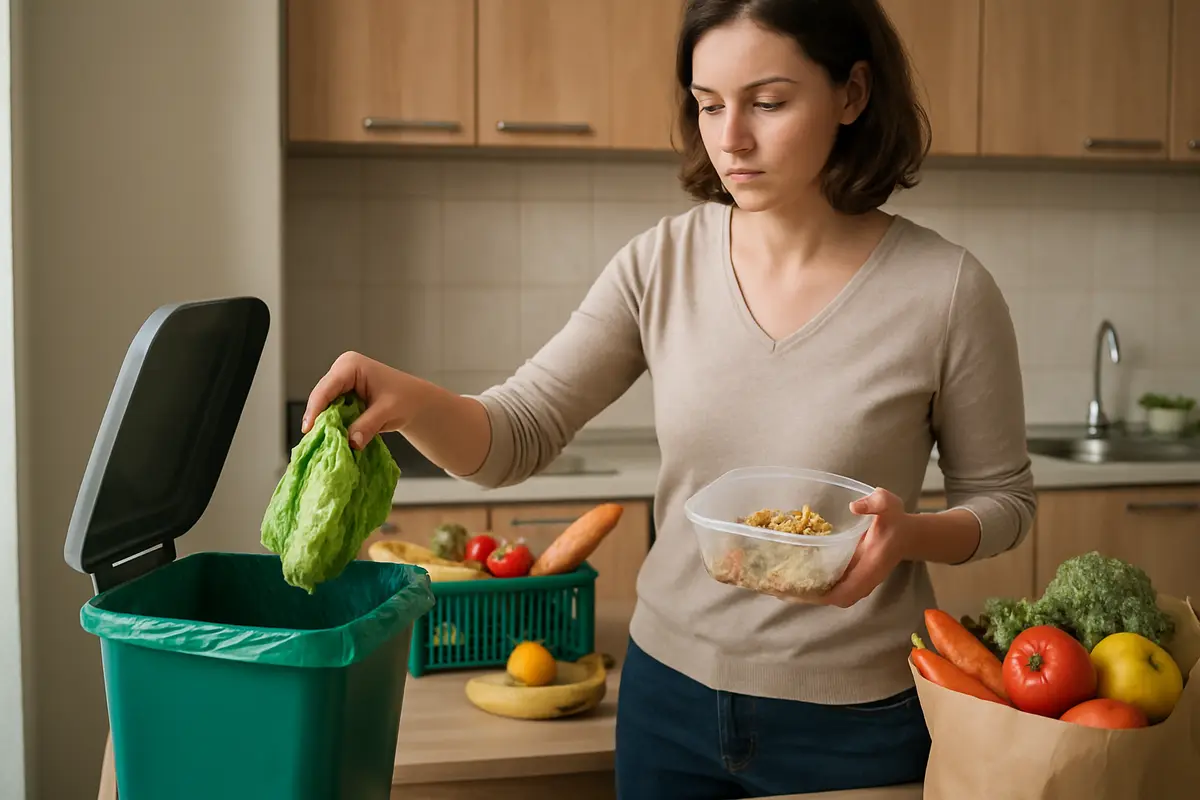
この画像はAIで生成され、学習目的で使用されています。
This image is AI-generated and used for educational purposes.
まだ食べられるのに捨てられてしまう食品は「食品ロス」と呼ばれています2。日本では1年間に約460万トンの食品が捨てられていて、その半分近くは家庭から出ています3。
こうした問題を減らすため、コンビニやスーパーでは、賞味期限が近い商品を安く売る店が増えてきました4。売れ残りそうな弁当をアプリで紹介し、必要な人に届ける仕組みも広がっています5。
専門家は「食品を作るときには、水やエネルギーもたくさん使われている6。買いすぎないようにするだけでも、大きな効果がある」と話しています7。
Discussion
to rate or comment.
No comments yet.