日本の小学校や中学校では、昼に給食を食べます2。今まで、給食のお金は親が払いました3。でも、今、給食のお金がいらない町が増えています4。
国の調べでは、去年、全国で三分の一ぐらいの市や町が給食を無料にしました5。子どもが二人や三人いる家は、お金が大変です6。だから、市や町が代わりにお金を払います7。
国も新しい計画を考えています8。来年から、小学校の給食を無料にしたいと言っています9。しかし、お金がたくさん必要です10。国と市や町は、これから話し合います11。
(きゅうしょく)
school lunch
(むりょう)
free of charge
(まち)
town
(ふえる)
to increase; to grow
(にほん)
Japan
(しょうがっこう)
elementary school
(ちゅうがっこう)
middle school / junior high school
(ひる)
noon / daytime
(たべる)
to eat
(いま)
now
(おかね)
money
(おや)
parent
(はらう)
to pay
(でも)
but; however
(いる)
to need; to be necessary
(くに)
country; the government
(しらべ)
investigation; survey
(きょねん)
last year
(ぜんこく)
nationwide; the whole country
(さんぶんのいち)
one third
(し)
city
(こども)
child
(ふたり)
two people
(さんにん)
three people
(いる)
to exist, to be (animate)
(いえ)
house
(たいへん)
tough, serious
(だから)
so, therefore
(かわり)
substitute; replacement; instead
(あたらしい)
new
(けいかく)
plan
(かんがえる)
to think; to consider
(らいねん)
next year
(いう)
to say
(しかし)
however, but
(たくさん)
a lot / many
(ひつよう)
necessary / needed
(これから)
from now on
(はなしあう)
to discuss
to become
Expresses a change of state; Kawai became the new commissioner of the Sports Agency.
新しい長官になりました。
He became the new commissioner.
目が見えなくなりました。
He became unable to see.
polite non-past tense
The polite non-past ~ます states what will happen — the funeral will continue.
葬式は続きます。
The funeral will continue.
明日行きます。
I will go tomorrow.
until / as far as
Indicates an end point in space or time. Here it expresses how far the balls flew.
駅まで歩きます。
I walk to the station.
遠くまで飛びました。
It flew far away.
did ... (polite past)
Polite past tense of verbs. Formed with verb stem + ました. Used in formal or polite speech to describe completed actions.
昨日、映画を見ました。
I watched a movie yesterday.
朝ごはんを食べました。
I ate breakfast.
友達が来ました。
A friend came.
is doing, has been doing (ongoing state/action)
Expresses a continuing action or resulting state. Formed with て-form + いる. Can describe an action in progress or a state resulting from a past change.
今、ご飯を食べています。
I am eating rice now.
東京に住んでいます。
I live in Tokyo.
ドアが開いています。
The door is open.
about ~ / approximately ~
Indicates approximate quantity. About 230mm of rain falls normally.
1時間ぐらいかかります。
It takes about 1 hour.
500円ぐらいです。
It's about 500 yen.
because ~
Provides a reason or cause.
疲れたから休む。
I'll rest because I'm tired.
寒いから帰る。
I'm going home because it's cold.
want to ~
Verb stem + たい to express desire.
日本に行きたい。
I want to go to Japan.
水を飲みたいです。
I want to drink water.
給食が無料になる町が増える
More towns are making school lunches free
日本の小学校や中学校では、昼に給食を食べます。
At elementary and junior high schools in Japan, children eat a school lunch at midday.
今まで、給食のお金は親が払いました。
Up until now, parents paid the cost of the school lunches.
でも、今、給食のお金がいらない町が増えています。
But now the number of towns where school lunches cost nothing is increasing.
国の調べでは、去年、全国で三分の一ぐらいの市や町が給食を無料にしました。
According to a national survey, last year about one third of the cities and towns across the country made school lunches free.
子どもが二人や三人いる家は、お金が大変です。
For households with two or three children, the cost is a heavy burden.
だから、市や町が代わりにお金を払います。
So the cities and towns pay the money instead.
国も新しい計画を考えています。
The national government is also considering a new plan.
来年から、小学校の給食を無料にしたいと言っています。
It says that from next year it wants to make elementary school lunches free.
しかし、お金がたくさん必要です。
However, a great deal of money is needed.
国と市や町は、これから話し合います。
The national government and the cities and towns will discuss this from now on.
2026年08月12日 19:14
著者: jpreader
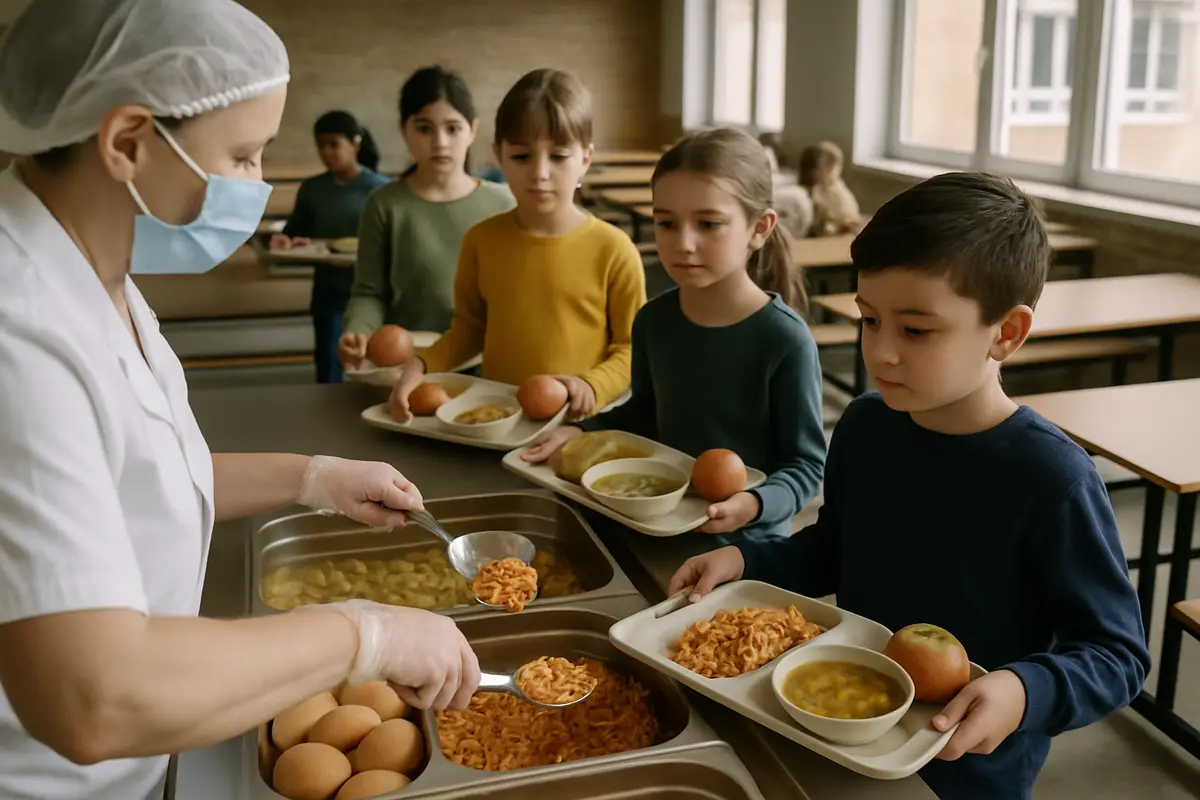
この画像はAIで生成され、学習目的で使用されています。
This image is AI-generated and used for educational purposes.
日本の小学校や中学校では、昼に給食を食べます2。今まで、給食のお金は親が払いました3。でも、今、給食のお金がいらない町が増えています4。
国の調べでは、去年、全国で三分の一ぐらいの市や町が給食を無料にしました5。子どもが二人や三人いる家は、お金が大変です6。だから、市や町が代わりにお金を払います7。
国も新しい計画を考えています8。来年から、小学校の給食を無料にしたいと言っています9。しかし、お金がたくさん必要です10。国と市や町は、これから話し合います11。
Discussion
to rate or comment.
No comments yet.