to occur in succession; to happen one after another
今年
N5
(ことし)
this year
全国
N3
(ぜんこく)
nationwide; the whole country
目撃情報
N1
(もくげきじょうほう)
sighting report
山
N5
(やま)
mountain
住宅
N2
(じゅうたく)
housing; residence
近く
N5
(ちかく)
nearby
駅
N5
(えき)
station
周辺
N2
(しゅうへん)
surroundings / vicinity
姿
N3
(すがた)
figure; appearance
確認
N3
(かくにん)
confirmation, checking
自治体
N1
(じちたい)
local government / municipality
注意
N3
(ちゅうい)
caution, warning
呼びかける
N2
(よびかける)
to call out; to appeal
専門家
N2
(せんもんか)
expert, specialist
木の実
N2
(きのみ)
tree nuts, berries
不作
N1
(ふさく)
poor harvest; bad crop
原因
N3
(げんいん)
cause / reason
一つ
N5
(ひとつ)
one (thing)
えさ
N1
(えさ)
feed / bait (animal food)
求める
N3
(もとめる)
to seek, request
里
N1
(さと)
village; settled land near the mountains
下りる
N4
(おりる)
to come down, descend
果物
N5
(くだもの)
fruit
生ごみ
N2
(なまごみ)
kitchen waste; food scraps
におい
N4
(におい)
smell; odor
引き寄せる
N2
(ひきよせる)
to draw near; to attract
例
N3
(れい)
example; case
少ない
N5
(すくない)
few, scarce
対策
N2
(たいさく)
countermeasure
収穫
N1
(しゅうかく)
harvest
早めに
N3
(はやめに)
early, ahead of time
取り除く
N2
(とりのぞく)
to remove / get rid of
また
N5
(また)
again
朝
N5
(あさ)
morning
夕方
N4
(ゆうがた)
evening
一人
N5
(ひとり)
one person / alone
入る
N5
(はいる)
to enter, be contained in
鈴
N2
(すず)
bell
ラジオ
N5
(らじお)
radio
音
N5
(おと)
sound
出す
N5
(だす)
to serve, put out
有効
N2
(ゆうこう)
effective; valid
出会う
N3
(であう)
to meet, to encounter
走る
N5
(はしる)
to run
静か
N5
(しずか)
quiet
離れる
N3
(はなれる)
to be apart
大切
N5
(たいせつ)
important
~ている
N5
is doing, has been doing (ongoing state/action)
Expresses a continuing action or resulting state. Formed with て-form + いる. Can describe an action in progress or a state resulting from a past change.
今、ご飯を食べています。
I am eating rice now.
東京に住んでいます。
I live in Tokyo.
ドアが開いています。
The door is open.
~だけでなく
N3
Not only ~ but also
Expresses that something is not limited to one thing. Not only Tokyo and Kyoto, but various other places too.
日本語だけでなく、英語も話せます。
I can speak not only Japanese but also English.
~ており
N3
and (formal ~ている)
Formal/written form of ~ていて, connecting clauses. Here competition is becoming fierce, and... (激しくなっており).
店は開いており、客も多い。
The shop is open, and there are many customers.
雨が降っており、寒い。
It is raining, and it's cold.
~によると
N3
according to ...
Cites a source of information. The noun before によると is the source. Often followed by a reported statement.
天気予報によると、明日は雨です。
According to the weather forecast, it will rain tomorrow.
ニュースによると、地震がありました。
According to the news, there was an earthquake.
先生によると、テストは来週です。
According to the teacher, the test is next week.
~こと
N5
nominalizer (the act of ~)
Turns a verb phrase into a noun. Here 話を聞くこと (the act of listening to a speech).
日本に行くことが好きだ。
I like going to Japan.
勉強することは大切だ。
Studying is important.
~まで
N5
until / as far as
Indicates an end point in space or time. Here it expresses how far the balls flew.
駅まで歩きます。
I walk to the station.
遠くまで飛びました。
It flew far away.
~てくる
N4
come toward (action approaching)
Indicates motion toward the speaker or a location. Here it describes rocks flying toward people.
鳥が飛んできた。
A bird flew toward (us).
雨が降ってきた。
It started raining.
~られる(受身)
N4
passive voice: was/were ~ed
Passive form indicating that the subject receives the action. '食べられて' means 'were eaten'. Central grammar of this article about tulips being eaten by deer.
ケーキが弟に食べられた。
The cake was eaten by my little brother.
~として
N3
as / in the role of
Marks the role, capacity, or status in which something is treated. Used here as 特別な史跡として (as a special historic site).
先生として働く。
To work as a teacher.
プレゼントとしてもらった。
I received it as a present.
~ない
N5
negative form: does not ~, will not ~
The plain negative 出ない in the headline and the polite negative 出ません in the article both say that Ohtani will not appear in the game.
オールスターゲームに出ない。
He will not play in the All-Star Game.
今年は出ません。
He will not take part this year.
~よう(に)求める
N2
to request/urge that ~
注意するよう求めています means experts are urging people to be careful of aftershocks.
余震に注意するよう求めています
They are urging caution against aftershocks.
静かにするよう求めた
They requested that people be quiet.
~たら
N4
if ..., when ...
Conditional form indicating 'if' or 'when' something happens. Formed by adding ら to the た-form of a verb. Expresses a hypothetical or temporal condition.
雨が降ったら、行きません。
If it rains, I won't go.
お金があったら、旅行したいです。
If I had money, I'd like to travel.
終わったら、電話してください。
When you're done, please call me.
~ずに
N3
without doing ~
Used in 悩まずに ('without worrying alone') to encourage people to seek consultation.
朝ごはんを食べずに出かけた。
I went out without eating breakfast.
何も言わずに帰った。
He left without saying anything.
1
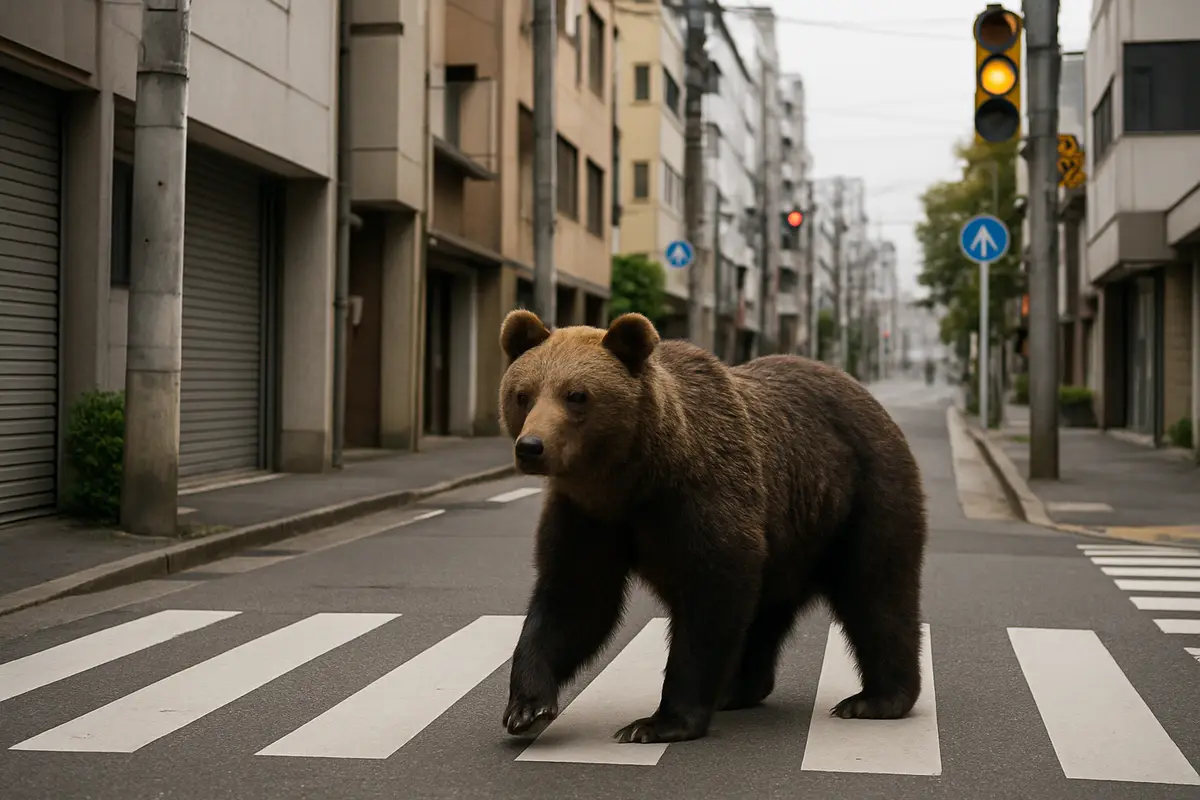
市街地でクマの目撃が相次ぐ
Bear sightings come one after another in built-up areas
2
今年は全国でクマの目撃情報が相次いでいる。
This year, reports of bear sightings are coming in one after another across the country.
3
山だけでなく、住宅の近くや駅の周辺でも姿が確認されており、自治体は注意を呼びかけている。
Bears have been spotted not only in the mountains but also near homes and around stations, and local authorities are calling for caution.
4
専門家によると、山の木の実が不作だったことが原因の一つだという。
According to experts, one cause is said to be a poor crop of nuts and berries in the mountains.
5
えさを求めたクマが、里まで下りてくる。
Bears searching for food come all the way down to the villages.
6
果物や生ごみのにおいに引き寄せられる例も少なくない。
There are more than a few cases of bears being drawn in by the smell of fruit and kitchen waste.
7
対策として、自治体は収穫しない果物を早めに取り除くよう求めている。
As a countermeasure, local authorities are urging residents to remove fruit they will not harvest as early as possible.
8
また、朝や夕方に一人で山へ入らないこと、鈴やラジオで音を出すことも有効とされる。
It is also considered effective not to go into the mountains alone in the morning or evening, and to make noise with a bell or a radio.
9
クマに出会ったら、走らずに静かに離れることが大切だ。
If you do meet a bear, the important thing is to move away quietly rather than running.
市街地でクマの目撃が相次ぐ1
2026年08月12日 19:21
著者: jpreader
この画像はAIで生成され、学習目的で使用されています。
This image is AI-generated and used for educational purposes.
Discussion
to rate or comment.
No comments yet.