地方ちほう
N3

(ちほう)

region; area

オンラインおんらいん
N3

(おんらいん)

online

診療しんりょう
N1

(しんりょう)

medical examination and treatment

広がるひろがる
N3

(ひろがる)

to spread

病院びょういん
N5

(びょういん)

hospital

遠いとおい
N5

(とおい)

far; distant

住むすむ
N5

(すむ)

to live; to reside

ひと
N5

(ひと)

person / people

行うおこなう
N3

(おこなう)

to carry out, to perform

増えるふえる
N3

(ふえる)

to increase; to grow

患者かんじゃ
N2

(かんじゃ)

patient

スマートフォンすまーとふぉん
N3

(すまーとふぉん)

smartphone

パソコンぱそこん
N4

(ぱそこん)

personal computer

使うつかう
N5

(つかう)

to use

いえ
N5

(いえ)

house

医者いしゃ
N5

(いしゃ)

doctor

話すはなす
N5

(はなす)

to speak, talk

日本にほん
N5

(にほん)

Japan

若いわかい
N5

(わかい)

young

都市とし
N2

(とし)

city; urban area

集まるあつまる
N4

(あつまる)

to gather; to come together

足りるたりる
N4

(たりる)

to be enough; to be sufficient

問題もんだい
N5

(もんだい)

problem

電車でんしゃ
N5

(でんしゃ)

electric train

バスばす
N5

(ばす)

bus

乗るのる
N5

(のる)

to ride, board

診察しんさつ
N2

(しんさつ)

medical examination

受けるうける
N3

(うける)

to receive

くすり
N4

(くすり)

medicine

送るおくる
N4

(おくる)

to send / to take (someone somewhere)

場合ばあい
N4

(ばあい)

case; situation

ただしただし
N2

(ただし)

however, provided that

からだ
N4

(からだ)

body

直接ちょくせつ
N3

(ちょくせつ)

directly

見るみる
N5

(みる)

to see, watch

分かるわかる
N5

(わかる)

to understand, be clear

病気びょうき
N5

(びょうき)

illness, sickness

くに
N5

(くに)

country; the government

初めてはじめて
N4

(はじめて)

for the first time

行くいく
N5

(いく)

to go

決めるきめる
N4

(きめる)

to decide

使い方つかいかた
N4

(つかいかた)

how to use; usage

難しいむずかしい
N5

(むずかしい)

difficult

感じるかんじる
N3

(かんじる)

to feel, to sense

高齢者こうれいしゃ
N1

(こうれいしゃ)

elderly person

N4

(し)

city

教えるおしえる
N5

(おしえる)

to teach

教室きょうしつ
N4

(きょうしつ)

classroom; class, workshop

開くひらく
N4

(ひらく)

to open, to hold (event)

~ために
N4

in order to ~

Expresses purpose.

健康のために歩く。

I walk for my health.

止めるために話し合う。

Discuss in order to stop it.

~ている
N5

is doing, has been doing (ongoing state/action)

Expresses a continuing action or resulting state. Formed with て-form + いる. Can describe an action in progress or a state resulting from a past change.

今、ご飯を食べています。

I am eating rice now.

東京に住んでいます。

I live in Tokyo.

ドアが開いています。

The door is open.

~ことができる
N4

can do ..., to be able to ...

Verb dictionary form + ことができる expresses ability or possibility. More formal than the potential verb form. Common in written Japanese and announcements.

日本語を話すことができます。

I can speak Japanese.

ここで写真を撮ることができます。

You can take photos here.

インターネットで予約することができます。

You can make a reservation on the internet.

~なら
N4

if it is ~ / in the case of ~

Noun + なら picks up a topic and states what is true in that case: with online care (as opposed to visiting), you need no train or bus.

オンライン診療なら、家で診察を受けられます。

With online care, you can be examined at home.

電車なら三十分で着きます。

If you take the train, you will arrive in thirty minutes.

~なくても
N4

even without ~ / even if not ~

Negative te-form with も meaning even if not. Here 予約をしなくても (even without making a reservation).

行かなくてもいい。

You don't have to go.

食べなくても大丈夫。

It's OK even without eating.

~られる(可能)
N4

potential form (can do)

入れられる is the potential form of 入れる — 'can put (things) in'. It describes what the furniture allows you to do.

物を入れられる家具。

Furniture you can put things into.

ここで食べられます。

You can eat here.

~てもらう
N4

have someone do (for me)

Expresses receiving a favor/action from someone.

助けてもらって本当にありがとうございます。

Thank you so much for helping us.

教えてもらいました。

I had them teach me.

~なければ
N4

if not ~

Conditional; if the action is not done.

勉強しなければ落ちる。

If you don't study, you'll fail.

急がなければ遅れる。

If we don't hurry, we'll be late.

~ように
N4

so that ~

Indicates a goal or desired outcome. Here: so that trainees reach the Specified Skilled Worker level.

分かるように説明します。

I'll explain so you understand.

聞こえるように大きい声で話す。

Speak loudly so it can be heard.

1

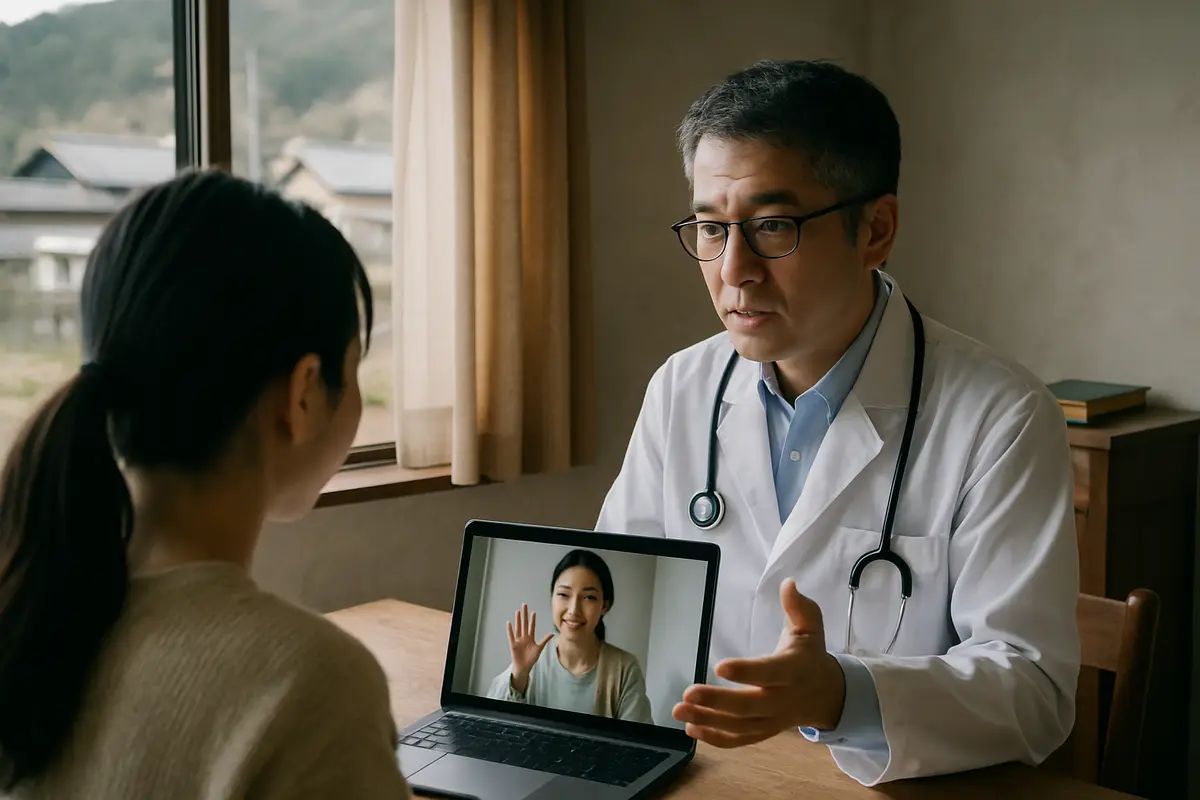
地方でオンライン診療が広がる

Online medical care is spreading in rural areas

2

病院が遠い地方に住む人のために、オンライン診療を行う病院が増えています。

For people who live in rural areas far from a hospital, the number of hospitals offering online medical care is increasing.

3

患者はスマートフォンやパソコンを使って、家から医者と話すことができます。

Patients can use a smartphone or a computer to talk with a doctor from home.

4

日本では、若い医者が都市に集まり、地方の医者が足りない問題があります。

In Japan, young doctors gather in the cities, and there is a problem of not enough doctors in rural areas.

5

オンライン診療なら、電車やバスに乗らなくても診察を受けられます。

With online care, you can receive an examination without having to take a train or a bus.

6

薬も家に送ってもらえる場合があります。

In some cases you can also have your medicine sent to your home.

7

ただし、体を直接見なければ分からない病気もあります。

However, there are also illnesses that cannot be identified without examining the body in person.

8

国は、初めての患者は病院へ行くように決めています。

The government has decided that first-time patients must go to the hospital.

9

使い方が難しいと感じる高齢者のために、市が使い方を教える教室を開いているところもあります。

For elderly people who find it hard to use, there are also places where the city holds classes teaching how to use it.

地方ちほうオンライン診療しんりょうひろがる1

2026年08月16日 19:16

著者: jpreader

地方でオンライン診療が広がる

この画像はAIで生成され、学習目的で使用されています。

This image is AI-generated and used for educational purposes.

病院びょういんとお地方ちほうひとためにオンライン診療しんりょうおこな病院びょういんています2患者かんじゃスマートフォンパソコン使つかって、いえから医者いしゃはなことができます3

日本にほんでは、わか医者いしゃ都市としあつまり、地方ちほう医者いしゃりない問題もんだいがあります4オンライン診療しんりょうなら電車でんしゃバスなくても診察しんさつられます5くすりいえおくてもらえる場合ばあいがあります6

ただしからだ直接ちょくせつなければからない病気びょうきもあります7くには、はじめて患者かんじゃ病院びょういんようにています8使つかかたむずかしいとかんじる高齢者こうれいしゃために使つかかたおしえる教室きょうしつひらているところもあります9

Discussion

00

to rate or comment.

No comments yet.