日本では農家の高齢化が進んでいます2。若い人が少ないため、広い畑の世話が大変になりました3。そこで、ドローンを使う農家が増えています4。
ドローンは空から畑に薬をまきます5。人が歩いてまくより、ずっと速く終わります6。カメラで写真を撮って、元気がない場所を調べることもできます7。農家はその場所にだけ肥料を入れます8。
ドローンを飛ばすには、練習と許可が必要です9。県や市は、農家のための教室を開いています10。値段はまだ高いですが、機械を借りられるサービスも始まりました11。
(のうぎょう)
agriculture
(どろーん)
drone
(つかう)
to use
(のうか)
farmer / farm household
(ふえる)
to increase; to grow
(にほん)
Japan
(こうれいか)
ageing (of a population)
(すすむ)
to advance, to progress
(わかい)
young
(ひと)
person / people
(すくない)
few, scarce
(ひろい)
wide; spacious
(はたけ)
Farm field; cultivated field
(せわ)
care; looking after
(たいへん)
tough, serious
(そこで)
and so, therefore
(そら)
sky
(くすり)
medicine
(まく)
to scatter, throw
(あるく)
to walk
(ずっと)
continuously; all along
(はやい)
fast
(おわる)
to end
(かめら)
camera
(しゃしん)
photograph
(とる)
to take (a photo)
(げんき)
Healthy; energetic; lively
(ばしょ)
place
(しらべる)
to investigate; to survey
(だけ)
only, just
(ひりょう)
fertilizer
(いれる)
to put in
(とばす)
to send flying; to launch
(れんしゅう)
practice, training
(きょか)
permission, approval
(ひつよう)
necessary / needed
(けん)
prefecture
(し)
city
(きょうしつ)
classroom; class, workshop
(ひらく)
to open, to hold (event)
(ねだん)
price
(まだ)
still; yet
(たかい)
expensive; high
(きかい)
machine
(かりる)
to borrow
(さーびす)
service
(はじまる)
to begin
is doing, has been doing (ongoing state/action)
Expresses a continuing action or resulting state. Formed with て-form + いる. Can describe an action in progress or a state resulting from a past change.
今、ご飯を食べています。
I am eating rice now.
東京に住んでいます。
I live in Tokyo.
ドアが開いています。
The door is open.
because of, due to
Indicates a reason or cause. More formal than から or ので. Can follow nouns (の + ため) or plain-form verbs/adjectives.
病気のため、学校を休みました。
I was absent from school because of illness.
雨が降ったため、試合は中止です。
The game was cancelled because it rained.
勉強するため、図書館に行きます。
I go to the library in order to study.
to become
Expresses a change of state; Kawai became the new commissioner of the Sports Agency.
新しい長官になりました。
He became the new commissioner.
目が見えなくなりました。
He became unable to see.
and then ~ (te-form linking actions)
The te-form links two actions in sequence without ending the sentence. 歩いてまく means "walk and (then) spray", and 写真を撮って、…調べる means "take photos and then check".
写真を撮って、農家に送ります。
I take a photo and send it to the farmer.
畑に行って、薬をまきました。
I went to the field and sprayed chemicals.
than / more than
Indicates comparison. Used to say prices rose on average 2.8% compared to last year.
去年より寒い。
Colder than last year.
彼より背が高い。
Taller than him.
can do ..., to be able to ...
Verb dictionary form + ことができる expresses ability or possibility. More formal than the potential verb form. Common in written Japanese and announcements.
日本語を話すことができます。
I can speak Japanese.
ここで写真を撮ることができます。
You can take photos here.
インターネットで予約することができます。
You can make a reservation on the internet.
in order to ~
Dictionary form + には indicates a condition required to achieve a goal. To deliver nengajō on Jan 1, you must mail by Dec 25.
駅に行くには、バスが便利です。
To get to the station, the bus is convenient.
上手になるには、練習が必要です。
To improve, practice is necessary.
but / however (contrast)
Conjunctive particle used to connect two clauses with contrasting or unexpected information.
行きたいですが、時間がありません。
I want to go, but I don't have time.
potential form (can do)
入れられる is the potential form of 入れる — 'can put (things) in'. It describes what the furniture allows you to do.
物を入れられる家具。
Furniture you can put things into.
ここで食べられます。
You can eat here.
農業でドローンを使う農家が増える
More farmers are using drones in agriculture
日本では農家の高齢化が進んでいます。
In Japan, the aging of farmers is advancing.
若い人が少ないため、広い畑の世話が大変になりました。
Because there are few young people, caring for the wide fields has become hard.
そこで、ドローンを使う農家が増えています。
And so the number of farmers who use drones is increasing.
ドローンは空から畑に薬をまきます。
The drone sprays chemicals onto the fields from the sky.
人が歩いてまくより、ずっと速く終わります。
It finishes far faster than when a person walks along spraying.
カメラで写真を撮って、元気がない場所を調べることもできます。
It can also take photos with a camera and check the spots where the crops are not doing well.
農家はその場所にだけ肥料を入れます。
The farmer puts fertilizer only on those spots.
ドローンを飛ばすには、練習と許可が必要です。
In order to fly a drone, practice and permission are necessary.
県や市は、農家のための教室を開いています。
Prefectures and cities are holding classes for farmers.
値段はまだ高いですが、機械を借りられるサービスも始まりました。
The price is still high, but a service that lets you rent the machines has also started.
2026年08月18日 19:16
著者: jpreader
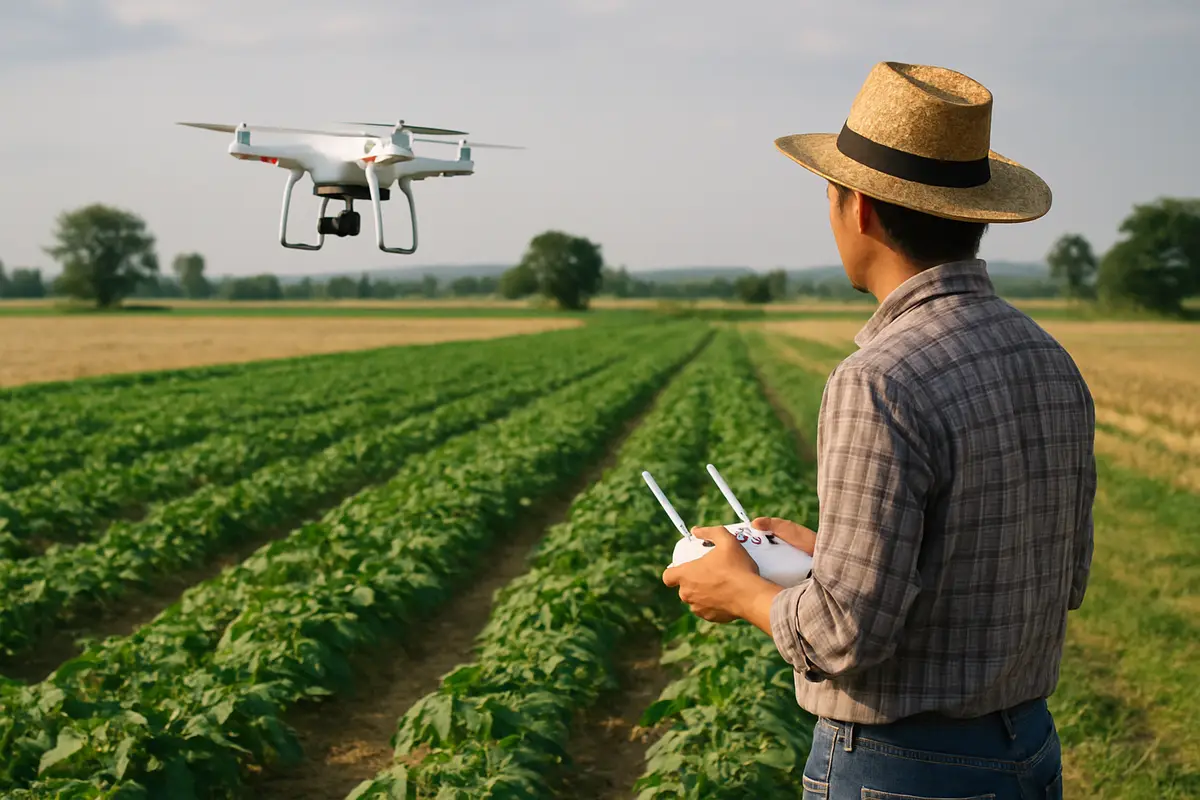
この画像はAIで生成され、学習目的で使用されています。
This image is AI-generated and used for educational purposes.
日本では農家の高齢化が進んでいます2。若い人が少ないため、広い畑の世話が大変になりました3。そこで、ドローンを使う農家が増えています4。
ドローンは空から畑に薬をまきます5。人が歩いてまくより、ずっと速く終わります6。カメラで写真を撮って、元気がない場所を調べることもできます7。農家はその場所にだけ肥料を入れます8。
ドローンを飛ばすには、練習と許可が必要です9。県や市は、農家のための教室を開いています10。値段はまだ高いですが、機械を借りられるサービスも始まりました11。
Discussion
to rate or comment.
No comments yet.