(しゃかいじん)
working adult; member of society
(まなびなおす)
to study again; to relearn (as an adult)
(だいがく)
university; college
(ちからをいれる)
to put effort into; to focus energy on
(ふえる)
to increase; to grow
(すすめる)
to advance; to move forward
(やかん)
nighttime; evening (hours)
(おこなう)
to carry out, to perform
(こうざ)
course; lecture series
(ようい)
preparation; readiness
(すうかげつ)
several months; a few months
(しゅうりょう)
completion (of a course of study)
(かてい)
course; curriculum; program
(きぎょう)
company; enterprise
(いっぽう)
on the other hand / meanwhile
(かだい)
issue, problem, challenge
(のこる)
to remain / to stay behind
(しょうしん)
promotion (at work)
(むすびつく)
to be linked to; to lead to
(してき)
pointing out, indication
(くに)
country; the government
(ひろげる)
to expand; to spread; to broaden
(しえん)
support; aid; assistance
(ほうしん)
policy, course of action
while doing ...
Verb stem + ながら indicates doing two things simultaneously. The action before ながら is the secondary action; the main action follows.
音楽を聞きながら勉強します。
I study while listening to music.
歩きながら話しましょう。
Let's talk while walking.
テレビを見ながらごはんを食べます。
I eat while watching TV.
is doing, has been doing (ongoing state/action)
Expresses a continuing action or resulting state. Formed with て-form + いる. Can describe an action in progress or a state resulting from a past change.
今、ご飯を食べています。
I am eating rice now.
東京に住んでいます。
I live in Tokyo.
ドアが開いています。
The door is open.
can do / be able to (potential)
In 運転できない it expresses the potential of being able (or not able) to drive a car.
車を運転できない人。
People who cannot drive a car.
日本語ができる。
I can do (speak) Japanese.
because of, due to
Indicates a reason or cause. More formal than から or ので. Can follow nouns (の + ため) or plain-form verbs/adjectives.
病気のため、学校を休みました。
I was absent from school because of illness.
雨が降ったため、試合は中止です。
The game was cancelled because it rained.
勉強するため、図書館に行きます。
I go to the library in order to study.
doing things like ~ and ~
Lists representative actions among several. Implies there are other actions too. Used twice in this article.
週末は本を読んだり映画を見たりします。
On weekends I do things like read books and watch movies.
歌ったり踊ったりして楽しんだ。
We had fun singing and dancing.
potential form (can do)
入れられる is the potential form of 入れる — 'can put (things) in'. It describes what the furniture allows you to do.
物を入れられる家具。
Furniture you can put things into.
ここで食べられます。
You can eat here.
~ and (i-adjective connector)
The て-form of i-adjectives, used to connect two adjectives or to give a reason. Formed by replacing い with くて.
この部屋は広くて明るいです。
This room is spacious and bright.
called/named ~
Used to introduce or name something. In this article, 「鳥貴族」という店 means 'a store called Torikizoku'.
田中という人を知っていますか。
Do you know a person called Tanaka?
これは寿司という料理です。
This is a dish called sushi.
to go on doing / continue to (from now)
In '増えていく' – 'will continue to increase (into the future)'. Indicates continuing trend going forward.
これから寒くなっていく。
From now on, it will become colder.
日本語を勉強していきたい。
I want to continue studying Japanese.
1
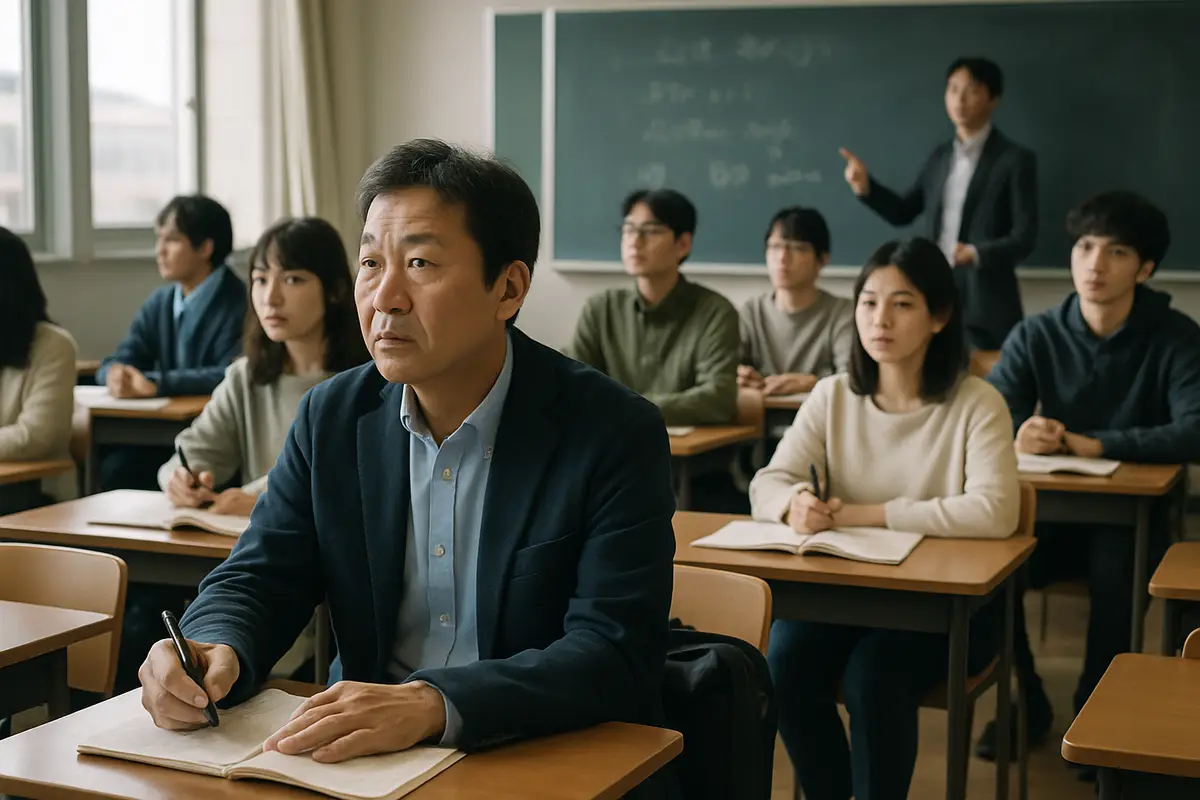
社会人の学び直しに大学が力を入れる
Universities are putting effort into re-education for working adults
2
働きながら大学や大学院で学び直す社会人が増えています。
The number of working adults who study again at universities and graduate schools while holding down a job is increasing.
3
技術の変化が速く、これまでの知識だけでは対応できない仕事が多くなったためです。
This is because technology is changing quickly and there are now more jobs that cannot be handled with existing knowledge alone.
4
大学側も対応を進めています。
Universities, for their part, are also pushing ahead with responses.
5
夜間や週末に授業を行ったり、オンラインで受けられる講座を用意したりする学校が増えました。
More schools now do things like hold classes at night or on weekends and prepare courses that can be taken online.
6
数か月で修了できる短い課程もあります。
There are also short programs that can be completed in a few months.
7
企業の中には、授業料の一部を負担するところもあります。
Among companies, there are some that cover part of the tuition.
8
一方で、課題も残っています。
On the other hand, problems still remain.
9
忙しくて時間が取れないという声や、学んだ内容が給料や昇進に結びつかないという指摘です。
There are voices saying that people are too busy to find the time, and criticism that what they learn does not lead to higher pay or promotion.
10
国は費用を補助する制度を広げ、学び直しを支援していく方針です。
The government's policy is to expand the schemes that subsidize the costs and to keep supporting adult re-education.
Discussion
to rate or comment.
No comments yet.