デジタルでじたる
N3

(でじたる)

digital

教科書きょうかしょ
N4

(きょうかしょ)

textbook

使うつかう
N5

(つかう)

to use

学校がっこう
N5

(がっこう)

school

増えるふえる
N3

(ふえる)

to increase; to grow

かみ
N4

(かみ)

paper

タブレットたぶれっと
N3

(たぶれっと)

tablet

パソコンぱそこん
N4

(ぱそこん)

personal computer

読むよむ
N5

(よむ)

to read

文部科学省もんぶかがくしょう
N1

(もんぶかがくしょう)

Ministry of Education, Culture, Sports, Science and Technology

まずまず
N4

(まず)

first of all

英語えいご
N5

(えいご)

English (language)

算数さんすう
N3

(さんすう)

arithmetic (school subject)

始めるはじめる
N5

(はじめる)

to begin, start

便利べんり
N4

(べんり)

convenient

てん
N4

(てん)

point, score

あるある
N4

(ある)

a certain (some)

こえ
N4

(こえ)

voice

聞くきく
N5

(きく)

to listen, hear

動画どうが
N3

(どうが)

video; moving image

見るみる
N5

(みる)

to see, watch

N5

(じ)

character, letter

大きいおおきい
N5

(おおきい)

big; large

子どもこども
N5

(こども)

child

役に立つやくにたつ
N3

(やくにたつ)

to be useful

かばんかばん
N5

(かばん)

bag

軽いかるい
N5

(かるい)

light (weight)

心配しんぱい
N4

(しんぱい)

worry / concern

長いながい
N5

(ながい)

long

時間じかん
N5

(じかん)

time

画面がめん
N3

(がめん)

screen, display

N5

(め)

eye

疲れるつかれる
N4

(つかれる)

to be tired

覚えるおぼえる
N4

(おぼえる)

to remember, memorize

意見いけん
N3

(いけん)

opinion

両方りょうほう
N4

(りょうほう)

both

方法ほうほう
N3

(ほうほう)

method; way

探すさがす
N4

(さがす)

to search for; to look for

~かわりに
N3

instead of ~; in place of ~

Attached to a noun with の to say one thing replaces another. The article opens with it to contrast paper textbooks with the digital ones now taking their place.

紙の教科書のかわりに、タブレットを使います。

We use tablets instead of paper textbooks.

父のかわりに私が行きます。

I will go in place of my father.

バスのかわりに電車に乗りました。

I took the train instead of the bus.

~ている
N5

is doing, has been doing (ongoing state/action)

Expresses a continuing action or resulting state. Formed with て-form + いる. Can describe an action in progress or a state resulting from a past change.

今、ご飯を食べています。

I am eating rice now.

東京に住んでいます。

I live in Tokyo.

ドアが開いています。

The door is open.

~ことにする
N4

to decide to do ...

Expresses a decision made by someone. Formed with verb plain form + ことにする. Indicates a deliberate choice or resolution.

来年、日本に行くことにしました。

I decided to go to Japan next year.

毎朝走ることにした。

I decided to run every morning.

甘いものを食べないことにしています。

I have decided not to eat sweets.

~たり~たり
N5

doing things like A and B

Lists example actions.

エアコンを使ったり水を飲んだり。

Using air conditioning, drinking water, etc.

読んだり書いたり。

Reading and writing.

~ことができる
N4

can do ..., to be able to ...

Verb dictionary form + ことができる expresses ability or possibility. More formal than the potential verb form. Common in written Japanese and announcements.

日本語を話すことができます。

I can speak Japanese.

ここで写真を撮ることができます。

You can take photos here.

インターネットで予約することができます。

You can make a reservation on the internet.

~ので
N4

because ~ / since ~

Causal connector. Because JA is buying at higher prices, store prices will also rise.

雨が降ったので、家にいた。

Since it rained, I stayed home.

忙しいので、行けません。

Since I'm busy, I can't go.

~にくい
N3

hard to ~; difficult to ~

Attached to a verb stem to describe difficulty — 'people who have difficulty hearing'.

読みにくい

hard to read

食べにくい

hard to eat

~くなる
N4

to become (い-adjective)

Expresses a change of state for い-adjectives. Drop the final い and add くなる. Indicates something has changed or will change to a new state.

寒くなりました。

It has gotten cold.

日本語が上手になりました。

My Japanese has gotten better.

値段が高くなりました。

The price became expensive.

~と(条件)
N4

if / when (natural consequence)

Conditional と indicating a natural or expected result. 一緒に捨てると…火が出て means 'if you throw them away together, fire starts.'

ボタンを押すと、ドアが開きます。

When you press the button, the door opens.

春になると、桜が咲きます。

When spring comes, cherry blossoms bloom.

~ほうが
N4

is more / rather

Indicates a preference or comparison; 紙の本のほうが読みやすい means 'paper books are easier to read'.

電車のほうが速い。

The train is faster.

こっちのほうがいい。

This one is better.

~やすい
N4

easy to ~ / tends to ~

Used in 'うつりやすくて' meaning 'easily contagious / easy to catch'.

この本は読みやすい。

This book is easy to read.

忘れやすい。

Easy to forget.

~という
N4

called/named ~

Used to introduce or name something. In this article, 「鳥貴族」という店 means 'a store called Torikizoku'.

田中という人を知っていますか。

Do you know a person called Tanaka?

これは寿司という料理です。

This is a dish called sushi.

~ながら
N4

while doing ...

Verb stem + ながら indicates doing two things simultaneously. The action before ながら is the secondary action; the main action follows.

音楽を聞きながら勉強します。

I study while listening to music.

歩きながら話しましょう。

Let's talk while walking.

テレビを見ながらごはんを食べます。

I eat while watching TV.

1

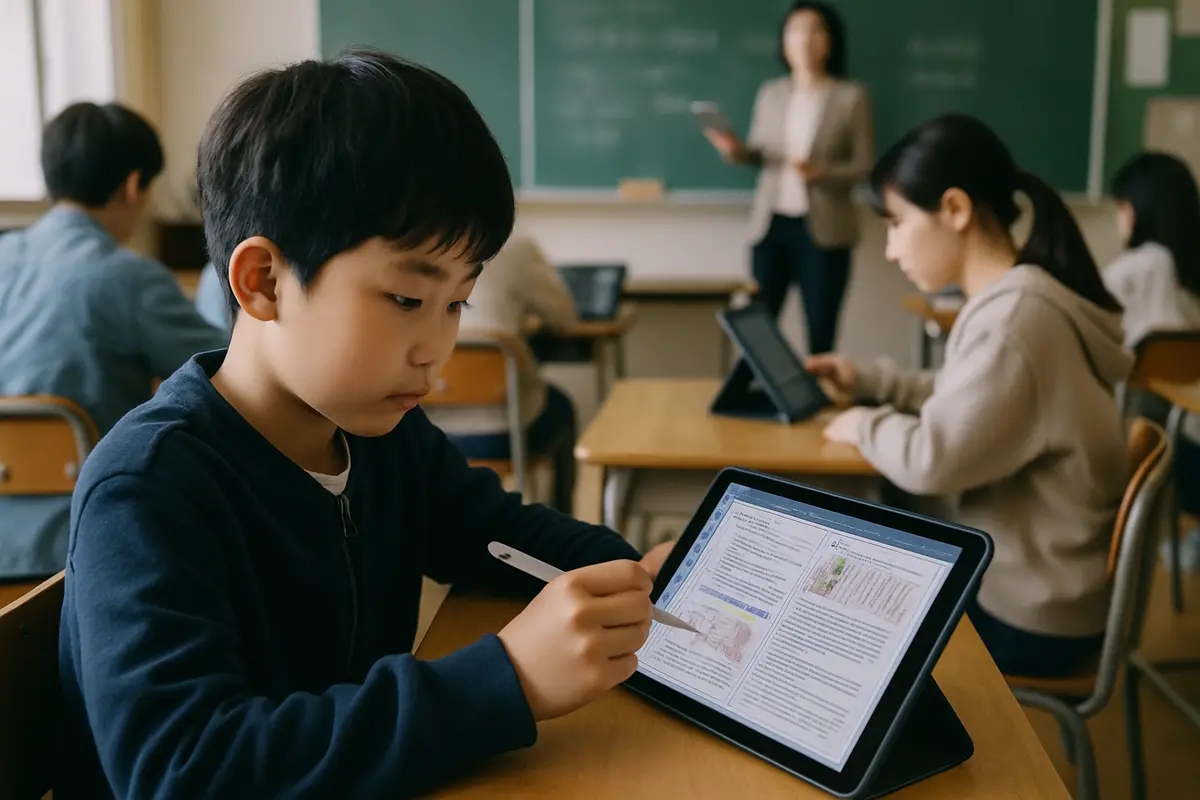
デジタル教科書を使う学校が増える

More schools are using digital textbooks

2

紙の教科書のかわりに、デジタル教科書を使う学校が増えています。

The number of schools using digital textbooks instead of paper ones is increasing.

3

タブレットやパソコンで教科書を読みます。

Pupils read their textbooks on tablets and computers.

4

文部科学省は、まず英語と算数で始めることにしました。

The Ministry of Education has decided to start with English and arithmetic first.

5

デジタル教科書には便利な点があります。

Digital textbooks have some convenient points.

6

声を聞いたり、動画を見たりできます。

You can do things like listen to audio and watch videos.

7

字を大きくすることもできるので、読みにくい子どもにも役に立ちます。

You can also make the letters bigger, so they help children who find reading difficult.

8

かばんも軽くなります。

School bags become lighter too.

9

心配な点もあります。

There are worrying points as well.

10

長い時間画面を見ると、目が疲れます。

If you look at a screen for a long time, your eyes get tired.

11

紙のほうが覚えやすいという意見もあります。

Some people say that paper is easier to remember things from.

12

学校は、紙とデジタルの両方を使いながら、いい方法を探しています。

Schools are using both paper and digital while looking for a good approach.

デジタル教科書きょうかしょ使つか学校がっこうえる1

2026年08月19日 19:16

著者: jpreader

デジタル教科書を使う学校が増える

この画像はAIで生成され、学習目的で使用されています。

This image is AI-generated and used for educational purposes.

かみ教科書きょうかしょかわりにデジタル教科書きょうかしょ使つか学校がっこうています2タブレットパソコン教科書きょうかしょみます3文部科学省もんぶかがくしょうは、まず英語えいご算数さんすうはじめることにしました4

デジタル教科書きょうかしょには便利べんりてんあります5こえたり動画どうがたりできます6おおきくすることもできるのでにくいどもにもやくちます7かばんかるくなります8

心配しんぱいてんあります9なが時間じかん画面がめんるとつかれます10かみほうがおぼやすいという意見いけんあります11学校がっこうは、かみデジタル両方りょうほう使つかながら、いい方法ほうほうさがています12

Discussion

00

to rate or comment.

No comments yet.