認知症にんちしょう
N1

(にんちしょう)

dementia

ひと
N5

(ひと)

person / people

地域ちいき
N3

(ちいき)

region; area

支えるささえる
N2

(ささえる)

to support

動きうごき
N3

(うごき)

movement; trend

高齢化こうれいか
N1

(こうれいか)

ageing (of a population)

進むすすむ
N3

(すすむ)

to advance, to progress

取り組みとりくみ
N2

(とりくみ)

efforts, initiatives

広がるひろがる
N3

(ひろがる)

to spread

厚生労働省こうせいろうどうしょう
N1

(こうせいろうどうしょう)

Ministry of Health, Labour and Welfare

以上いじょう
N3

(いじょう)

more than; beyond this

やく
N3

(やく)

approximately, about

七人しちにん
N5

(しちにん)

seven people

一人ひとり
N5

(ひとり)

one person / alone

言ういう
N5

(いう)

to say

家族かぞく
N5

(かぞく)

family

だけだけ
N4

(だけ)

only, just

介護かいご
N2

(かいご)

nursing care

続けるつづける
N4

(つづける)

to continue

難しいむずかしい
N5

(むずかしい)

difficult

周りまわり
N3

(まわり)

Surroundings; people around; vicinity

助けたすけ
N4

(たすけ)

help / rescue

欠かせないかかせない
N2

(かかせない)

indispensable; essential

各地かくち
N2

(かくち)

various places, everywhere

N4

(し)

city

まち
N5

(まち)

town

学ぶまなぶ
N3

(まなぶ)

to learn / study

講座こうざ
N2

(こうざ)

course; lecture series

開くひらく
N4

(ひらく)

to open, to hold (event)

参加さんか
N4

(さんか)

participation

サポーターさぽーたー
N3

(さぽーたー)

supporter

呼ぶよぶ
N4

(よぶ)

to call

みち
N5

(みち)

road, street, path

迷うまよう
N3

(まよう)

to get lost, hesitate

こえ
N4

(こえ)

voice

買い物かいもの
N5

(かいもの)

shopping

手伝うてつだう
N4

(てつだう)

to help

銀行ぎんこう
N5

(ぎんこう)

bank

コンビニこんびに
N3

(こんびに)

convenience store

店員てんいん
N4

(てんいん)

shop clerk

受けるうける
N3

(うける)

to receive

増えるふえる
N3

(ふえる)

to increase; to grow

一方いっぽう
N3

(いっぽう)

on the other hand / meanwhile

足りるたりる
N4

(たりる)

to be enough; to be sufficient

多いおおい
N5

(おおい)

many

専門家せんもんか
N2

(せんもんか)

expert, specialist

特別とくべつ
N3

(とくべつ)

Special; particular

必要ひつよう
N4

(ひつよう)

necessary / needed

近所きんじょ
N4

(きんじょ)

neighborhood

かお
N4

(かお)

face

覚えるおぼえる
N4

(おぼえる)

to remember, memorize

いつもいつも
N5

(いつも)

always, usually

様子ようす
N3

(ようす)

appearance; state

違うちがう
N5

(ちがう)

to differ; to be different

気づくきづく
N3

(きづく)

to notice; to realise

大切たいせつ
N5

(たいせつ)

important

話すはなす
N5

(はなす)

to speak, talk

~中で
N3

amid ~; while ~ is going on

なかで after a plain-form verb sets a wider background situation. The article opens with 高齢化が進む中で to frame everything that follows against Japan's ageing population.

高齢化が進む中で、地域の助けが必要だ。

Amid the ageing of society, community help is needed.

雨が降る中で、試合が続いた。

The match continued while the rain fell.

忙しい毎日の中で、時間を作る。

I make time amid my busy days.

~ている
N5

is doing, has been doing (ongoing state/action)

Expresses a continuing action or resulting state. Formed with て-form + いる. Can describe an action in progress or a state resulting from a past change.

今、ご飯を食べています。

I am eating rice now.

東京に住んでいます。

I live in Tokyo.

ドアが開いています。

The door is open.

~によると
N3

according to ...

Cites a source of information. The noun before によると is the source. Often followed by a reported statement.

天気予報によると、明日は雨です。

According to the weather forecast, it will rain tomorrow.

ニュースによると、地震がありました。

According to the news, there was an earthquake.

先生によると、テストは来週です。

According to the teacher, the test is next week.

~られる(受身)
N4

passive voice: was/were ~ed

Passive form indicating that the subject receives the action. '食べられて' means 'were eaten'. Central grammar of this article about tulips being eaten by deer.

ケーキが弟に食べられた。

The cake was eaten by my little brother.

~こと
N5

nominalizer (the act of ~)

Turns a verb phrase into a noun. Here 話を聞くこと (the act of listening to a speech).

日本に行くことが好きだ。

I like going to Japan.

勉強することは大切だ。

Studying is important.

~について
N4

about / regarding / concerning

Used to indicate the topic of discussion or consideration. Here it introduces the topic the team will think about.

日本について話します。

I will talk about Japan.

この問題について考える。

Think about this problem.

~たり~たり
N5

doing things like A and B

Lists example actions.

エアコンを使ったり水を飲んだり。

Using air conditioning, drinking water, etc.

読んだり書いたり。

Reading and writing.

~てくる
N4

come toward (action approaching)

Indicates motion toward the speaker or a location. Here it describes rocks flying toward people.

鳥が飛んできた。

A bird flew toward (us).

雨が降ってきた。

It started raining.

~と(条件)
N4

if / when (natural consequence)

Conditional と indicating a natural or expected result. 一緒に捨てると…火が出て means 'if you throw them away together, fire starts.'

ボタンを押すと、ドアが開きます。

When you press the button, the door opens.

春になると、桜が咲きます。

When spring comes, cherry blossoms bloom.

1

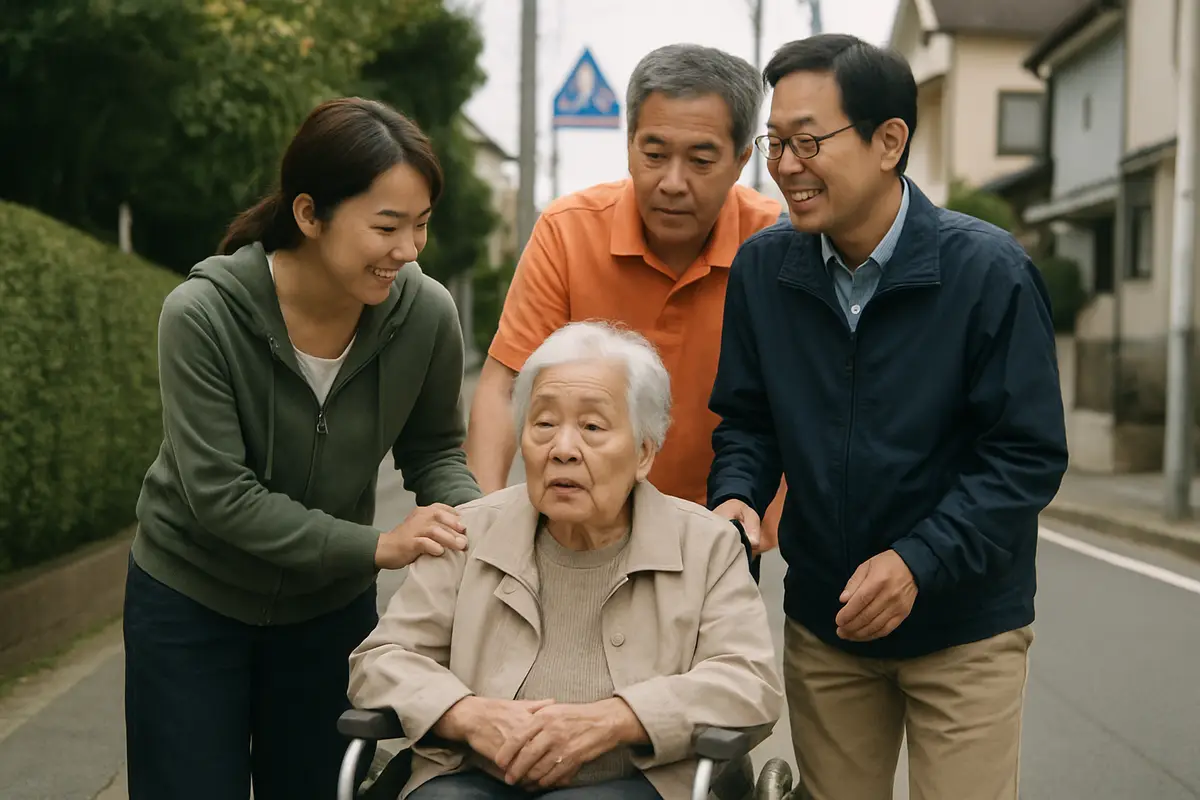
認知症の人を地域で支える動き

A movement to support people with dementia in their local communities

2

高齢化が進む中で、認知症の人を地域で支える取り組みが広がっている。

As the population ages, efforts to support people with dementia within their local communities are spreading.

3

厚生労働省によると、六十五歳以上の約七人に一人が認知症だと言われている。

According to the Ministry of Health, Labour and Welfare, about one in seven people aged 65 or over is said to have dementia.

4

家族だけで介護を続けることは難しく、周りの助けが欠かせない。

It is hard for a family to keep providing care on its own, and help from the people around them is essential.

5

各地の市や町では、認知症について学ぶ講座を開いている。

Cities and towns around the country are holding courses for learning about dementia.

6

参加した人は「認知症サポーター」と呼ばれ、道に迷った人に声をかけたり、買い物を手伝ったりする。

People who take part are called "dementia supporters", and they do things like speaking to someone who has lost their way or helping with the shopping.

7

銀行やコンビニの店員が受けることも増えてきた。

It has also become more common for bank and convenience store staff to take the course.

8

一方で、支える人が足りない地域も多い。

On the other hand, there are many areas where there are not enough people to provide support.

9

専門家は「特別なことをする必要はない。

An expert says, "There is no need to do anything special.

10

近所の人が顔を覚えて、いつもと様子が違うと気づくことが大切だ」と話している。

What matters is that neighbours learn each other's faces and notice when someone seems different from usual."

認知症にんちしょうひと地域ちいきささえるうご1

2026年08月19日 19:22

著者: jpreader

認知症の人を地域で支える動き

この画像はAIで生成され、学習目的で使用されています。

This image is AI-generated and used for educational purposes.

高齢化こうれいかすすなか認知症にんちしょうひと地域ちいきささえるひろがっている2厚生労働省こうせいろうどうしょうによると六十五歳ろくじゅうごさい以上いじょうやく七人しちにん一人ひとり認知症にんちしょうだとわれている3家族かぞくだけ介護かいごつづけることむずかしく、まわたすかせない4

各地かくちまちでは、認知症にんちしょうについてまな講座こうざひらている5参加さんかしたひとは「認知症にんちしょうサポーター」とばれみちまよったひとこえをかけたりもの手伝てつだたりする6銀行ぎんこうコンビニ店員てんいんけることてきた7

一方いっぽうで、ささえるひとりない地域ちいきおお8専門家せんもんかは「特別とくべつことをする必要ひつようはない9近所きんじょひとかおおぼえて、いつも様子ようすちがうとづくこと大切たいせつだ」とはなている10

Discussion

00

to rate or comment.

No comments yet.