日本にほん
N5

(にほん)

Japan

N5

(き)

tree / wood

使うつかう
N5

(つかう)

to use

高いたかい
N5

(たかい)

expensive; high

建物たてもの
N4

(たてもの)

building

増えるふえる
N3

(ふえる)

to increase; to grow

今までいままで
N4

(いままで)

until now / so far

大きなおおきな
N5

(おおきな)

big (attrib.)

ビルびる
N5

(びる)

building

コンクリートこんくりーと
N2

(こんくりーと)

concrete

てつ
N3

(てつ)

iron

しかししかし
N4

(しかし)

however, but

新しいあたらしい
N5

(あたらしい)

new

技術ぎじゅつ
N3

(ぎじゅつ)

skill, technology

丈夫じょうぶ
N4

(じょうぶ)

sturdy; strong; durable

作るつくる
N5

(つくる)

to make

いいいい
N5

(いい)

good

てん
N4

(てん)

point, score

育つそだつ
N3

(そだつ)

to grow up / to be raised

二酸化炭素にさんかたんそ
N1

(にさんかたんそ)

carbon dioxide

取り入れるとりいれる
N2

(とりいれる)

to take in; to absorb

だからだから
N4

(だから)

so, therefore

環境かんきょう
N3

(かんきょう)

environment

やさしいやさしい
N4

(やさしい)

kind, gentle

言ういう
N5

(いう)

to say

工事こうじ
N3

(こうじ)

construction work

おと
N5

(おと)

sound

小さいちいさい
N5

(ちいさい)

small

期間きかん
N3

(きかん)

period, term

短いみじかい
N5

(みじかい)

short

心配しんぱい
N4

(しんぱい)

worry / concern

火事かじ
N4

(かじ)

fire (accident)

弱いよわい
N5

(よわい)

Weak

ひと
N5

(ひと)

person / people

多いおおい
N5

(おおい)

many

会社かいしゃ
N5

(かいしゃ)

company

特別とくべつ
N3

(とくべつ)

Special; particular

簡単かんたん
N4

(かんたん)

simple / easy

燃えるもえる
N3

(もえる)

to burn / to catch fire

説明せつめい
N4

(せつめい)

explanation

くに
N5

(くに)

country; the government

増やすふやす
N4

(ふやす)

to increase (something)

計画けいかく
N3

(けいかく)

plan

進めるすすめる
N3

(すすめる)

to advance; to move forward

~ています
N5

is doing, has been doing (ongoing state/action)

Expresses a continuing action or resulting state. Formed with て-form + いる/います. Can describe an action in progress or a state that continues from a past change.

今、本を読んでいます。

I am reading a book now.

窓が開いています。

The window is open.

日本に住んでいます。

I live in Japan.

~れる・られる(受身)
N4

passive voice

Expresses that something is done to the subject. Here the crabs were carried in (運ばれました) and Shiraoi's crabs are known as a specialty (知られています).

カニが運ばれました。

The crabs were carried in.

この町は毛ガニで知られています。

This town is known for hairy crabs.

~おかげで
N3

thanks to

すばらしい監督のおかげです attributes the success to the wonderful director.

すばらしい監督のおかげです。

It is thanks to the wonderful director.

~でも(~であっても)
N4

even (with) ~

A noun plus でも means "even ~", presenting a surprising case. 木でも丈夫な建物 says that strong buildings are possible even with wood, which readers might not expect.

木でも丈夫な建物が作れます。

Even with wood, strong buildings can be built.

子どもでもわかります。

Even a child can understand it.

雨でも工事をします。

We will do the construction even in the rain.

~ようになる
N4

come to / reach the point where

Indicates a change in state or ability.

運転できるようになった。

Trains became able to run.

日本語が話せるようになりました。

I became able to speak Japanese.

~とき
N5

when ~

Indicates the time when something happened — when he was in junior high school.

中学生のとき病気になりました。

When I was a junior-high student I got sick.

子どものとき日本にいました。

I was in Japan when I was a child.

~と(条件)
N4

if / when (natural consequence)

Conditional と indicating a natural or expected result. 一緒に捨てると…火が出て means 'if you throw them away together, fire starts.'

ボタンを押すと、ドアが開きます。

When you press the button, the door opens.

春になると、桜が咲きます。

When spring comes, cherry blossoms bloom.

~くて(形容詞のて形)
N5

and (joining i-adjectives)

An i-adjective changes い to くて to link to the next clause. 小さくて joins the quiet construction noise to the second benefit, the shorter building period.

工事の音が小さくて、期間も短いです。

The construction noise is quiet and the period is short too.

この部屋は広くて明るいです。

This room is spacious and bright.

その店は安くておいしいです。

That restaurant is cheap and tasty.

~くなる
N4

to become (い-adjective)

Expresses a change of state for い-adjectives. Drop the final い and add くなる. Indicates something has changed or will change to a new state.

寒くなりました。

It has gotten cold.

日本語が上手になりました。

My Japanese has gotten better.

値段が高くなりました。

The price became expensive.

~と思う
N5

to think that

In '増えていくと思います' – 'I think (they) will continue to increase'. Used to express opinion.

雨が降ると思います。

I think it will rain.

彼は学生だと思う。

I think he is a student.

~ば(条件)
N4

if (conditional form)

The ば-form states the condition under which the result holds. 使えば、簡単には燃えません is the companies' claim: if special wood is used, it will not burn easily.

特別な木を使えば、簡単には燃えません。

If you use special wood, it will not burn easily.

安ければ買います。

If it is cheap, I will buy it.

時間があれば、行きます。

If I have time, I will go.

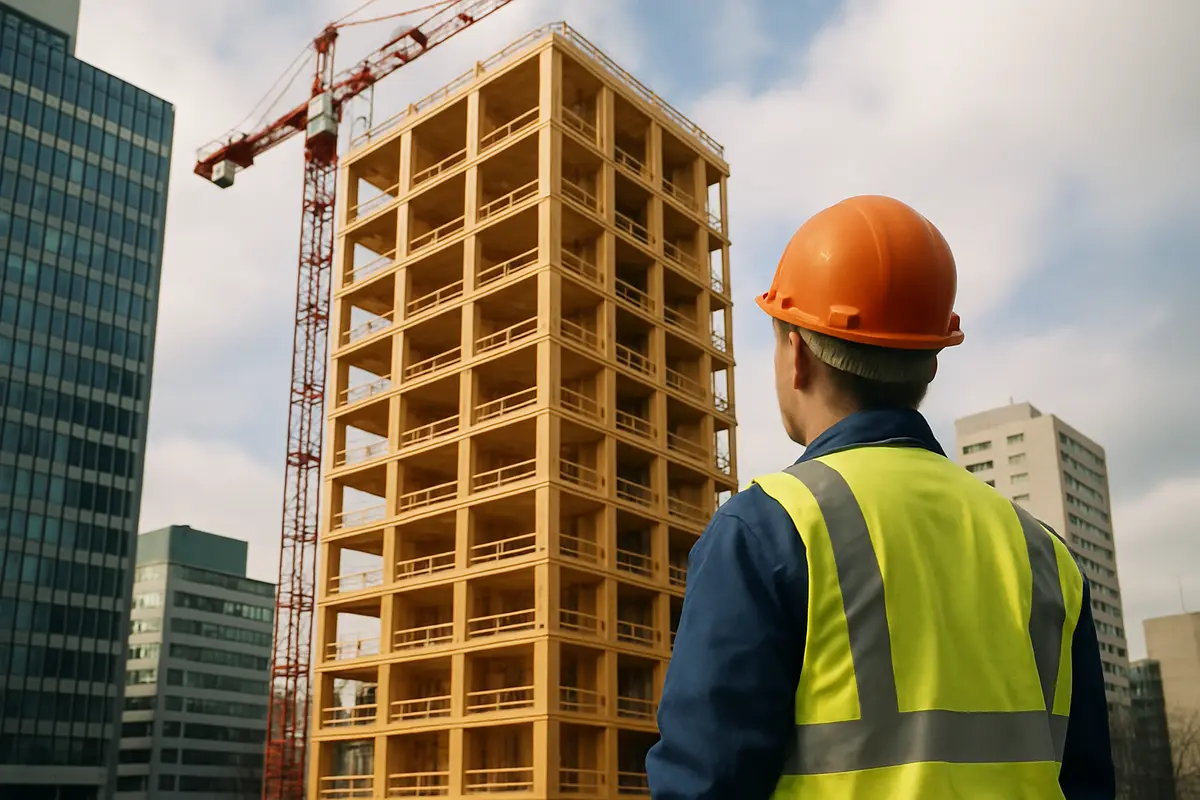
1

木を使った高い建物が増える

Tall buildings made with wood are increasing

2

日本で、木を使った高い建物が増えています。

In Japan, the number of tall buildings that use wood is increasing.

3

今までは、大きなビルにはコンクリートや鉄が使われていました。

Until now, concrete and steel were used for large buildings.

4

しかし、新しい技術のおかげで、木でも丈夫な建物が作れるようになりました。

However, thanks to new technology, it has become possible to build strong buildings even out of wood.

5

木の建物にはいい点があります。

Wooden buildings have good points.

6

木は育つときに二酸化炭素を取り入れます。

Trees take in carbon dioxide while they are growing.

7

だから、木を使うと環境にやさしいと言われています。

That is why using wood is said to be kind to the environment.

8

工事の音が小さくて、期間も短くなります。

The noise of the construction work is quieter, and the building period also becomes shorter.

9

心配な点もあります。

There are worrying points too.

10

火事に弱いと思う人が多いです。

Many people think that wood is weak against fire.

11

会社は「特別な木を使えば、簡単には燃えません」と説明しています。

The companies explain, "If you use special wood, it does not burn easily."

12

国も木の建物を増やす計画を進めています。

The government is also moving ahead with a plan to increase the number of wooden buildings.

使つかったたか建物たてものえる1

2026年08月20日 19:16

著者: jpreader

木を使った高い建物が増える

この画像はAIで生成され、学習目的で使用されています。

This image is AI-generated and used for educational purposes.

日本にほんで、使つかったたか建物たてものています2いままでは、おおきなビルにはコンクリートてつ使つかわれていました3しかしあたらしい技術ぎじゅつのおかげででも丈夫じょうぶ建物たてものつくれるようになりました4

建物たてものにはいいてんがあります5そだときに二酸化炭素にさんかたんそれます6だから使つかうと環境かんきょうやさしいわれています7工事こうじおとちいくて期間きかんみじかくなります8

心配しんぱいてんもあります9火事かじよわおもひとおおいです10会社かいしゃは「特別とくべつ使つかえば簡単かんたんにはえません」と説明せつめいています11くに建物たてものやす計画けいかくすすています12

Discussion

00

to rate or comment.

No comments yet.