Expresses a change of state for い-adjectives. Drop the final い and add くなる. Indicates something has changed or will change to a new state.
寒くなりました。
It has gotten cold.
日本語が上手になりました。
My Japanese has gotten better.
値段が高くなりました。
The price became expensive.
~になる
N5
to become
Expresses a change of state; Kawai became the new commissioner of the Sports Agency.
新しい長官になりました。
He became the new commissioner.
目が見えなくなりました。
He became unable to see.
~ほど(程度)
N3
about; approximately
After a number, ほど gives a rough amount in the same way as ぐらい. 五十年ほど前 means the pipes were laid roughly fifty years ago.
水道管は五十年ほど前に埋められました。
The water pipes were buried about fifty years ago.
駅まで十分ほどかかります。
It takes about ten minutes to the station.
百人ほどの人が集まりました。
About a hundred people gathered.
~れる・られる(受身)
N4
passive voice
Expresses that something is done to the subject. Here the crabs were carried in (運ばれました) and Shiraoi's crabs are known as a specialty (知られています).
カニが運ばれました。
The crabs were carried in.
この町は毛ガニで知られています。
This town is known for hairy crabs.
~やすい
N4
easy to ~ / tends to ~
Used in 'うつりやすくて' meaning 'easily contagious / easy to catch'.
この本は読みやすい。
This book is easy to read.
忘れやすい。
Easy to forget.
~ています
N5
is doing, has been doing (ongoing state/action)
Expresses a continuing action or resulting state. Formed with て-form + いる/います. Can describe an action in progress or a state that continues from a past change.
今、本を読んでいます。
I am reading a book now.
窓が開いています。
The window is open.
日本に住んでいます。
I live in Japan.
~のが
N4
the one who / the thing that ~ (nominalizing の)
の stands in for an unnamed person or thing. 引き継ぐのが、大岩剛さんです means 'the one who takes over is Go Oiwa'.
来るのが友だちです。
The one coming is my friend.
私が作ったのがこれです。
This is the one I made.
~てくる
N4
come toward (action approaching)
Indicates motion toward the speaker or a location. Here it describes rocks flying toward people.
鳥が飛んできた。
A bird flew toward (us).
雨が降ってきた。
It started raining.
~か(間接疑問)
N3
embedded question: where / what / whether
A question word plus か can sit inside a larger sentence as its object. どこに使うか、決めること means deciding the question "where should it be spent?".
予算をどこに使うか、決めます。
We decide where to spend the budget.
だれが来るか、わかりません。
I do not know who is coming.
何を買うか、まだ考えています。
I am still thinking about what to buy.
~ことが
N4
nominalizer: the act of doing (as subject)
こと turns a verb into a noun phrase, and が marks it as the subject. 決めることが大切だ states that the act of deciding is what matters.
決めることが大切だ。
Deciding is what is important.
毎日練習することが大切です。
Practising every day is important.
水を大事に使うことが必要です。
Using water carefully is necessary.
1
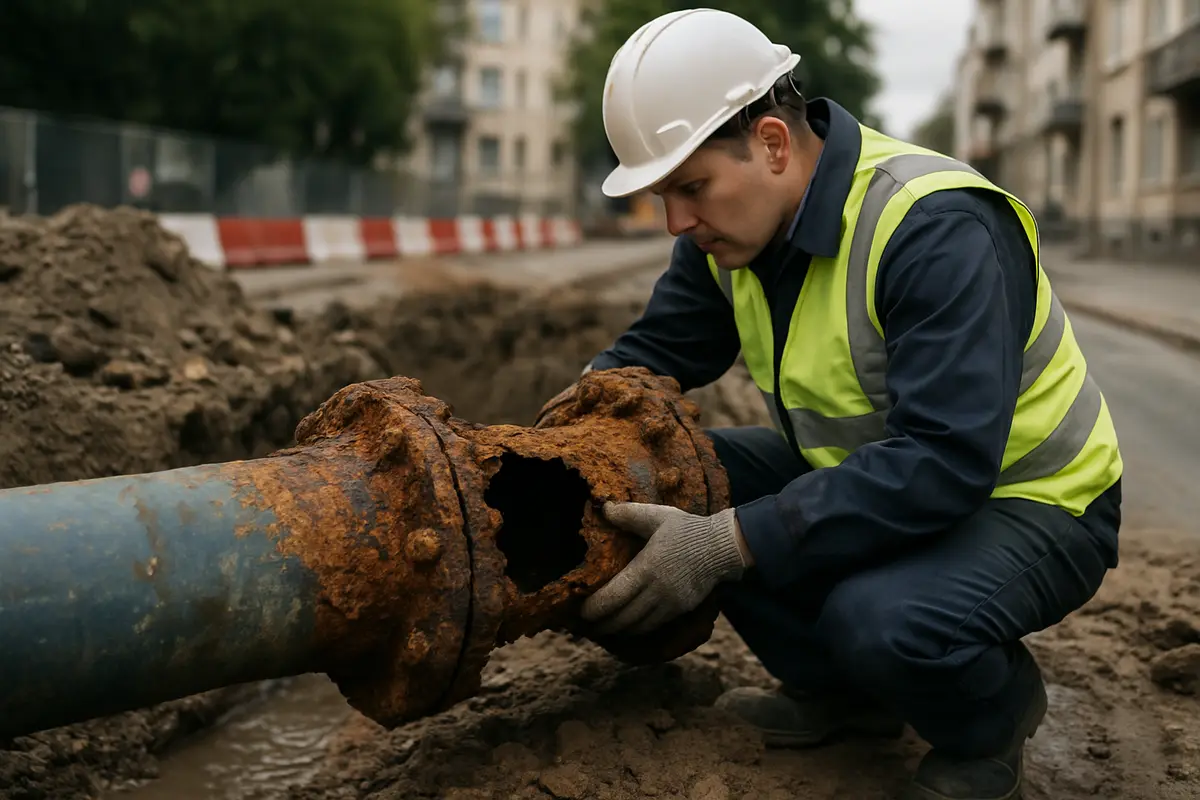
老朽化した水道管の交換が進まない
Replacement of aging water pipes is not moving forward
2
日本各地で、古くなった水道管の交換が大きな課題になっています。
All around Japan, replacing water pipes that have grown old has become a major issue.
3
多くの水道管は五十年ほど前に埋められました。
Many of the water pipes were laid in the ground about fifty years ago.
4
古い管は破れやすく、道路が急に水浸しになる事故も起きています。
Old pipes burst easily, and accidents in which a road is suddenly flooded are happening as well.
5
交換にはたくさんの費用がかかります。
Replacing them costs a great deal of money.
6
人口が減っている地域では、水道料金を払う人も減りました。
In areas where the population is falling, the number of people who pay water charges has dropped too.
7
そのため、必要なお金を集めるのが難しくなっています。
For that reason, raising the money that is needed is becoming difficult.
8
工事をする技術者の不足も問題です。
A shortage of engineers to carry out the work is also a problem.
9
国は、複数の市町村が協力して水道を運営する方法をすすめています。
The national government is promoting a method in which several municipalities cooperate to run the water supply.
10
水漏れの場所を音や人工知能で見つける技術も広がってきました。
Technology that locates leaks using sound or artificial intelligence has also been spreading.
11
専門家は「限られた予算をどこに使うか、決めることが大切だ」と話しています。
An expert says, "It is important to decide where to spend a limited budget."
老朽化した水道管の交換が進まない1
2026年08月20日 19:22
著者: jpreader
この画像はAIで生成され、学習目的で使用されています。
This image is AI-generated and used for educational purposes.
Discussion
to rate or comment.
No comments yet.