今年から、外で働く人を熱中症から守るための新しいルールが始まりました2。会社は暑い日に、働く人の様子を確認しなければなりません3。
具合が悪くなった人がいたら、すぐに涼しい場所へ運びます4。そして、病院に連れて行くかどうかを決めます5。会社は、そのやり方を前もって決めておく必要があります6。
今年の夏も、暑い日が続いています7。熱中症で運ばれる人は毎年多く、仕事中に亡くなる人もいます8。専門家は「水を飲むだけでなく、休む時間をきちんと取ることが大切だ」と話しています9。
(ことし)
this year
(そと)
outside
(はたらく)
to work
(ひと)
person / people
(ねっちゅうしょう)
heatstroke
(まもる)
to protect
(あたらしい)
new
(るーる)
rule
(はじまる)
to begin
(かいしゃ)
company
(あつい)
hot
(ひ)
day
(ようす)
appearance; state
(かくにん)
confirmation, checking
(ぐあい)
condition / state
(わるい)
bad
(すずしい)
cool, refreshing
(ばしょ)
place
(はこぶ)
to carry; to transport
(そして)
and; and then
(びょういん)
hospital
(つれていく)
to take (someone) along
(きめる)
to decide
(やりかた)
way of doing, method
(まえもって)
in advance, beforehand
(ひつよう)
necessary / needed
(なつ)
Summer
(つづく)
to continue
(まいとし)
every year
(おおい)
many
(しごとちゅう)
during work, while on the job
(なくなる)
to pass away; to die (polite)
(せんもんか)
expert, specialist
(みず)
water
(のむ)
to drink
(やすむ)
to rest; to take a break
(じかん)
time
(きちんと)
properly, neatly, punctually
(とる)
to take
(たいせつ)
important
(はなす)
to speak, talk
(ふせぐ)
to prevent / to protect against
in order to, for the purpose of
Expresses purpose. Formed with verb dictionary form + ための + noun, or noun + のための + noun. Modifies the following noun to indicate its purpose.
試験のための勉強をしています。
I am studying for the exam.
健康のために運動します。
I exercise for my health.
日本語を勉強するための本を買いました。
I bought a book for studying Japanese.
must ~; have to ~
Expresses obligation using double negative construction.
宿題をしなければなりません。
I must do my homework.
明日までに返さなければなりません。
I must return it by tomorrow.
to become (い-adjective)
Expresses a change of state for い-adjectives. Drop the final い and add くなる. Indicates something has changed or will change to a new state.
寒くなりました。
It has gotten cold.
日本語が上手になりました。
My Japanese has gotten better.
値段が高くなりました。
The price became expensive.
if ..., when ...
Conditional form indicating 'if' or 'when' something happens. Formed by adding ら to the た-form of a verb. Expresses a hypothetical or temporal condition.
雨が降ったら、行きません。
If it rains, I won't go.
お金があったら、旅行したいです。
If I had money, I'd like to travel.
終わったら、電話してください。
When you're done, please call me.
whether or not
Used with embedded questions to express uncertainty about whether something is true. Here it introduces what the research lab is trying to determine about the bear.
行くかどうか分からない。
I don't know whether I'll go or not.
本当かどうか確認する。
I'll check whether it's true or not.
Do ~ in advance (preparation)
Indicates doing something in advance for future readiness. Companies need to decide procedures in advance.
旅行の前にホテルを予約しておく。
I book a hotel in advance before the trip.
is doing, has been doing (ongoing state/action)
Expresses a continuing action or resulting state. Formed with て-form + いる/います. Can describe an action in progress or a state that continues from a past change.
今、本を読んでいます。
I am reading a book now.
窓が開いています。
The window is open.
日本に住んでいます。
I live in Japan.
passive form
Passive voice used for the victim: 殺されている (was murdered), 見つかりました (was found).
女性が殺されているのが見つかりました。
The woman was found murdered.
Not only ~ but also
Expresses that something is not limited to one thing. Not only Tokyo and Kyoto, but various other places too.
日本語だけでなく、英語も話せます。
I can speak not only Japanese but also English.
nominalizer (the act of ~)
Turns a verb phrase into a noun. Here 話を聞くこと (the act of listening to a speech).
日本に行くことが好きだ。
I like going to Japan.
勉強することは大切だ。
Studying is important.
quotative particle
Marks the content of what someone said or reported. Used with 言う here.
彼は行くと言いました。
He said he would go.
明日休みだと聞きました。
I heard tomorrow is a holiday.
熱中症を防ぐ新しいルールが始まる
New rules to prevent heatstroke take effect
今年から、外で働く人を熱中症から守るための新しいルールが始まりました。
Starting this year, new rules to protect people who work outdoors from heatstroke have taken effect.
会社は暑い日に、働く人の様子を確認しなければなりません。
On hot days, companies must check on the condition of their workers.
具合が悪くなった人がいたら、すぐに涼しい場所へ運びます。
If someone becomes unwell, they are to be moved to a cool place right away.
そして、病院に連れて行くかどうかを決めます。
Then it is decided whether or not to take the person to a hospital.
会社は、そのやり方を前もって決めておく必要があります。
Companies need to decide that procedure in advance.
今年の夏も、暑い日が続いています。
This summer as well, hot days are continuing.
熱中症で運ばれる人は毎年多く、仕事中に亡くなる人もいます。
Every year many people are taken to hospital with heatstroke, and some even die while working.
専門家は「水を飲むだけでなく、休む時間をきちんと取ることが大切だ」と話しています。
Experts say, "It is important not just to drink water, but also to take proper time to rest."
2026年08月21日 19:20
著者: jpreader
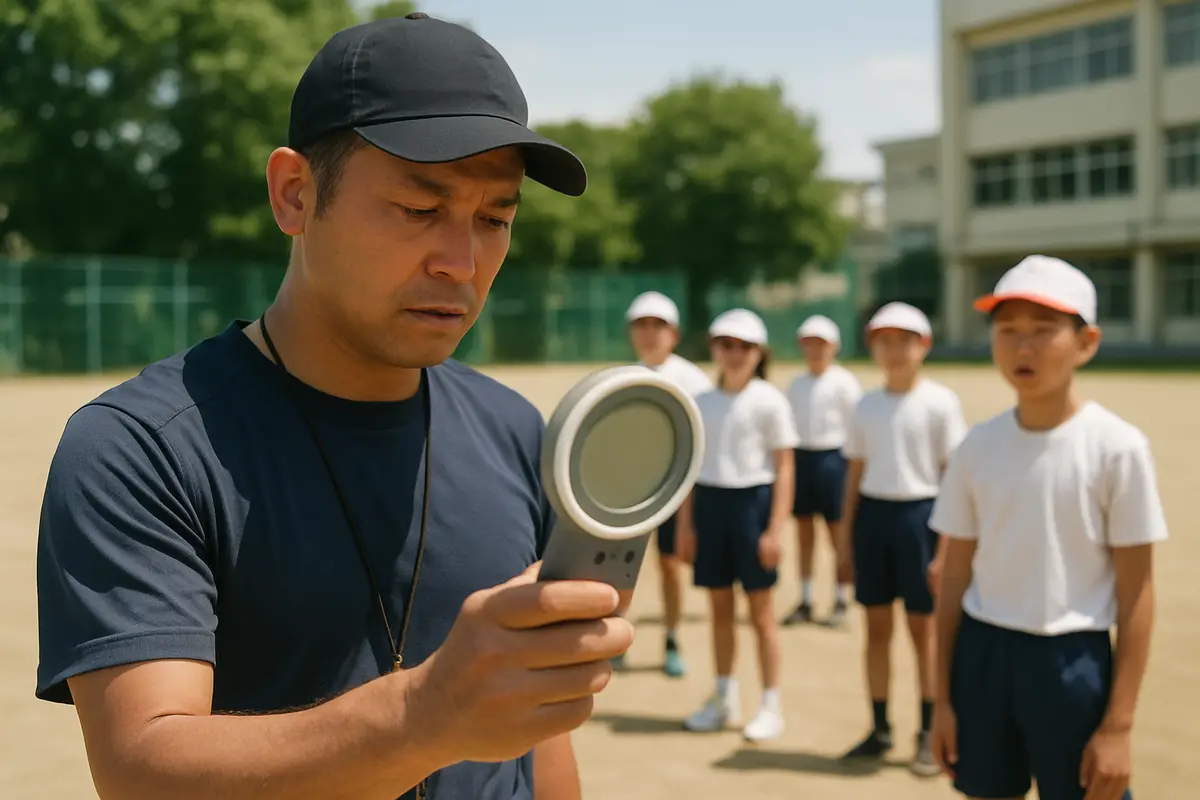
この画像はAIで生成され、学習目的で使用されています。
This image is AI-generated and used for educational purposes.
今年から、外で働く人を熱中症から守るための新しいルールが始まりました2。会社は暑い日に、働く人の様子を確認しなければなりません3。
具合が悪くなった人がいたら、すぐに涼しい場所へ運びます4。そして、病院に連れて行くかどうかを決めます5。会社は、そのやり方を前もって決めておく必要があります6。
今年の夏も、暑い日が続いています7。熱中症で運ばれる人は毎年多く、仕事中に亡くなる人もいます8。専門家は「水を飲むだけでなく、休む時間をきちんと取ることが大切だ」と話しています9。
Discussion
to rate or comment.
No comments yet.