Plain form + のに expresses that the result clashes with expectation. 食べられるのに捨てられてしまう = 'it is thrown away even though it can still be eaten'.
食べられるのに捨てられている。
It is thrown away even though it can still be eaten.
薬を飲んだのに、まだ熱がある。
Even though I took the medicine, I still have a fever.
~られる(可能)
N4
potential form (can do)
入れられる is the potential form of 入れる — 'can put (things) in'. It describes what the furniture allows you to do.
物を入れられる家具。
Furniture you can put things into.
ここで食べられます。
You can eat here.
~てしまう
N4
completely / finish ~ing (often regretful)
Expresses completion, often with regret or unexpectedness. Here the rice sold out quickly.
すぐに全部売れてしまった。
It all sold out right away.
忘れてしまった。
I forgot (unfortunately).
~られる(受身)
N4
passive voice: was/were ~ed
Passive form indicating that the subject receives the action. '食べられて' means 'were eaten'. Central grammar of this article about tulips being eaten by deer.
ケーキが弟に食べられた。
The cake was eaten by my little brother.
~(よ)うとする
N3
to try to ~ / to be about to ~
The volitional form plus とする shows an attempt. 消そうとしています means they are trying to put the fires out, without saying they succeed.
ドアを開けようとしましたが、開きませんでした。
I tried to open the door, but it wouldn't open.
火を消そうとしています。
They are trying to put out the fire.
~ている
N5
is doing, has been doing (ongoing state/action)
Expresses a continuing action or resulting state. Formed with て-form + いる. Can describe an action in progress or a state resulting from a past change.
今、ご飯を食べています。
I am eating rice now.
東京に住んでいます。
I live in Tokyo.
ドアが開いています。
The door is open.
~とされる
N2
is said to be / is considered to be
Used in news writing to report a widely held estimate without naming a source. Here it marks the figure for how much food waste comes from homes.
半分近くは家庭から出ているとされる。
Nearly half is said to come from households.
この方法が一番安全だとされる。
This method is considered the safest.
~ないほうがいい
N4
had better not
「外に出ないほうがいいです」と、雨が強い時は外出しない方がよいと助言しています。
無理しないほうがいい。
You had better not overdo it.
今は行かないほうがいい。
You had better not go now.
~にすぎない
N2
is nothing more than, is only
Emphasises that an amount is smaller or less significant than expected. Here only a fraction of the appliances is actually collected.
それはうわさにすぎません。
That is nothing more than a rumor.
参加者は十人にすぎなかった。
There were only ten participants.
~ため(理由)
N4
because of ~ / since ~
Plain form + ため states a cause in formal writing. 知られていないため = 'because it is not well known'.
十分に知られていないため、食べ物が捨てられている。
Because it is not well known, food is being thrown away.
雨のため、試合は中止になった。
Because of the rain, the match was called off.
~ではなく
N3
not ... but rather ...
Negative connective form of だ. Used to negate one thing and present an alternative. では + なく links to what follows as the true explanation.
これは犬ではなく、猫です。
This is not a dog, but a cat.
問題は時間ではなく、お金です。
The problem is not time, but money.
~てきた
N4
have been doing ~
Expresses continuation from past up to present.
ずっと勉強してきました。
I have been studying all along.
この会社で10年働いてきた。
I've worked at this company for 10 years.
~ずに
N3
without doing ~
Used in 悩まずに ('without worrying alone') to encourage people to seek consultation.
朝ごはんを食べずに出かけた。
I went out without eating breakfast.
何も言わずに帰った。
He left without saying anything.
~やすい
N4
easy to ~ / tends to ~
Used in 'うつりやすくて' meaning 'easily contagious / easy to catch'.
この本は読みやすい。
This book is easy to read.
忘れやすい。
Easy to forget.
~ていく
N3
to go on doing / continue to (from now)
In '増えていく' – 'will continue to increase (into the future)'. Indicates continuing trend going forward.
これから寒くなっていく。
From now on, it will become colder.
日本語を勉強していきたい。
I want to continue studying Japanese.
1
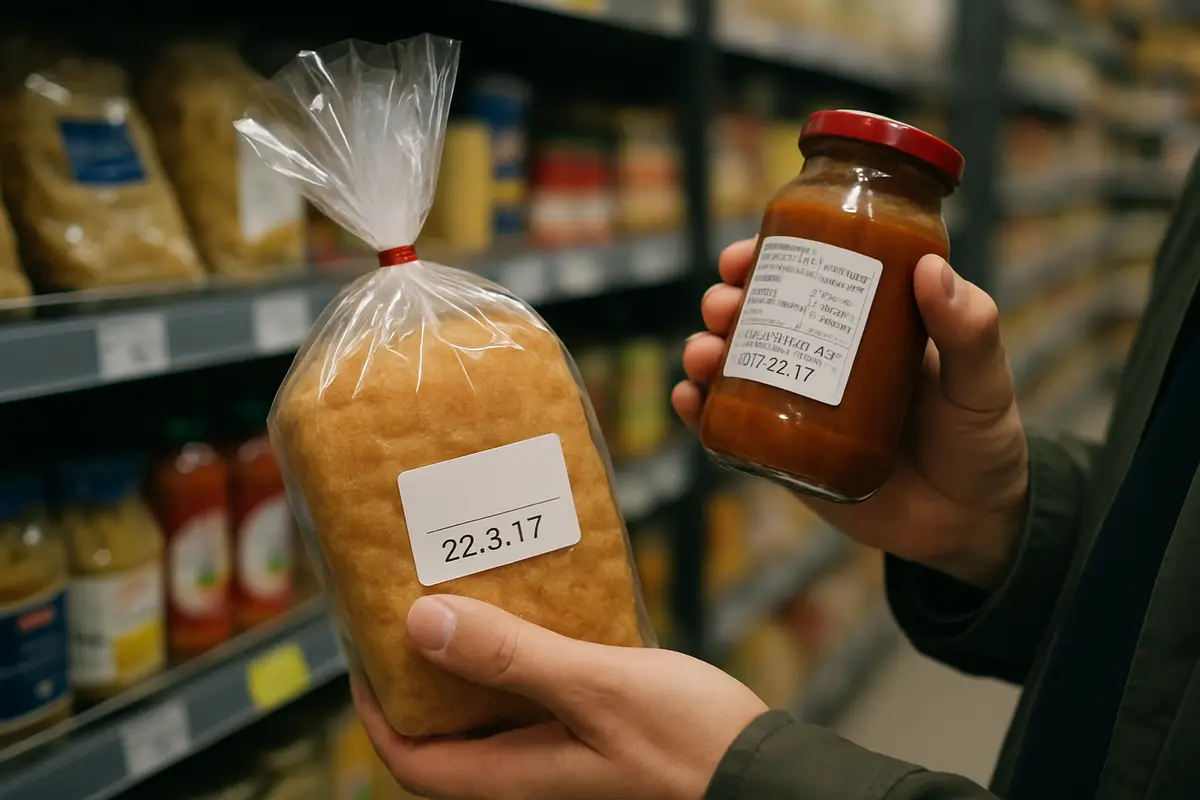
食品ロスを減らす期限表示の見直し
Rethinking date labels to cut food waste
2
食べられるのに捨てられてしまう「食品ロス」を減らそうと、期限の表示を見直す動きが広がっている。
In an effort to reduce "food loss" — food thrown away even though it is still edible — a movement to review date labeling is spreading.
3
日本の食品ロスは年間400万トンを超え、その半分近くは家庭から出ているとされる。
Japan's food loss is said to exceed four million tons a year, with nearly half of it coming from households.
4
食品には「消費期限」と「賞味期限」の二種類がある。
There are two kinds of dates on food: the "use-by date" and the "best-before date."
5
消費期限を過ぎた物は食べないほうがいいが、賞味期限はおいしく食べられる目安にすぎない。
You had better not eat something past its use-by date, but the best-before date is nothing more than a guide to when the food still tastes good.
6
この違いが十分に知られていないため、まだ食べられる物まで捨てられている。
Because this difference is not well known, even food that is still edible is being thrown away.
7
そこで、賞味期限を「年月日」ではなく「年月」だけで示す会社が増えてきた。
And so more companies have begun showing the best-before date with only the year and month, rather than the year, month and day.
8
細かい日付にこだわらずにすむうえ、配送や在庫の管理もしやすくなるという。
This not only removes the need to fuss over exact dates but also makes delivery and inventory management easier, they say.
9
消費者庁は、期限の意味を正しく伝える取り組みを続けていく方針だ。
The Consumer Affairs Agency plans to keep up its efforts to convey the meaning of these dates correctly.
食品ロスを減らす期限表示の見直し1
2026年08月21日 19:23
著者: jpreader
この画像はAIで生成され、学習目的で使用されています。
This image is AI-generated and used for educational purposes.
Discussion
to rate or comment.
No comments yet.