人工知能じんこうちのう
N1

(じんこうちのう)

artificial intelligence

天気予報てんきよほう
N3

(てんきよほう)

Weather forecast

変わるかわる
N4

(かわる)

to change

使うつかう
N5

(つかう)

to use

研究けんきゅう
N4

(けんきゅう)

research, study

世界中せかいじゅう
N3

(せかいじゅう)

all over the world

急速きゅうそく
N2

(きゅうそく)

rapid; swift

進むすすむ
N3

(すすむ)

to advance, to progress

これまでこれまで
N4

(これまで)

until now / so far

予報よほう
N3

(よほう)

forecast

大気たいき
N2

(たいき)

the atmosphere

動きうごき
N3

(うごき)

movement; trend

物理ぶつり
N2

(ぶつり)

physics

しき
N3

(しき)

ceremony

計算けいさん
N3

(けいさん)

calculation; computation

やり方やりかた
N3

(やりかた)

way of doing, method

中心ちゅうしん
N3

(ちゅうしん)

center; core

方法ほうほう
N3

(ほうほう)

method; way

精度せいど
N1

(せいど)

accuracy; precision

高いたかい
N5

(たかい)

expensive; high

大型おおがた
N2

(おおがた)

large-scale; large-size

コンピューターこんぴゅーたー
N5

(こんぴゅーたー)

computer

長いながい
N5

(ながい)

long

計算時間けいさんじかん
N2

(けいさんじかん)

calculation time; computing time

必要ひつよう
N4

(ひつよう)

necessary / needed

新しいあたらしい
N5

(あたらしい)

new

手法しゅほう
N1

(しゅほう)

technique; approach

過去かこ
N3

(かこ)

the past

数十年すうじゅうねん
N3

(すうじゅうねん)

several decades

観測かんそく
N1

(かんそく)

observation (scientific)

データでーた
N3

(でーた)

data

学習がくしゅう
N3

(がくしゅう)

learning; study

さき
N5

(さき)

ahead, future

天気てんき
N5

(てんき)

weather

予測よそく
N2

(よそく)

prediction; to predict

かかるかかる
N5

(かかる)

to take (time/money), cost

時間じかん
N5

(じかん)

time

従来じゅうらい
N1

(じゅうらい)

conventional; up to now

ずっとずっと
N4

(ずっと)

continuously; all along

短いみじかい
N5

(みじかい)

short

ふつうふつう
N4

(ふつう)

usually; ordinary; normal

機械きかい
N3

(きかい)

machine

動くうごく
N4

(うごく)

to move

台風たいふう
N3

(たいふう)

typhoon

進路しんろ
N1

(しんろ)

course, path

上回るうわまわる
N1

(うわまわる)

to exceed; to surpass

結果けっか
N3

(けっか)

result

報告ほうこく
N3

(ほうこく)

report

ただしただし
N2

(ただし)

however, provided that

現象げんしょう
N2

(げんしょう)

phenomenon

弱いよわい
N5

(よわい)

Weak

言ういう
N5

(いう)

to say

記録的きろくてき
N1

(きろくてき)

record-breaking

豪雨ごうう
N1

(ごうう)

torrential rain; downpour

前例ぜんれい
N1

(ぜんれい)

precedent

少ないすくない
N5

(すくない)

few, scarce

事態じたい
N1

(じたい)

situation; state of affairs

判断はんだん
N2

(はんだん)

judgement; decision

誤るあやまる
N2

(あやまる)

to make a mistake; to get wrong

気象きしょう
N1

(きしょう)

weather / meteorological

専門家せんもんか
N2

(せんもんか)

expert, specialist

当面とうめん
N1

(とうめん)

for the time being

両方りょうほう
N4

(りょうほう)

both

組み合わせるくみあわせる
N2

(くみあわせる)

to combine; to put together

指摘してき
N1

(してき)

pointing out, indication

~ている
N5

is doing, has been doing (ongoing state/action)

Expresses a continuing action or resulting state. Formed with て-form + いる. Can describe an action in progress or a state resulting from a past change.

今、ご飯を食べています。

I am eating rice now.

東京に住んでいます。

I live in Tokyo.

ドアが開いています。

The door is open.

~一方で
N2

on the other hand

Introduces a contrasting point of view, meaning 'on the other hand'. It pivots from the benefits to the drawbacks.

一方で、建設には大きな費用がかかります。

On the other hand, construction costs a great deal.

便利だ。一方で、危険もある。

It's convenient. On the other hand, there are dangers too.

~させる(使役)
N4

causative (make/let do)

Causative form. 自由にさせる means 'to let (them) be free'.

子供に食べさせる

let the child eat

休ませる

let (someone) rest

~より
N5

than / more than

Indicates comparison. Used to say prices rose on average 2.8% compared to last year.

去年より寒い。

Colder than last year.

彼より背が高い。

Taller than him.

~くなる
N4

to become (い-adjective)

Expresses a change of state for い-adjectives. Drop the final い and add くなる. Indicates something has changed or will change to a new state.

寒くなりました。

It has gotten cold.

日本語が上手になりました。

My Japanese has gotten better.

値段が高くなりました。

The price became expensive.

~でも
N5

Even ~; also at ~

Particle でも after a noun means 'even' or 'also at.' 首相官邸の庭でも means 'even at the Prime Minister's residence garden.'

子供でもわかります。

Even a child can understand.

~という
N4

called/named ~

Used to introduce or name something. In this article, 「鳥貴族」という店 means 'a store called Torikizoku'.

田中という人を知っていますか。

Do you know a person called Tanaka?

これは寿司という料理です。

This is a dish called sushi.

~れる(受身)
N4

passive form

Passive voice used for the victim: 殺されている (was murdered), 見つかりました (was found).

女性が殺されているのが見つかりました。

The woman was found murdered.

~と(引用)
N5

quotative particle

Marks the content of what someone said or reported. Used with 言う here.

彼は行くと言いました。

He said he would go.

明日休みだと聞きました。

I heard tomorrow is a holiday.

~のように
N4

like ~; as if ~

Simile expression comparing something to another thing.

子どものように元気です。

I'm energetic like a child.

雪のように白い。

White like snow.

~恐れがある
N2

there is a fear/risk that

In 「影響が広がる恐れがある」 it warns of the risk that the impact on citizens' lives could spread.

台風が来る恐れがある。

There is a risk that a typhoon will come.

病気が広がる恐れがある。

There is a fear the disease will spread.

~べきだ
N3

should ~ / ought to ~

States what is the right thing to do. 組み合わせて使うべきだ is the experts' recommendation that both forecasting methods be used together for now.

もっと練習するべきだ。

You should practise more.

両方の方法を使うべきです。

Both methods should be used.

1

人工知能で天気予報が変わる

Artificial intelligence is changing the weather forecast

2

人工知能を使った天気予報の研究が、世界中で急速に進んでいます。

Research into weather forecasting that uses artificial intelligence is advancing rapidly around the world.

3

これまでの予報は、大気の動きを物理の式で計算するやり方が中心でした。

Forecasting up to now has centred on a method that calculates the movement of the atmosphere using the equations of physics.

4

この方法は精度が高い一方で、大型のコンピューターと長い計算時間が必要です。

While this method is highly accurate, it requires a large computer and a long calculation time.

5

新しい手法は、過去数十年の観測データを人工知能に学習させ、そこから先の天気を予測します。

The new approach has an artificial intelligence learn observation data from the past several decades, and predicts the weather from that point onward.

6

計算にかかる時間は従来よりずっと短くなり、ふつうの機械でも動くといいます。

The time the calculation takes is said to have become far shorter than before, and the model reportedly runs even on an ordinary machine.

7

台風の進路予測では、これまでの予報を上回る結果も報告されています。

In predicting the paths of typhoons, results that surpass conventional forecasts have also been reported.

8

ただし、人工知能はデータにない現象に弱いと言われています。

However, artificial intelligence is said to be weak at phenomena that do not appear in its data.

9

記録的な豪雨のように前例の少ない事態では、判断を誤る恐れがあります。

In situations with few precedents, such as record-breaking torrential rain, there is a risk that it will judge wrongly.

10

気象の専門家は、当面は両方の手法を組み合わせて使うべきだと指摘しています。

Weather experts point out that for the time being both approaches should be combined and used together.

人工知能じんこうちのう天気予報てんきよほうわる1

2026年08月22日 19:29

著者: jpreader

人工知能で天気予報が変わる

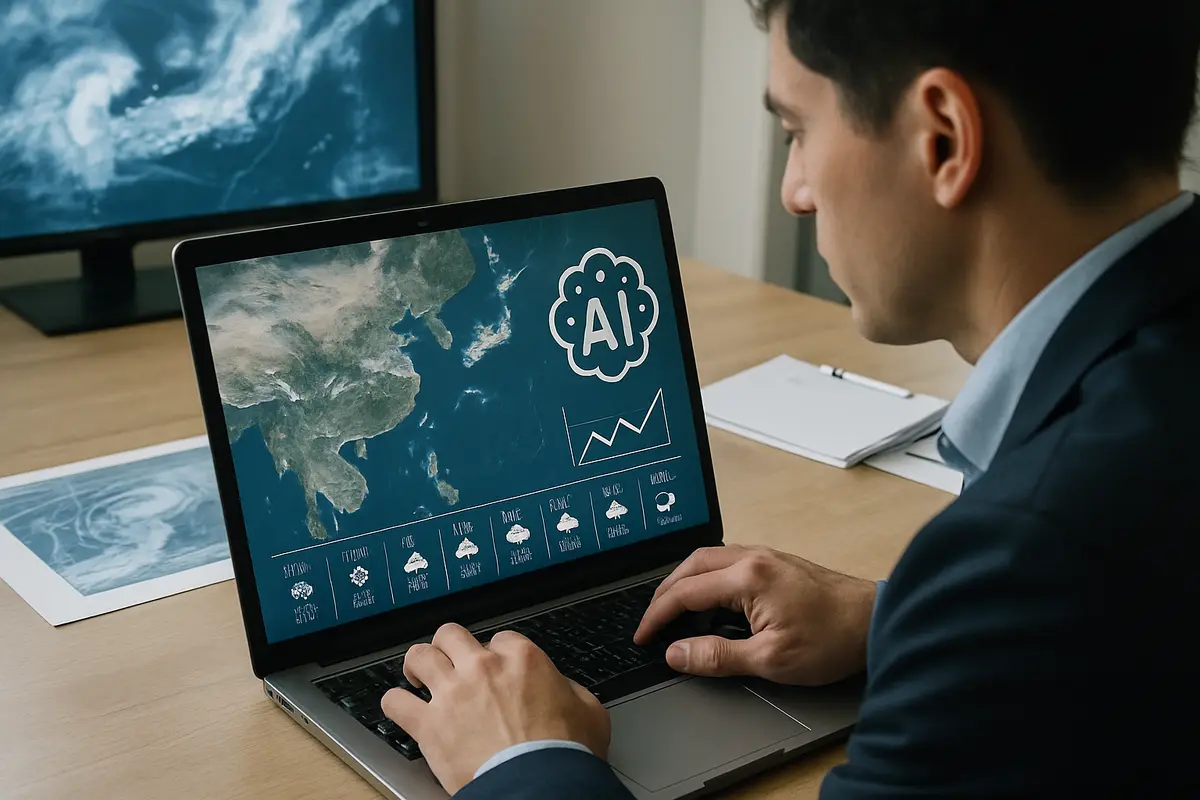
この画像はAIで生成され、学習目的で使用されています。

This image is AI-generated and used for educational purposes.

人工知能じんこうちのう使つかった天気予報てんきよほう研究けんきゅうが、世界中せかいじゅう急速きゅうそくすすでいます2これまで予報よほうは、大気たいきうご物理ぶつりしき計算けいさんするやりかた中心ちゅうしんでした3。この方法ほうほう精度せいどたか一方いっぽう大型おおがたコンピューターなが計算時間けいさんじかん必要ひつようです4

あたらしい手法しゅほうは、過去かこ数十年すうじゅうねん観測かんそくデータ人工知能じんこうちのう学習がくしゅうさせ、そこからさき天気てんき予測よそくします5計算けいさんかかる時間じかん従来じゅうらいよりずっとみじかくなりふつう機械きかいでもうごといいます6台風たいふう進路しんろ予測よそくでは、これまで予報よほう上回うわまわ結果けっか報告ほうこくされています7

ただし人工知能じんこうちのうデータにない現象げんしょうよわわれています8記録的きろくてき豪雨ごううのように前例ぜんれいすくない事態じたいでは、判断はんだんあやまおそれがあります9気象きしょう専門家せんもんかは、当面とうめん両方りょうほう手法しゅほうわせ使つかべき指摘してきしています10

Discussion

00

to rate or comment.

No comments yet.