日本のバス会社で、新しい払い方が広がっています2。お客さんは、スマートフォンやカードでバスの料金を払うことができます3。現金を出さなくてもいいので、乗るときも降りるときも早いです4。
バス会社の人は「運転手が数えるお金が少なくなります5。時間も短くなります」と話しています6。町のバスでは、お年寄りが使いやすいように、簡単な機械を使います7。
でも、スマートフォンを持っていない人もいます8。そのため、今も現金で払うことができるバスが多いです9。バス会社は、みんなが困らない方法を考えています10。
(ばす)
bus
(りょうきん)
fee, charge
(すまほ)
smartphone
(はらう)
to pay
(にほん)
Japan
(かいしゃ)
company
(あたらしい)
new
(ひろがる)
to spread
(おきゃくさん)
guest / spectator / customer
(すまーとふぉん)
smartphone
(かーど)
card
(げんきん)
cash
(だす)
to serve, put out
(のる)
to ride, board
(おりる)
to descend, get off
(はやい)
early / fast
(ひと)
person / people
(うんてんしゅ)
driver
(かぞえる)
to count
(おかね)
money
(すくない)
few, scarce
(じかん)
time
(みじかい)
short
(はなす)
to speak, talk
(まち)
town
(おとしより)
elderly person
(つかう)
to use
(かんたん)
simple / easy
(きかい)
machine
(でも)
but; however
(もつ)
to have; to hold
(そのため)
therefore; for that reason
(いま)
now
(おおい)
many
(みんな)
Everyone; everybody
(こまる)
to be troubled; to be in difficulty
(ほうほう)
method; way
(かんがえる)
to think; to consider
is doing, has been doing (ongoing state/action)
Expresses a continuing action or resulting state. Formed with て-form + いる. Can describe an action in progress or a state resulting from a past change.
今、ご飯を食べています。
I am eating rice now.
東京に住んでいます。
I live in Tokyo.
ドアが開いています。
The door is open.
way of doing
Attached to verb stem to mean 'way of doing'. '力の入れ方' means 'way of applying force'.
食べ方が分からない。
I don't know how to eat it.
書き方を教えてください。
Please teach me how to write.
can do ..., to be able to ...
Verb dictionary form + ことができる expresses ability or possibility. More formal than the potential verb form. Common in written Japanese and announcements.
日本語を話すことができます。
I can speak Japanese.
ここで写真を撮ることができます。
You can take photos here.
インターネットで予約することができます。
You can make a reservation on the internet.
it's okay not to ~; don't have to ~
Expresses that there is no obligation or necessity to do something.
何もしなくてもいいです。
You don't have to do anything.
when ~
Indicates the time when something happened — when he was in junior high school.
中学生のとき病気になりました。
When I was a junior-high student I got sick.
子どものとき日本にいました。
I was in Japan when I was a child.
to become (い-adjective)
Expresses a change of state for い-adjectives. Drop the final い and add くなる. Indicates something has changed or will change to a new state.
寒くなりました。
It has gotten cold.
日本語が上手になりました。
My Japanese has gotten better.
値段が高くなりました。
The price became expensive.
easy to ~ / tends to ~
Used in 'うつりやすくて' meaning 'easily contagious / easy to catch'.
この本は読みやすい。
This book is easy to read.
忘れやすい。
Easy to forget.
バスの料金をスマホで払う
Paying bus fares with a smartphone
日本のバス会社で、新しい払い方が広がっています。
A new way of paying is spreading among bus companies in Japan.
お客さんは、スマートフォンやカードでバスの料金を払うことができます。
Passengers can pay their bus fare with a smartphone or a card.
現金を出さなくてもいいので、乗るときも降りるときも早いです。
Because you do not have to take out cash, it is quick both when getting on and when getting off.
バス会社の人は「運転手が数えるお金が少なくなります。
A person from a bus company says, "The amount of money the driver has to count goes down.
時間も短くなります」と話しています。
It also takes less time," they say.
町のバスでは、お年寄りが使いやすいように、簡単な機械を使います。
On town buses, simple machines are used so that elderly people find them easy to use.
でも、スマートフォンを持っていない人もいます。
However, there are also people who do not have a smartphone.
そのため、今も現金で払うことができるバスが多いです。
For that reason, there are still many buses where you can pay with cash.
バス会社は、みんなが困らない方法を考えています。
Bus companies are thinking about a method that will not cause trouble for anyone.
2026年08月23日 19:10
著者: jpreader
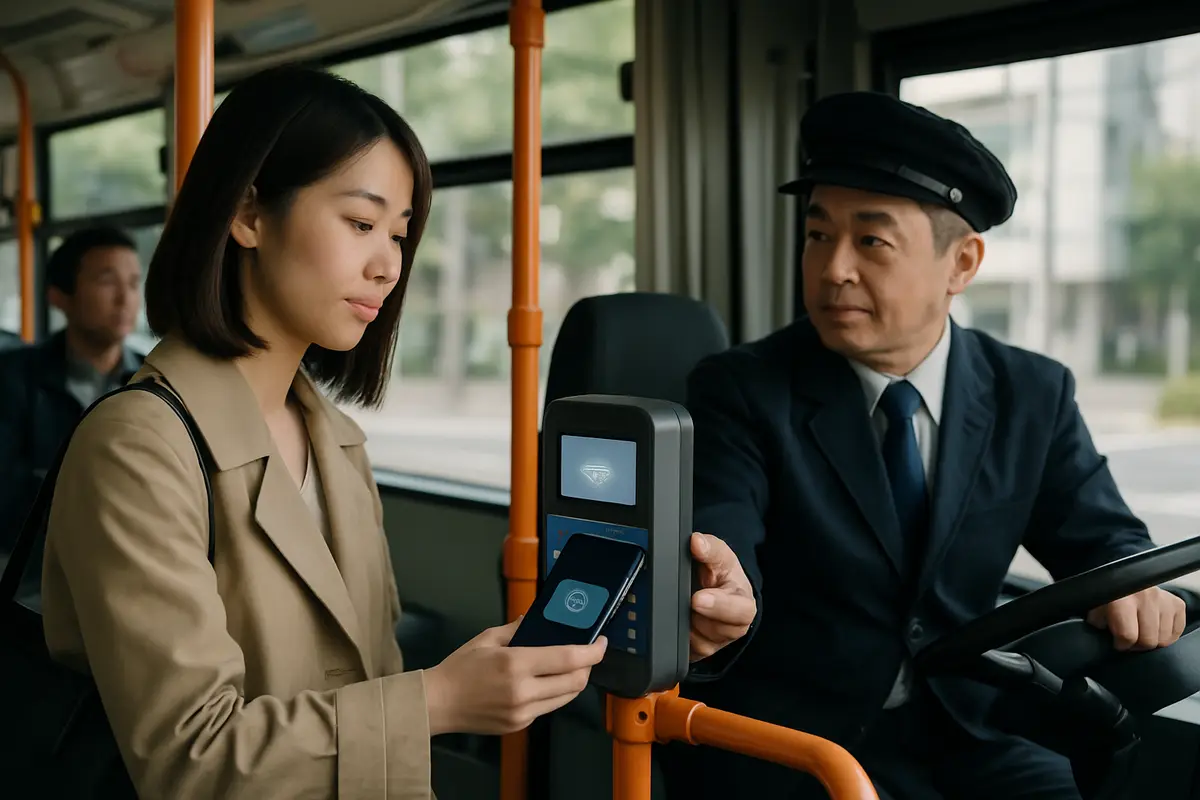
この画像はAIで生成され、学習目的で使用されています。
This image is AI-generated and used for educational purposes.
日本のバス会社で、新しい払い方が広がっています2。お客さんは、スマートフォンやカードでバスの料金を払うことができます3。現金を出さなくてもいいので、乗るときも降りるときも早いです4。
バス会社の人は「運転手が数えるお金が少なくなります5。時間も短くなります」と話しています6。町のバスでは、お年寄りが使いやすいように、簡単な機械を使います7。
でも、スマートフォンを持っていない人もいます8。そのため、今も現金で払うことができるバスが多いです9。バス会社は、みんなが困らない方法を考えています10。
Discussion
to rate or comment.
No comments yet.